Nora Lester Murad - The View From My Window in Palestine

  • About Me
    • Bio
    • Contact Me
    • Sign up for updates
  • My Writing
    • Life Under Occupation
    • Video/Radio
    • Guest Posts
    • Aid and Development
    • Gaza!
    • Palestinian Literary Scene
  • My Books
    • Resisting Erasure
    • Ida in the Middle
    • Rest in My Shade
    • I Found Myself in Palestine
  • Shop
  • Email
  • Instagram
  • LinkedIn
  • Twitter
  • YouTube

Part Two: Accessing Gaza Through the Tunnels: My Saga! Guest Post by Anonymous

June 6, 2012 by Nora Lester Murad

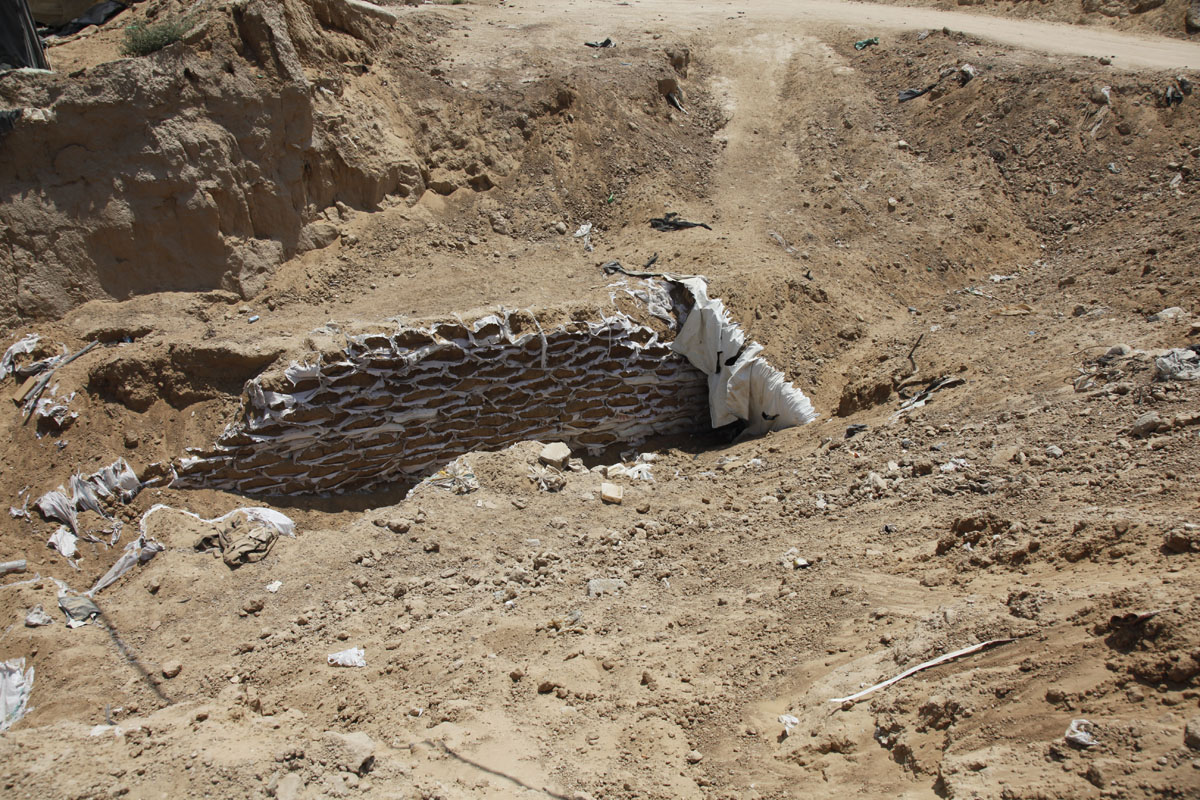
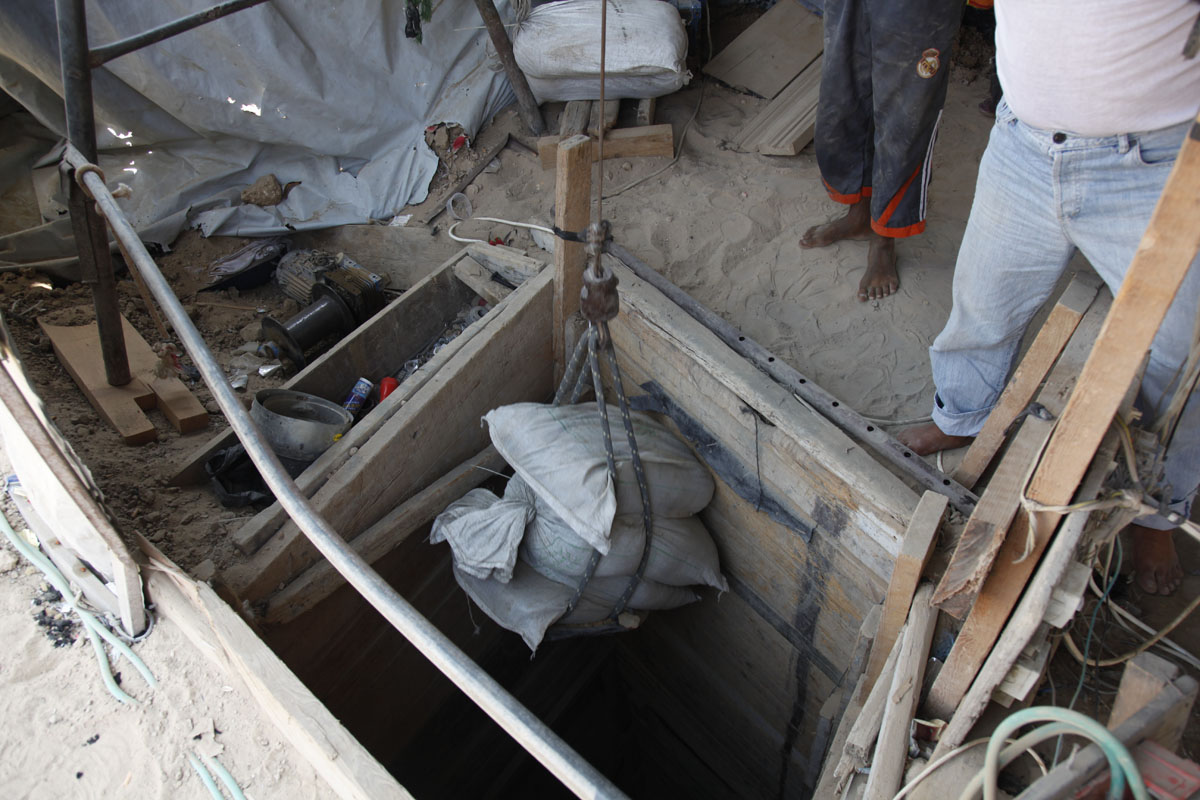
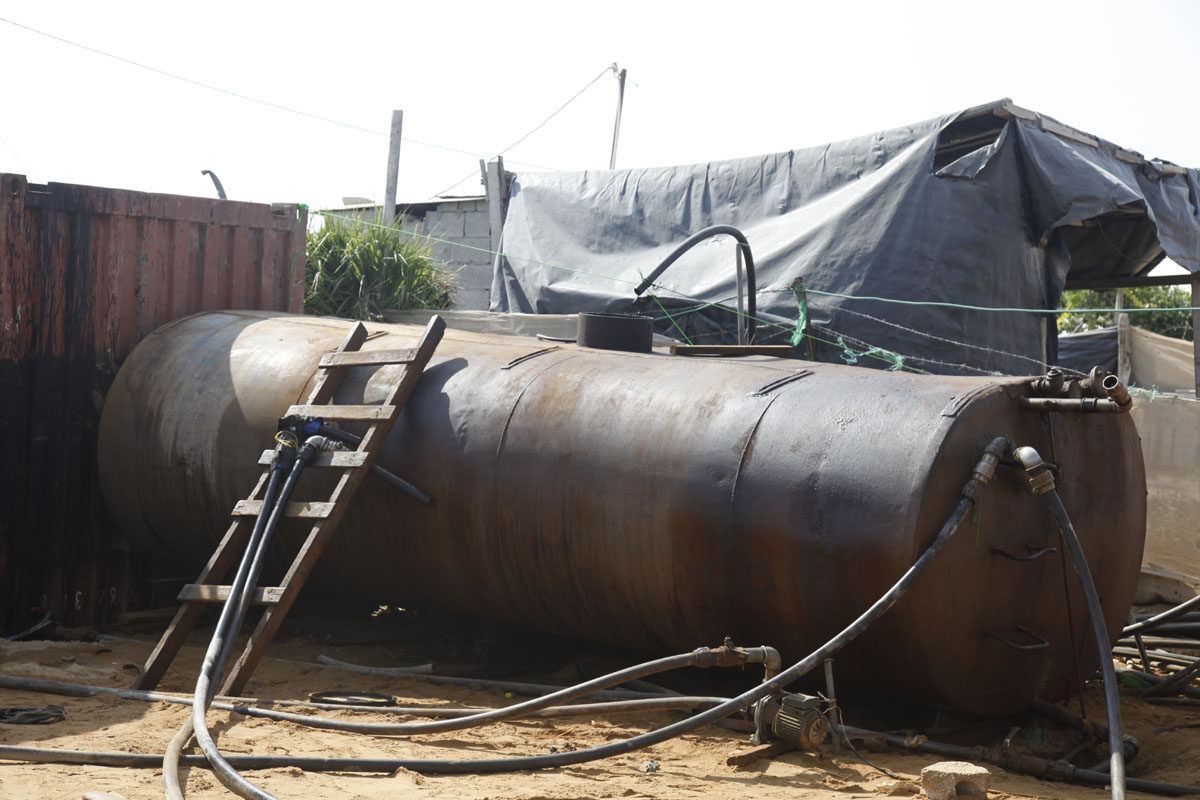
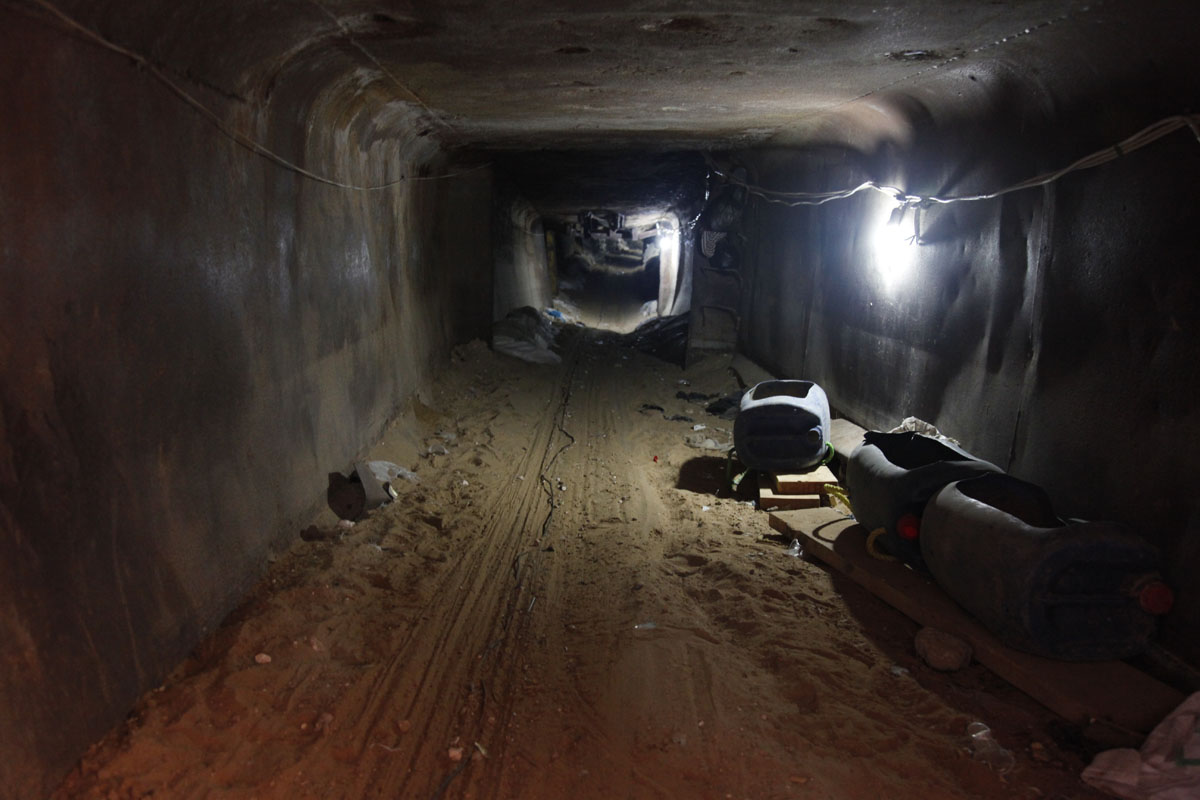
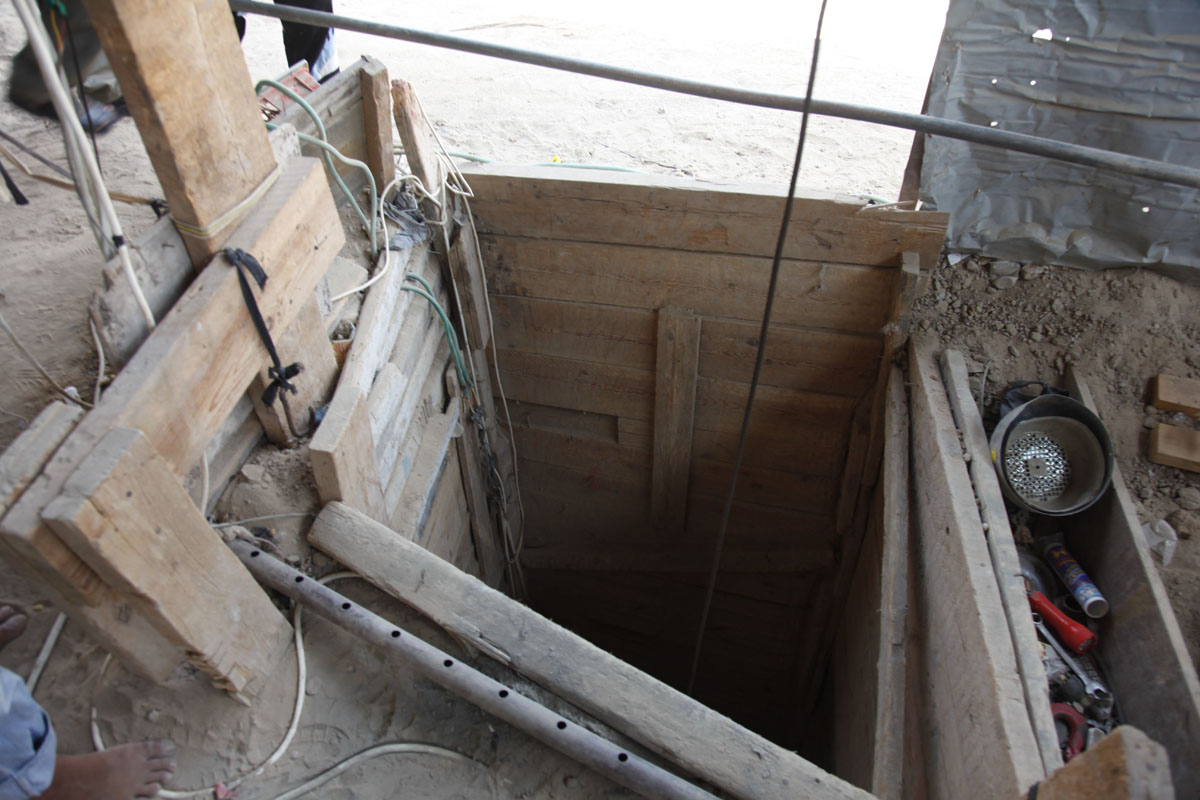
This is Part Two of a rare first hand account of accessing Gaza through the tunnels that connect the Gaza Strip to the outside world. To protect those involved, the author is anonymous and all the names have been changed. Note: The photos are of Gaza tunnels, but they were not taken by the author of this account, nor were they taken at the same time as the author’s trip.

Getting out

The exit leg of the trip was long and worrisome:

Because my return flight from Cairo to Tel Aviv was set for 9:00 am on Sunday Cairo time, and to avoid driving from Rafah to Cairo through Sinai at night, I decided to leave Gaza City the day before, Saturday  as soon as I finished my lecture.

It was arranged for a taxi to pick me up at 12:30 from IUG and to take me directly to Muthanna (my Palestinian “tunnel” organizer), who was waiting for us at the Gaza Mental Health Program “chalet” on the beach, not far from Al-Zawaydeh (the middle part of Gaza).  There, we had to wait for about 30 minutes for Abu Tarek, originally a Bedouin from the Rafah area (and our effective and indispensable “key” for the tunnel procedure.)  He met me at the tunnel opening when I entered.  He’s Muthanna’s reliable contact. The plan was that I’d be accompanied to the “mouth” of the tunnel in Rafah with Muthanna, Abu Tarek (of the inviting organization).

We arrived at the tunnel area in Rafah about 40 minutes later.  We were led to the office of “Central Operations, the Borders’ Commission” of the Ministry of the Interior in the Gaza Government.  Government offices are closed on Fridays and Saturdays, we were told.  This office had a skeleton staff of one—a very nice young man, with a cute smile, dressed in black shirt and black trousers, no evidence of any gun to his waist, but he could not (or would not) take any personal responsibility for the decisions he had to take.  This situation spelled disaster for us.

I showed my documents: (1) the permit from the Ministry of Interior to enter Gaza, (2) My US passport stamped in Egypt with an entry visa, and (3) my return ticket.  He recorded my data, which he had a hell of a time deciphering, on a loose sheet of paper.  He kept repeating my name as “ad-daktoor.”  I kept on correcting him every time he called someone with the information, but he kept repeating the same thing.  Also, my accompanying team in the office kept correcting him and telling him: “Ad-Doktoor is an important doktoor and professor, and he came to lecture.”

The young man kept trying to call “his superiors” for authorization.  He said that all my information was in order, but he could not “authorize” me to cross in his own capacity.  The person, or persons, he was trying to call had their Jawwals (Palestinian cells) turned off.  He said he was sorry for this, but he could not do anything about it. In the meantime, we sat in his office on a very wide dusty bed (with no sides or pillows for back support), constantly shifting our bodies for comfort, searching and hoping to keep our backs straight.  We were very hot; dust and more dust everywhere.  The cab driver sat in his cab and waited for us.  All of us waited and hoped for the Jawwal on the other side of the signal to turn on!  We assumed this was the reason for the delay.

We became very intolerant with the nonchalant attitude and indecisiveness. My team kept repeating “Ad-Doktoor had to leave today; otherwise he’ll miss his flight tomorrow morning to America.”  He had the ticket in front of him, on the dusty and bare desk, showing, for anyone, who could read English, and that my flight was to Tel Aviv not to America! He kept apologizing for delaying us, and insisted that he needed authorization, and he could not take the responsibility on his own to let me through.  He said perhaps his superior was sleeping.  We said: “why don’t you wake him up; if he’s sleeping nothing gets done?”
We consulted among ourselves on how to nudge the decision process. In the meantime, we had been sitting, fidgeting, sighing … and Abu Tarek making his Islamic supplications, recalling Koranic verses, intermingled with Arabic jokes to release tension … As we “sat” there, a colleague of our indecisive young man, from another Ministry of Interior office next door, came in and, after hearing the story and that my papers were in order, he urged our young man repeatedly: “Hurry and authorize the crossing of ad-Doktoor so he can be on his way”.  This, however, was to no avail on the claim that he needed authorization from his superiors.  Suddenly, and without receiving any external calls, or any indication that he received the “needed” authorization from his superiors or anybody, he decided to let me cross … just like that!  We got up after nearly two hours; thanked him, and followed, in our taxi, his colleague, in his jeep, towards the “mouth” of the same tunnel through which I came in.

Entering the tunnel was no problem at all, no delay.  The platform elevator was level with the ground, where the passengers—I and two full-size, horse-pulled carts, awaited and ready to board.  The carts, with their horses and drivers, loaded side by side on the wooden platform, followed by my suitcase on one of the carts.  “Yalla doktoor, hop on,” I was instructed, and I gladly obliged, relieved that the ordeal was basically over.  Down the 40-meter shaft we were lowered: I, two young men, two horses, two carts on four wheels each, and my suitcase.  As we reached the ground, one of the carts proceeded ahead of us, while my driver asked me to hold on tight.  The only way I could hold on tight was to lay flat on the dirty cart hanging on my suitcase.  (Keep in mind that I was coming directly from giving a lecture at the university with a white shirt, dressing dark pants, suit jacket …).  I held on tight for my life with great fear at times of falling, as the horse trotted most of the 750 meters of the tunnel, jerking my body right and left, until we got to the opening on the Egyptian side, where I let a big sigh when I could see the natural light!

I got out from the tunnel with my suitcase, shoulder satchel, jacket, pants, shirt, and hair, all full of white powdery sand and dirt; thirsty and without anything to eat since 6:00 am.  By now, it was about 5:00 pm.

A young boy was asked by the tunnel operator to help carry the suitcase of al-Hajj (me) to the wire gate signaling the entrance, a distance of 20-30 meters.  The young boy dragged my suitcase in thick dirt and sand, and placed it outside the gate, which they closed behind me.

Now, I stood alone with my suitcase immediately outside the gate, with no sign of my driver who transported me from the airport to Rafah a few days back, and whom I expected to see waiting for me at the gate, especially since he is reliable, and we had called him the night before and informed him about the arrangements.  We had asked him to be there about 2:30 pm, but I arrived about 3 hours late.  What to do now? I stood at the entrance gate, in an unknown and potentially hostile territory, with an overwhelming sense of panic.  I felt I was standing in a mafia-controlled territory, as the sun was gradually disappearing.  This is an area under the total control of Bedouin tribes, marauders, traders and transporters of every commodity for which there is demand and pay, between the two sides of Rafah.  There is clearly no control of the Egyptian central authority here.  On the contrary, these people are overtly opposed to the presence of any symbols of central authority.  The last two days, the area witnessed armed confrontation between the northern Sinai tribesmen and Egyptian police and army.  Police posts were attacked with RPG’s and some were ambushed, which resulted in several injuries and one dead. They don’t hide their deep mistrust and hostility towards the Egyptian police and army, and they express openly their desire to establish an “Islamic Salafist Imarah” in this region.
As I stood there, I tried desperately to call my driver on his mobile to no avail.  I could not get hold of him.  He was praying.  After about 30 minutes, which seemed forever, he showed up, and sped with me towards Cairo airport, dodging the hot spots of confrontation and burning tires on the main access road, and clearly rushing to avoid driving in the dark in northern Sinai.

He dropped me off at about 10:00 pm at Novotel airport hotel, in which I had reserved a room the night before.  All I needed at that minute was to have a decent place where I could have a nice hot bath, a meal, a bottle of wine, a TV with good reception, clean sheets, and sleep.  That I did, until I was awakened at 6:00 am to ready myself to catch my flight back to Tel Aviv.

Observations at-large

I will start with observations of little things, compared with Ramallah:

  • Observable on the streets are old, run-down cars, with more pollution; absence of fancy, new, late model cars observable on the streets of the “imaginary bubble” called Ramallah.  On the other hand, animal-pulled carts (donkeys, mules and horses), abound on the streets of Gaza to transport rubbish, building materials, cases of water and soft drinks, vegetables, etc.  Most often, they are “driven” by younger boys; in some cases, middle-aged women were “driving” their donkey-pulled carts with some homegrown vegetables to peddle at different stops.
  • Popular foods (falafel, humus, fool, etc.) are much cheaper than in Ramallah; in my experience, the price is about one-third what I am used to in Ramallah.  In one instance, I walked to the “popular food” shop across the street from the apartment where I stayed, to get some falafel and humus for lunch.  When I asked about the cost of the falafel, he told me “seven for one Shekel”.  My shock was obvious from my body reaction.  The owner said: “clearly you are not from here”.  No, I answered, “I am Palestinian from Galilee but living in Ramallah”.  “How much is it in Ramallah,” he asked, “generally, three for one Shekel,” I answered.

But, when the average person has no money, this seems to be the only affordable quick food. On the other hand, the only available commercial bread is the tiny, white-flour, tasteless, cardboard-like, “kmajeh”, which young people refer to as “bitah”! I looked hard to find other kinds of bread, dark, or whole wheat, etc., hoping in my exuberance of visiting Gaza in spite of all kinds of restrictions, to stumble upon “taboun” bread, but to no avail.

  • Unless you were planning to shop at the new mall, it was almost impossible to walk around with denominations bigger than 50 Shekels. Small shops cannot handle bigger denominations, and have no small change.
  • During my stay, electricity was interrupted every day, during the day, sometimes for 7-8 hours; often it came back late during the night.  So, one had to plan when to charge mobile phones, what to keep, or not to keep, in the refrigerator, when can you heat water on the gas stove for coffee or tea, if you don’t smoke and don’t walk around with a box of matches or a lighter, etc. Not to mention, of course, if you’re hoping to keep up with your favorite TV show…
  • I walked up and down Omar Al-Mukhtar Street, one of the main, and at one time fancy, streets in Gaza city.  When the electricity was out, every shop, small or big, had a running small generator by the door.  The noise is deafening; and combined with the heat and dust of the day, the noise pollution is overbearing.
  • Tap water is salty.  I would brush my teeth in the morning, and I have the constant taste of salt in my mouth until I had a chance to eat or drink bottled water.  Of course, this water is undrinkable. But who can afford bottled water? How does the average person, who has no money and cannot afford to go to restaurants, manage?
  • Long cues of cars are frequently observable in front of gas stations, waiting for cheaper Egyptian gasoline and solar (mazoot) to arrive.  Next to the cars, I observed another long cue of empty tin cans and gallon jugs waiting to be filled, so they can be sold on the black market for some profit (which is illegal; taking pictures of these cues is also illegal).  The price of the Egyptian gas is less than half the price of the Israeli gas.  I observed these phenomena also in northern Sinai district, as I entered and exited Gaza.
  • Not readily observable are young “professional technocrats” walking around with their name tags, attached to blue ribbons, and dangling down from their necks, as is the common scene in many Ramallah streets.  A few “NGO types” can be observed, mainly near fancy hotels and meeting halls, but not abundantly.
  • Walking the streets, during day or night, I never feared for my personal security.  Nor did I notice signs of armed groups, or such menacing scenes.  I felt the place was quiet.

Some observations of the bigger things:

  • Readily observable is the presence of a big and clear chasm in geography, thought and speech simultaneously.  The Gaza Strip appears to be a world in its own.  Unity of Gaza and the West Bank is illusory. It appears to me that, more and more, Gaza is extending southwards, through language, social and human relationships, economic interests, daily interactions, and tyranny of religious thought, etc., and connecting with northern Sinai.  As observed, northern Sinai district exists in a sort of “imaginary self-rule”, detached from the central authority and in confrontation with it.
  • I began wondering about the implications of such geographical and emotive fragmentation, and the role and planning of Zionist colonization in fueling such disintegration in order to control the available energy resources in the entire area.  I also began questioning our contribution in feeding this fragmentation and disintegration, the more we insist on seeking a solution based on the partitioning of Palestine, and disregards its historical wholeness.
  • There are allusions that current society in Gaza is undergoing a “Talibanization” process, evidenced by the insistence of the Ministry of Education to introduce “Sharia” classes, required at the basic education level.  Drew my attention, in this context, a big sign affixed to the wall of the police training academy (that was shelled at the beginning of the war on Gaza), stating in bold calligraphy: “The liberation generation will emerge from the mosques”.
  • One is very impressed by the resilience and creative steadfastness shown by the average people of Gaza in their daily adaptation to the most difficult and oppressive living conditions and environment.  It was very clear to me that there was a prevalence of positive feeling of interactive human solidarity and concern to each other, which exceeds by leaps and bounds what I observe in Ramallah.
Part One: Accessing Gaza Through the Tunnels: My Saga! Guest Post by Anonymous

June 4, 2012 by Nora Lester Murad

I am very excited to be able to share this rare first-hand account of accessing Gaza through the tunnels that link the Gaza Strip to the outside world. To protect those involved, the author of the account is anonymous and all the names have been changed. Note: The photos are of the Gaza tunnels, but they were not taken by the author of this account, nor were they taken on the same trip.

Opening remarks

  1. I was invited to visit Gaza by a small organization, Tida Gaza. I accepted the invitation on the same day.
  2. After being informed of the documents I hold, the organizers proposed two options through which I could enter Gaza.  The first option: to enter through the official crossing point at Rafah (al-Ma’bar), which meant that I would fly from Tel Aviv to Cairo, and be driven from there by car to Rafah. This required me to visit the US Embassy in Cairo a day before (since I would be traveling on my US passport) in order to give me a letter clearing them from any responsibility, while in Gaza.  It required also pre-coordination with Egyptian intelligence. The second option: to enter through the underground tunnels, which required pre-coordination with the Ministry of the Interior of the Gaza government, but without any coordination with the American or Egyptian authorities.
  3. I opted for the second option right away based on the principle that I, as a Palestinian, should not require external coordination, especially with our enemies, to interact and deliberate with my people, wherever they are, on important issues that affect our collective future.  My organizers took upon themselves to do the necessary coordination with the Gaza authorities.
  4. All communications with me were through emails and telephone.  I received a scanned copy of an entry permit from the Ministry of Interior valid for 30 days; a lecture was arranged for me; samples of my earlier writings were requested and sent; a scanned copy of my US passport; and names and numbers of all necessary contacts in Gaza responsible for my visit. At this moment, early on, I was impressed, and worried at the same time, by the level of openness, overtness, and normalcy of the whole process.  On the other hand, I kept reiterating to myself that I was not on a secret mission; I was going to lecture to university students, and to hold discussions in an open small seminar with concerned young people on pressing issues of “development”, which I addressed in my most recent book.  Accordingly, I reserved my flight.

Getting in

My flight on Air Sinai from Tel Aviv to Cairo was scheduled to leave at 12:00 noon on a Monday; it was about 30 minutes late.  We arrived at Cairo airport at about 2:00 pm, Egypt time. As an Israeli citizen, I exited from Tel Aviv on my Israeli passport, and I entered Egypt on my American passport.  This is the only way I could travel.

After I came out of customs, I saw four taxi drivers holding names of persons for whom they were waiting.  I veered towards them in search of my name, but it was not among them.  My heart sank for a minute; I was calm, however, but panic was about to set in! At that moment, my designated driver, whose name and cell number I was carrying, came in with my name and identified me.  Without wasting anytime, he picked up my suitcase, directed me to his car, and we started heading northeast in the direction of Rafah (on the Egyptian-Palestinian border—keep in mind that Rafah is an artificially divided city on both sides of the border).

It was a drive of about 4-5 hours (450 km).  I tried to learn everything about “Mohammed” (my driver), and he about me.  Often I had to repeat my question or comment because of difference in our spoken Arabic dialects, which rendered some word usages too incomprehensible to both of us. Nevertheless, I learned that he grew up in various regions of the Sinai desert because his father was the chief engineer for putting in the railroad tracks for the “Hijaz Line” in the early thirties under the British occupation.  I felt reassured, particularly as it began to get dark, that he was familiar with the region in which we were driving, and that he spoke the local vernacular.  Most of the road northeastward, after clearing the Egyptian city of Ismailiyya, was dusty, to a suffocating degree, with sand in the air—a desert—until we got to the city of El-Arish on the shore of the Mediterranean.  From there we continued towards the city of Rafah, not to the official Crossing point between Egypt and Gaza, but to the “tunnel area”, which we reached around 5:45 pm.

Whereas the official Rafah Crossing is clearly marked with Egyptian flags, visible structures and signs, the entrance to the “tunnel area” is buried in the sand, and decipherable only to the knowledgeable; neither my driver nor I possessed this needed knowledge. Finally, we reached, as close as we could, the general tunnel area, and waited for instructions from my organizers on the Palestinian side.

In a way, it was tantamount to arriving at the right “terminal” in the airport, so to speak, but without any “gate” information, i.e., which of the nearly 1,700 tunnels we’re “scheduled” to take so that we can meet in the right place with our people on the other side. As we approached, Mohammed suggested calling my contact on the other side.  I called twice as we waited on the Egyptian side.  A “committee”, we were told, was convening to decide which tunnel to “allocate” for my crossing, since I had a formal entry approval from the Palestinian Ministry of the Interior—Gaza Government.  Fearing that it would become dark soon, and I won’t be able to cross, and may had to stay overnight on the Egyptian Rafah side, Mohammed decided to seek the advice of his local tribal contacts.  He did, and someone by the name of “Abu Bilal” met us there soon after.  After a brief discussion he proposed the “right” tunnel to take, which, I assumed, it was based on considerations of familiarity, safety and reliability? He knew it by the name of its owner/operator (a privately-owned).  He directed us to the “mouth” of the tunnel.  There, we encountered two men sitting on plastic chairs in the sand, without any appearance of urgency, sipping coffee or tea comfortably, around the “mouth” of the tunnel.  Hovering around them were two or three young men.  One of them had a Vespa-like motorcycle (referred to locally as “tuk tuk”), ready to service us. Our local guide explained the situation and my urgency to cross before it gets dark, since my people are awaiting my arrival on the other side, and that I had an official entry permit (which I pulled out on cue).  One of the men made a couple of contacts on his Jawwal (presumably to their men at the other end); and then they approved my crossing into their tunnel.  It was a “commercial” transaction, for which I knew I had to pay $100 each way. Immediately, we conveyed this info to our “organizers” on the Palestinian side.  At last, I was very relieved to know that I was cleared to enter through “their” tunnel.  No pictures were allowed; my mobile with camera was withheld at the beginning, and returned to me at the end of the ride.

Now, how to get to the other end of the tunnel?  Hop on “doktoor” on the tuk tuk behind the “driver”.  “What about my suitcase,” I asked, “the driver holds it in front of him,” the explanation came.  I hopped in behind him, but I was in a very precarious position, with my satchel on one shoulder, and my permit in one hand, as if expecting checkpoints on the way!

The instructions to the “tuk tuk” driver were to take me to the “well” (al-Bir) at the end of the tunnel. We zipped through the 750 meters length of the tunnel on a pressed sand and white dirt path, but with numerous bumps and potholes.  The path was wide enough, and high enough for cars, or big animals, to drive or gallop through (one-way).  The walls and the ceilings were of pressed mud and cement, protected with mesh wire, and lit by electric lights on small poles on both sides, spaced, what looked like every 10-15 meters.  Afraid of falling off, I pressed hard on the driver’s waist, without uttering a word.  Neither did he.  It became obvious later that the driver of the “tuk tuk” was mute.

The “well”, or Al-Bir, at the end of the tunnel, is a big circular open shaft, about 40 meters deep, where natural light from the Gaza sky could be seen.  Filling the complete diameter of this shaft is a wooden platform elevator operating by side pulleys, wide enough to transport people, cars, animals, animal-drawn carts, cement, gasoline, etc. As we arrived to Al-Bir, a maintenance crew of 4 young men was fixing the platform.  The atmosphere was nonchalant and normal.  I did not feel any sense of urgency, or that they were on some sort of a military mission; they were joking and laughing with each other and taking their time. Sometimes they were serious.  But they appeared like a normal maintenance crew, taking their job seriously.  Every now and then, they asked me questions about where I was from, and why did I come through the tunnel not the official crossing (al-Ma’bar), etc.  When I said I am a Palestinian living now in Ramallah, one asked, “where in Ramallah do you live? I lived there until ‘Al-Khityar’ (Abu Ammar) died; I was in the presidential guard,” he made a point to tell me, and to indicate, perhaps, that he was (or is) Fateh?  We waited in Al-Bir, 40 meters underground for about 20-30 minutes until the crew completed the maintenance chores.  During this time, electricity went out and the entire tunnel was pitch-black for a few seconds until generators kicked in without delay.

Now the elevator-platform is ready for operation.  I was ready and elated to be lifted up with my suitcase. Before I did,  I handed the “tuk tuk” driver a few Shekels for his trouble. Once on top, my contacts/organizers were waiting with broad smiles that I made it safely. A policeman was sitting there on a plastic chair “checking” those coming in. A car drove us to Gaza City, and that was it.

Read Part Two of this account to be posted on June 6, 2012.

Take Action Against UNICEF? That’s the Wrong Question.

May 31, 2012 by Nora Lester Murad

On March 24, 2012, The Times of Israel reported, “Israeli Companies Win UN Bids to Reconstruct Gaza, Angering Palestinians.”

I was angry too. Furious, in fact.

How could UNICEF, with a mandate to “…help Palestinian children access education, protection, health and safe drinking water” re-direct Palestinian aid money to Israel, the perpetrator of the attacks and siege that caused the damage that UN agencies are suppose to alleviate?

The Times of Israel cited the London-based Al-Quds Al-Arabi as the source. Soon after, WAFA Palestinian News and Info Agency said Palestinian contractors would boycott if Israeli companies were allowed to participate in tenders, and PressTV said Palestinian contractors had already decided to boycott. Gaza.Scoop.ps even reported that UNICEF had responded to criticism by insisting on dealing with Israeli companies in Gaza.

As far as I can figure out, all of these reports are wrong. The truth seems to be both more innocent and, at the same time, more troubling.

To clarify, UNICEF issued a media release on May 28 that said:

“The priority and policy of UNICEF office in the occupied Palestinian territory is to purchase goods and services from qualified Palestinian manufacturers, authorized dealers and companies. We only buy from other providers when goods are not available”, Ms. Gough said.

When purchasing goods or services, UNICEF follows the joint United Nations guidelines and buys goods directly from manufacturers or authorized dealers in a timely, cost effective manner. All purchases are made through a competitive bid process among prequalified suppliers based in the area of operations.”

And a more recent release from the Coastal Municipalities Water Utility says:

“Moreover, a lot of the materials and the equipment that needs to be supplied are of dual use and it is not possible to supply it in through Israeli crossing by the Palestinian suppliers because of the blockade. Hence the donor organizations always conduct the purchase of items from the source and then transport it through the crossings using its own United Nations coordination channels. Based on the above, it was clear that UNICEF has followed the correct procedures according to its regulation and guidelines set for the organization. And also UNICEF has given every possible priority to the local Palestinian product and always worked and still working according the Palestinian strategic needs for water and sanitation, which meets the top Palestinian interest.”

From this, it is apparent that:

1- UNICEF has a policy of preferring Palestinian contractors and vendors. In fact, upon consultation with UNICEF, I found out that all UN agencies have preference for local procurement, primarily because local procurement is more likely to be timely, less costly to transport, and more likely to result in undamaged receipt. I admit that was not able to confirm this in the UN Procurement Manual, because the manual (2010) is 286 pages and I simply didn’t have time to read it all.

2- UNICEF followed all its internal procedures in this case, which includes empowering Palestinian counterparts to make the final decision. (At the same time, following internal procedures isn’t really the point if the internal procedures are flawed.)

And most importantly,

3- No decision in this case has yet been made. Get that? According to UNICEF, the contract for the desalinization units has not yet been awarded!

So why is the UNICEF procurement event such a big scandal? Why was it blown into a major case?

Because questions about Israel profiting from international aid are real. And because questions about the international community’s role in complying with or challenging Israeli policies against Palestinians are legitimate.

Read anything by Shir Hever of Alternative Information Center or Who Profits? and you’ll see that both occupying Palestinians and providing aid to Palestinians under occupation are big, profitable businesses.

Unfortunately, it’s not so easy to simply insist on the purchase of Palestinian goods. What if, as in this case, Palestinians don’t make the product? What if Israeli won’t let the product in? What if refusing to coordinate with Israel means that the desalinization project doesn’t happen, and, as a result,  Palestinian children don’t have clean water to drink?

It’s a complicated problem!

As you may know, international aid in general is under scrutiny, and procurement is an important element. Eurodad, a European advocacy organization, released their policy brief, How to Spend It in advance of the recent Fourth High Level Forum on Aid Effectiveness. They told me that an estimated 60% of aid goes to procurement and an estimated 2/3 of that goes to multinationals in OECD (meaning relatively rich) countries. That certainly gives insight into who is profiting from international aid, doesn’t it?

In my opinion, Eurodad and other aid reform advocates need to look more carefully at the occupied Palestinian territory. They already acknowledge that we need to rethink what “value for money” means in conflict-affected situations. Will they go further and suggest that Israeli companies be excluded from the list of “authorized” vendors for aid-funded tenders? Will the international community take seriously critics’ position that it is unethical for Palestinian aid to reach the coffers of the occupier?

I tried to ask this question directly to the United Nations Ethics Office. They didn’t answer my email, and when I called, I just got this:

+19173679858 on 2012-05-30 at 17.08

What do you think?

Is Jerusalem’s Old City Safe? (part two)

May 29, 2012 by Nora Lester Murad


In response to all the excellent comments about my post, “Checkpoint Etiquette,” I am thrilled to share this must-see video “Yala to the Moon” which I saw on Electronic Intifada.

The fact that such a joyful, creative, and hopeful film can be made here, despite the checkpoints (and all they symbolize), is answer to that oft-asked question, “How can you stand it?” Palestinians don’t just “stand it,” they create.

Enjoy! And if you like it, share a comment. (And if you don’t like it, please get some help!)


Is Jerusalem’s Old City Safe?

May 21, 2012 by Nora Lester Murad

Last week I got an email from a friend of a friend. He’s coming to Jerusalem. First time. Among other things, he’s heard that the Old City of Jerusalem isn’t safe. Is it? Is the Old City safe?

I’m asked that question by nearly every single visitor I encounter.

The question makes me contort my face as if I’m being offered fried cow organs by someone I really don’t want to offend.

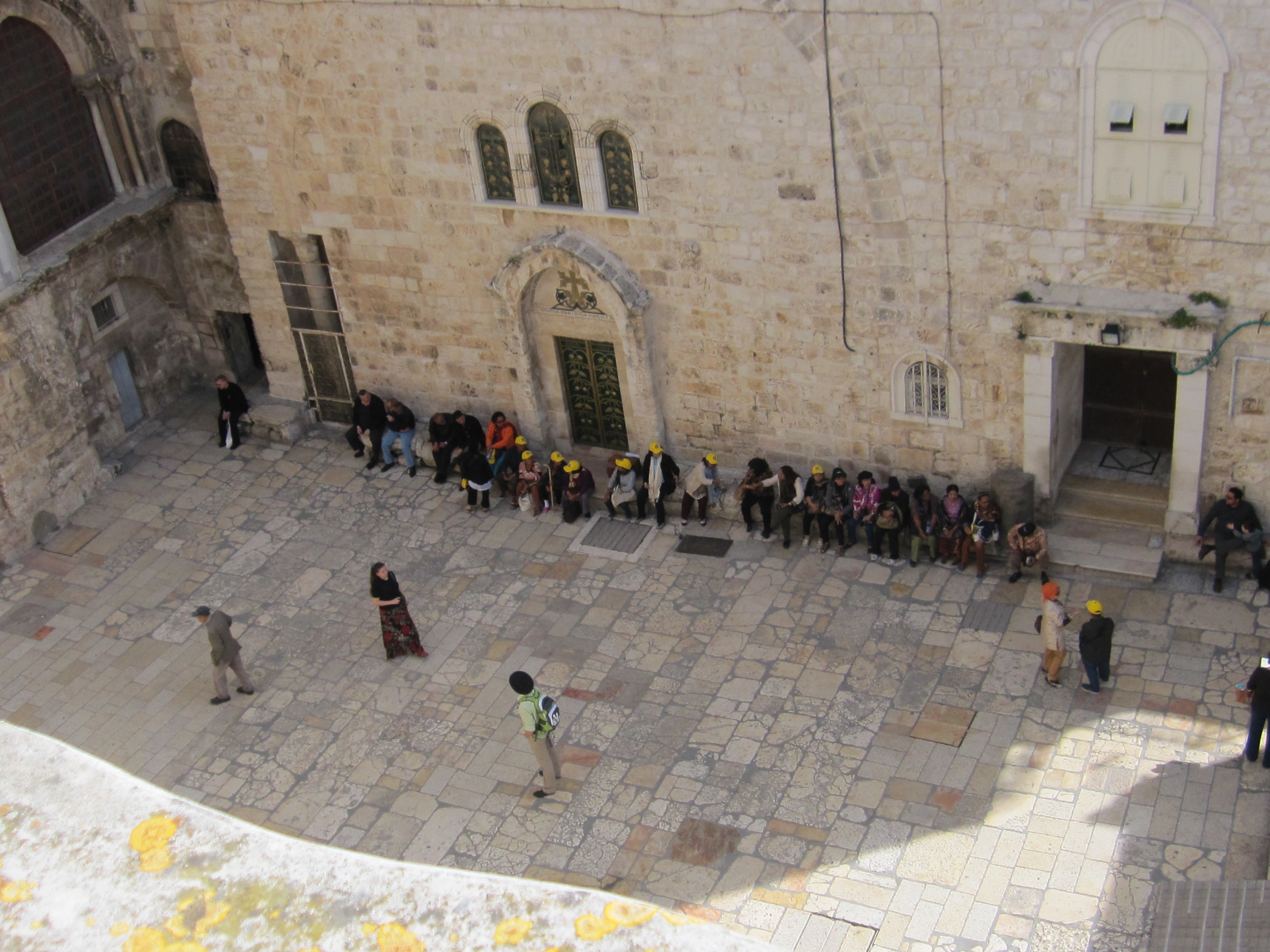
Plaza of the Church of the Holy Sepulcher

I posed the question to a friend of mine who just got her master’s degree in Jerusalem Studies. Her eyes rolled to the right as if she’d told her son four thousand times that his shirt is hanging in the closet but he just asked again where it is.

Is the Old City safe?

What do you think? Is the Old City safe? (I’ll post my answer soon.)


Visualizing Occupation: Freedom of Movement

May 16, 2012 by Nora Lester Murad

Whereas West Bank settlers can travel freely between Israel and the West Bank, Palestinian movement is governed by the Israeli security establishment. This illustration is the fourth in a series of infographics on the effect of the occupation on the Palestinian civilian population.

Sincere thanks to Michal Vexler for permission to reprint this artwork freely and without restriction.


Checkpoint Etiquette

May 14, 2012 by Nora Lester Murad

My daughter, and the other neighborhood kids who attend Friends School in Ramallah, usually take a public bus in the morning. As long as they leave before traffic builds up, it’s an easy ride from Jerusalem—no checking of identity papers, no searches by soldiers. But the return to Jerusalem can take hours through military checkpoints and sometimes requires the dodging of obstacles and dangers.

Because of these erratic conditions, we mothers take turns bringing the kids back by car, either the long way around through the Beit Il checkpoint (which I can do because I have a United Nations identity card) or on the Jeba’a Road through the Pisgat Ze’ev checkpoint. Sometimes I take a risk and drive through Qalandia checkpoint. Once you’re in though, there’s no turning back. You’re stuck for the duration.

Whether on foot or by car, going through military checkpoints is miserable. It might take 20 minutes or it might take 2 hours, but either way, I go through emotional turbulence. Sometimes I’m stuck on a simple (existential?) question: Why does someone else decide if I get home or not and whether or not I’m late? Sometimes it’s more logistical: If boys start to throw rocks, how can I get out of the checkpoint before the tear gas flies?

Occasionally there are amusing or thought-provoking incidents at the checkpoint. A few weeks back I was near the front of the line at Qalandia when rocks started raining down on my car and the cars around me. The drivers jumped out of their cars furious at the boys, “You’re hitting us, you fools. The Israeli watchtower is over there. Learn to aim!” And recently, coming home with a carload of children through a different checkpoint, we encountered a soldier the children named, “the happy soldier” because he seemed so happy to see us.

Photo by Muthanna Al-Qadi

What do you say to a child when he waves enthusiastically at an Israeli soldier at a military checkpoint? Do you tell him not to be friendly and squash the innate humanity of the child? Or do you encourage him to express his humanity, perhaps awaking the humanity of the solder? Or do you spend the next 20 minutes talking about the complexities of human interactions in situations of structural inequality, thus losing the child completely and embarrassing your daughter in front of her friends? (You can guess what I did.)

Even when I’m alone, checkpoints are hard. How to act? I’ve noticed that if I drive up and hand my passport to a soldier with a scowl on my face, although I intend to communicate my disapproval and non-acceptance, the soldier tends not to notice or care. To be honest, they are often too deep in conversation with one another to acknowledge me. Yesterday a male and female soldier were flirting so suggestively at Qalandia; I felt I had walked into a private bedroom! In these situations, I find I want to shout, to make them feel uncomfortable; to make them know they are unwelcome.

But let’s be honest, if I make a fuss, I’ll delay the line. The drivers behind me will be angry. After all, we just want to get home, have some lemonade and watch Fetafeat, the cooking show, on TV. And it won’t make a difference anyway. Nothing makes a difference. So why make a fuss? But if I don’t make a fuss, what am I saying about occupation?

One thing that especially infuriates me is when they make me get out of my car to open the trunk for inspection. In my trunk I have a gallon of windshield wiper fluid, a quart of oil, and equipment for changing a tire. Sometimes my computer is in there and a box of books and some bags of recycling to deliver. There could be anything in there, but invariably, they glance in the trunk and hand back my passport without comment. So what was it for? It certainly wasn’t a security check. It was harassment. How come I have to drive away furious while they get to go back to flirting without even registering my existence?

Sometimes I’m angry before I get to the soldiers. Sitting in my car, next to a pile of rocks and expended tear gas canisters, I can see them up ahead chit chatting and repositioning their guns on their shoulders. Through the loudspeaker, the soldier who I cannot see in the watchtower to my left shrieks (yes, she shrieks!) “imshi” by which she intends the first several cars to enter the checkpoint while the rest wait behind the line. But “imshi” isn’t the right word for that! She should say “itfadal” (if you please) or “bevakasha” if she wants to say it in Hebrew. “Imshi,” especially in that tone, is the tone that an animal-hater would use to tell a dog to get out of the way, or perhaps, if you were really, really upset, you might use it to tell your child to hurry up.

I feel my muscles tightening just writing about it.

So, when I’m in the car with people who use a different strategy, I am amazed. They drive up to the checkpoint and greet the soldier: “How are you?” with a smile. They hand over their passport and wait patiently. They take back the passport and pause to say, “Thank you! Have a nice day!” How do they do that?

I understand, intellectually, that the soldier is a human being and s/he may not even want to be there oppressing me. I also understand that if I treat the soldier like a human being, s/he is more likely to treat me as one. But I don’t live in my intellect.

What would you do at a military checkpoint?

Lots of Activities for Writers and Readers in Palestine!

April 26, 2012 by Nora Lester Murad

The Palestine Writing Workshop 

is pleased to announce as part of
The 5th Annual Palestine Festival of Literature

Upcoming activities, including a children’s literature festival, a series of creative writing workshops, a public literary event, and children’s storytelling.

4 May 2012 (Friday) 9:00 – 16:00

Children’s Activity: A full day Children’s Literature Festival entitled “Cave of Imagination” in the old city of Abwein with Sonia Nimr.

5 May 2012 (Saturday) 10:00-12:00

Workshop: A two hour training on Writing About Culture with writer Rachel Holmes in Birzeit to introduce research and composition skills for writing about culture and the concerns of everyday life.

5 – 11 May 2012

Workshop: A 15 hour (over 5 days) training on creating Stories for the Radio that covers basic journalistic skills with radio journalist Bee Rowlatt, meeting in Birzeit.

5 May 2012 (Saturday) 19:30-21:00

Public Literary Reading: “Representing Lives through Literature” with writers Maya al Hayat, Abed al Rahim al Shaikh, Rachel Holmes, and Bee Rowlatt at the Khalil Sakakini Cultural Centre.

6 May 2012 (Sunday) 14:00 – 16:00

Children’s Activity: Interactive Storytelling in English “The Mornings Smelt Like Chocolate” with Bee Rowlatt at Beit Nimeh, Birzeit.

6 May 2012 (Sunday) 14:30 – 16:30

Workshop: This one day training on Character Development explores how to create characters and bring them to life with writer Rachel Holmes, held in Birzeit.

7 May 2012 (Monday) 14:00 – 17:00

Workshop: This one day training in Birzeit on Draft Editing with writer Rachel Holmes introduces three tools of the writing process to help writers produce well-written, effective texts.

7 May 2012 (Monday) 16:00 – 18:00

Children’s Activity: Interactive Storytelling in Arabic at the Khalil Sakakini Cultural Center.

8 May 2012 (Tuesday) 16:00 – 18:00

Children’s Activity: Interactive Storytelling in English “The Mornings Smelt Like Chocolate” with Bee Rowlatt at Khalil Sakakini Cultural Center, Ramallah.

9 May 2012 (Wednesday) 15:30 – 17:30

Workshop: This one day training with writer Rachel Holmes on Publishing Digital Non Fiction is for writers in Gaza and introduces some essential skills for transforming currents events into good, accessible writing. Given via video conferencing.

10 May 2012 (Thursday) 14:30 – 17:30

Workshop: This 3 hour e workshop will be held via video conferencing with journalist Bee Rowlatt for writers in Gaza on Blogging-Get Yourself Out There! 

10 May 2012 (Thursday) 17:00 – 18:30

Children’s Activity: Interactive Storytelling in Arabic at the Khalil Sakakini Cultural

Center.

May 11 2012 (Friday) 16:00 – 17:30

Literary Tea with author Rachel Holmes, discussing her book “The Hottentot Venus: the life and death of Saarjtie Baartman: born 1709-buried 2002.” Pick up book in advance to read.

May 12 2012 (Saturday) 11:30 – 13:00  

Literary Tea with author Bee Rowlatt, discussing her book “Talking About Jane Austen In Baghdad: The True Story of an Unlikely Friendship.” Pick up book in advance to read.

A big thank you to our partners: Palestine Festival of Literature, British Council, Khalil Sakakini Cultural Center, Riwaq, Tamer Institute, and Danish Center for Culture and Development

For more information on any of the above, email us at write@palestineworkshop.org or call +970-(0)597651408


Trying to Reach PalFest LAST YEAR (written on April 21, 2011)

April 23, 2012 by Nora Lester Murad

The 2012 PalFest activities are about to begin! I’m hoping to participate more than I did last year. What happened last year? Read this story about my unsuccessful attempt to attend the PalFest 2011 closing event in Silwan.

April 11, 2011: Last night my family was sitting around doing nothing in particular, but I still had to pester and beg and insist that we go out. We live in Jerusalem, a world-class city! Even on the Palestinian side of town, there are things to see. But too often we let the most banal of life’s obligations fill up our time and we get stuck in a rut.

It was the last day of PalFest (the annual Palestinian Literature Festival) and we had already missed most of the contemporary dance festival. My eldest really, really, really didn’t want to go, so she stayed with her friends celebrating the last school day before the Easter break. My middle child, characteristically eager to please me, was happy to join, but she brought a book expecting to bored. My youngest was playing with another 7-year old. I called the girl’s mother, a dear friend, and convinced her to put the girls in her car and drive behind us to PalFest.

The closing event of the 2011 PalFest was being held at the Silwan Solidarity Tent where internationals and locals gather to protest the demolition orders on 80 or so of Silwan’s Palestinian homes. It’s a Palestinian community just adjacent to the Old City, and one that, unfortunately, has religious significance to Jews. It might be a lost cause, but Silwan is going down fighting – hard (get more information here and here).

It only took 10 minutes to get to the corner of the Old City walls where the road curves down and left to Silwan, but that road was roped off. We had forgotten Passover. There are always closures and detours and traffic problems on Jewish holidays, but this one was massive. Cars everywhere with nowhere to go.

We took a right, away from Silwan and drove to the Palestinian bus station to ask a Silwan bus driver (#76 if you ever need to know) what he suggested. He said there are back roads, but it would take more than an hour and we might not get there. We deliberated. My friend had the idea to walk straight through the Old City; Silwan is just beyond the Jewish Quarter. It was 8 pm and the event should have been starting, but the chances were that if we couldn’t get to the venue on time, the performers might also be late. And since the weather was lovely and the kids were awake, we parked near Damascus Gate and walked into the Old City.

I was euphoric. First of all, the Old City is beautiful at night. I don’t remember the last time I was there at night. It was alive and crowded with pushy, noisy vendors and tourists. Taking advantage of the visit, I was quickly able to buy the piece of Palestinian embroidery I wanted to send to my cousin. I was also excited about the line up. DAM, an internationally recognized rap group was playing. Suad Amiry, an internationally recognized author (and friend) was scheduled to MC.

Actually, I saw DAM perform just last week at TEDx in Ramallah (which surreally was held in Bethlehem) and I was hoping they would play their song, “I’m in love with a Jew” about falling in love with a Jew in an elevator (“She was going up, I was going down, down, down”). For some reason, I like that song!

The adults, walking fast to get to the show we were already late for, were followed by the three kids. We took the left fork at the bottom of the Damascus Gate entrance and my friend led us this way and that way until we found ourselves in a sea of black hats. I have never been in the midst (really the midst) of SO many orthodox Jews before and it made me nervous. My friend (who is Palestinian) and I look like foreigners but my husband is clearly Arab. Although no one seemed to notice us or care, I found my stomach tied in nervous knots for the rest of the night.

The checkpoint into the Jewish Quarter was closed and there was already a crowd of angry Jews yelling at the soldiers because they wanted to get in. It didn’t seem smart hang around to watch a fight brew between the Israeli army and religious Jews, so we followed someone’s directions and took two left turns to get to the other entrance into the Jewish Quarter. There, we found ourselves on some stairs in a crowd of hundreds of people standing packed between the narrow alley walls. No one was moving. My husband wasn’t nervous at all (amazing) and asked someone what the delay was (though by talking, most people would know for certain that he’s an Arab). It turned out a “suspicious object” had been found just ahead and that checkpoint was also closed. I pulled my husband away from the crowd, sure that he’d be rounded up. We walked fast into the Arab section where I could breathe again.

We pondered whether we should give up or not, but my friend kept saying, “It’s right there” pointing to the wall. She meant that Silwan was just on the other side of the wall, which was true, but somehow an understatement and an overstatement at the same time. I, too, really wanted to go to that PalFest event. Badly.

Kids in tow, we backtracked to the place where the “suspicious object” had been and found, strangely, the path was open. Completely open. We walked down the stairs and up to the next checkpoint without even slowing down. Jerusalem is such a weird place. Then, despite all the focus on “security,” no one paid any attention to us at the checkpoint because an international guy was carrying a box of what looked like fossilized chips of biblical cooking pots, and the soldiers were so interested, they didn’t pay attention to anyone else. We breezed through that checkpoint and walked straight down to the Wailing Wall. There must have been thousands of people there. It was all lit up. Beautiful in its own right, but so strange to walk through that reality out the Dung Gate to the top of the hill over Silwan, one of Palestine’s hottest hot spots.

Tour busses (Passover, remember?) were lined up to our left but to our right was the entrance to Silwan and nearly empty. We started to walk down the hill toward the solidarity tent, but locals came forward and told us to re-consider. Soldiers had tear-gassed the tent. There was rock throwing. My old activist persona wanted to go anyway, to show support, and to bear witness, but my mother identity won out. It was too dangerous. We turned back.

We had been walking through a maze of human, political, cultural, physical and vehicular obstacles for more than an hour-and-a-half trying to reach a place that was an easy 15-minute drive from our house. We arrived but couldn’t take part. Instead, we went to the Austrian Hospice and had tea and cake.

Here’s a video about PalFest including footage at the end of what we missed:

PalFest 2011

  • « Previous Page
  • 1
  • …
  • 13
  • 14
  • 15
  • 16
  • Next Page »

Recent Posts

  • Children’s Picture Book Review: “Never Again for Anyone”
  • Members of Educators Union Say Its Capitulation to ADL Betrays Workers, Students
  • On Teach Truth Day of Action: The Movement to #TeachTruth Includes Palestine, Too
  • How do we get the ADL out of schools? A conversation with Nora Lester Murad of #DropTheADLfromSchools.
  • The convos jumbled in my heart and head

Tweets!

Could not authenticate you.
  • Contact Me
  • About Me
  • Archive
  • Sign up for updates

Copyright © 2026, All rights reserved
Website Maintained by AtefDesign