Nora Lester Murad - The View From My Window in Palestine

  • About Me
    • Bio
    • Contact Me
    • Sign up for updates
  • My Writing
    • Life Under Occupation
    • Video/Radio
    • Guest Posts
    • Aid and Development
    • Gaza!
    • Palestinian Literary Scene
  • My Books
    • Resisting Erasure
    • Ida in the Middle
    • Rest in My Shade
    • I Found Myself in Palestine
  • Shop
  • Email
  • Instagram
  • LinkedIn
  • Twitter
  • YouTube

I wrote three OpEds for The Forward. They published zero.

August 20, 2024 by Nora Lester Murad

On May 30, 2024, The Forward contacted me in response to a tweet of mine criticizing an article they published. They asked me to write an OpEd, and after checking with some friends in the Palestinian solidarity movement, I decided to accept the offer as long as they didn’t censor my ideas. Over the next several months, I wrote three OpEds, none of which were published. The first got stale when The Forward didn’t respond in a timely way. The second was completely rewritten and my politics misrepresented, so I refused to agree to their edits. I sent a third one with a new hook, but after agreeing to publish (and pay for it), The Forward stopped replying to my emails. They also didn’t respond to my invoice for payment. For what its worth, I’m sharing one of the OpEds here.

What are we keeping Jewish students safe from?

As the new school year approaches, I am being bombarded with emails and texts about the imperative to keep Jewish students safe in the new politicized atmosphere. But safe from what? One text message noted that the BDS movement has been training campus activists and that anti-genocide encampments will be back.

There are actual right-wing racists, including white supremacists and Christian nationalists, who are being emboldened by MAGA rhetoric, but the self-appointed antisemitism watchdogs don’t mention those real threats at all. They focus on students who believe in the humanity of Palestinans and support their right to be equal and free. 

I wonder how Jewish outlooks might change if they understood their fate not as aligned only with one another against the world, but as inextricably linked with the people of color, including Palestinians, who constitute the global majority. What if Jews believed that that Jewish wellbeing depended on Palestinians also being safe?

I sought insight from one of my cousins, a liberal Zionist with whom I’ve had many respectful exchanges: “Why can’t everyone in Israel live together in equality? Isn’t that what we strive for here in the United States?” 

When I pose this question to most liberal Zionists, I hear some version of “We would love to, if only they didn’t hate us.” I tell them how my own, albeit unusual, lived experience proves that Palestinians don’t hate Jews – they only hate being oppressed. But most liberal Zionists simply don’t believe me. 

A Jew who married into a Palestinian Muslim family, who is loved as a daughter- and sister-in law, who is accepted as a neighbor and friend, and has had significant roles in Palestinian civil society does not fit into the story of Palestinian antisemitism and Jewish vulnerability they tell themselves. In fact, when Palestinians learn that I’m Jewish, they frequently recall stories from their elders about the good ole days when Muslim, Christian, and Jewish Palestinians lived peacefully as members of one united community, and they long for a country where once again everyone can live together in peace.

I learned these important truths serendipitously. When I was a 19-year-old college sophomore still lacking a plan for my life, the Sabra and Shatilla massacres shocked me into understanding that as a Jew I was implicated in a conflict “over there.” I assumed that understanding Palestinians would be difficult, so I sought them out with a genuine curiosity and concern I inherited from my Jewish ancestors. I studied in Cairo, then in Jerusalem. Taxi drivers taught me Arabic, and women I met in vegetable markets taught me to cook. I made friends on travels in Sudan, Jordan, and Syria.

Unexpectedly, I fell in love, got married, and after years in the U.S., we moved to the West Bank to raise three daughters under Israeli military occupation. 

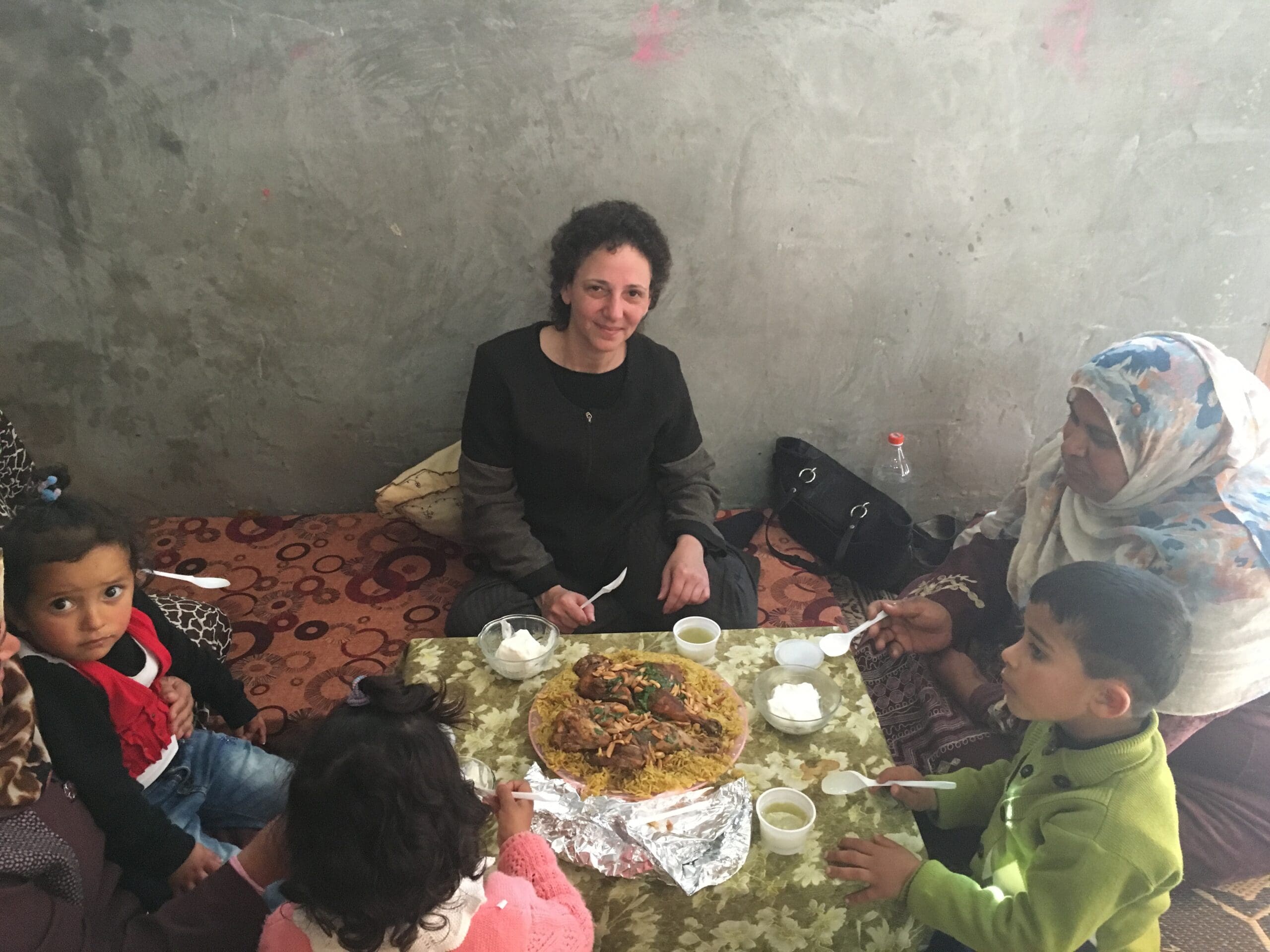
It hasn’t always been easy being part of the Palestinian community. It hurts to see how statelessness disperses families around the world. It hurts to break bread with families who live under constant threat of home demolition. It hurts to hear friends recount settler attacks on their children and not know how to help.

But being part of the Palestinian community has also been uplifting and fulfilling in countless ways. Palestinians have shown me how the world appears different depending on your relationship to power. They have inspired me to pay attention to life’s smallest gifts. They taught me that safety is found not individually, but within the collective.

Now, 11 months  into a historically brutal slaughter in Gaza by Israel, I am struck by how divergent my perspective of the power to be found in connecting with Palestinians is from the deeply held beliefs of many Jews around me, including those who self-identify as liberal.

Lawn signs reading “I Stand with Israel” confound my Jewish and humanistic sensitibilites. Do we stand with Jews even when they are wrong? Labeling ceasefire demands as antisemitic infuriates me. If it is wrong to be killed, isn’t it also wrong to kill others?

At least right-wing Jewish Zionists are consistent. They weaponize antisemitism against everyone whose politics they don’t like, shamelessly using their Jewish identity as a shield against criticism of their unadulterated violent politics. These are the same people who oppose affirmative action, blame crime on immigrants, and deny health care to trans people. Like their white Christian nationalist pro-Israel political allies, they have no incentive to change the system to include others when the current system is working for them.

I called my cousin to say that I don’t understand why liberal Zionists think they are better than right-wing Zionists. I see liberals fighting passionately against discrimination in the United States, but when it comes to Israel, they uphold a political ideology that values Jews over non-Jews. He didn’t respond with some implicitly racist message that Jews can never be safe without being dominant. 

He surprised me by saying, “Of course, every person and group should enjoy the same rights to land, safety, and dignity.”

“Then you’re like me!” I said, with great relief. “You’re not a Zionist!” 

“Yes I am a Zionist. I care about Jews and want Jews to thrive.”

“I care about Jews and want Jews to thrive, too!” I countered. “But that’s not what Zionism is.”

People like to say that Zionism can mean different things to different people, but the Zionism explicitly espoused by many of Israel’s founders, and the Zionism that Palestinians experience in their everyday lives, is an ideology and practice of Israel as a nation-state for the benefit of Jews and only Jews. Under that ideology, non-Jews will always have an inferior status, because they do not share the right to collective self-determination It is the imperative to keep Jews dominant that drives Israel’s rejection of refugees’ legally-enshrined right to return, the military occupation of over 5 million Palestinians in a brutally repressive regime that controls all aspects of life, and also the reality that 20% of Israel’s population, the indigenous Palestinians who are legally citizens of Israel, are deemed by law to have lesser rights–not only than their fellow Jewish citizens, but also fewer rights than non-citizens anywhere in the world who are Jewish.

My cousin said I gave him a lot to think about.

I keep thinking, too. What if Jews did not work only to protect Jewish students, but instead dedicated themselves to protecting all students, including those who are Palestinian? What if Jews saw their prospects for thriving as tied to a world where bombs and starvation and dehydration and disease were not tolerated – no matter who the victim is, and regardless of the identity of the perpetrator? 

I believe with all my heart that a just peace with Palestinians could not only save tens of thousands of Palestinian lives, but it would also save Jewish lives, and could spare Jews from the anxiety of living with a perpetual sense of existential threat. It could save Jews by re-focusing us on the ways that antisemitism works in concert with anti-Blackness, patriarchy, militarism, and other forms of bigotry, to uphold white supremacy. It would save Jews by reminding us that Palestinians are human beings.

But to achieve a just peace with Palestinians, it is not enough to trust in their humanity. We also need to do the sometimes painful work of living up to our own. 
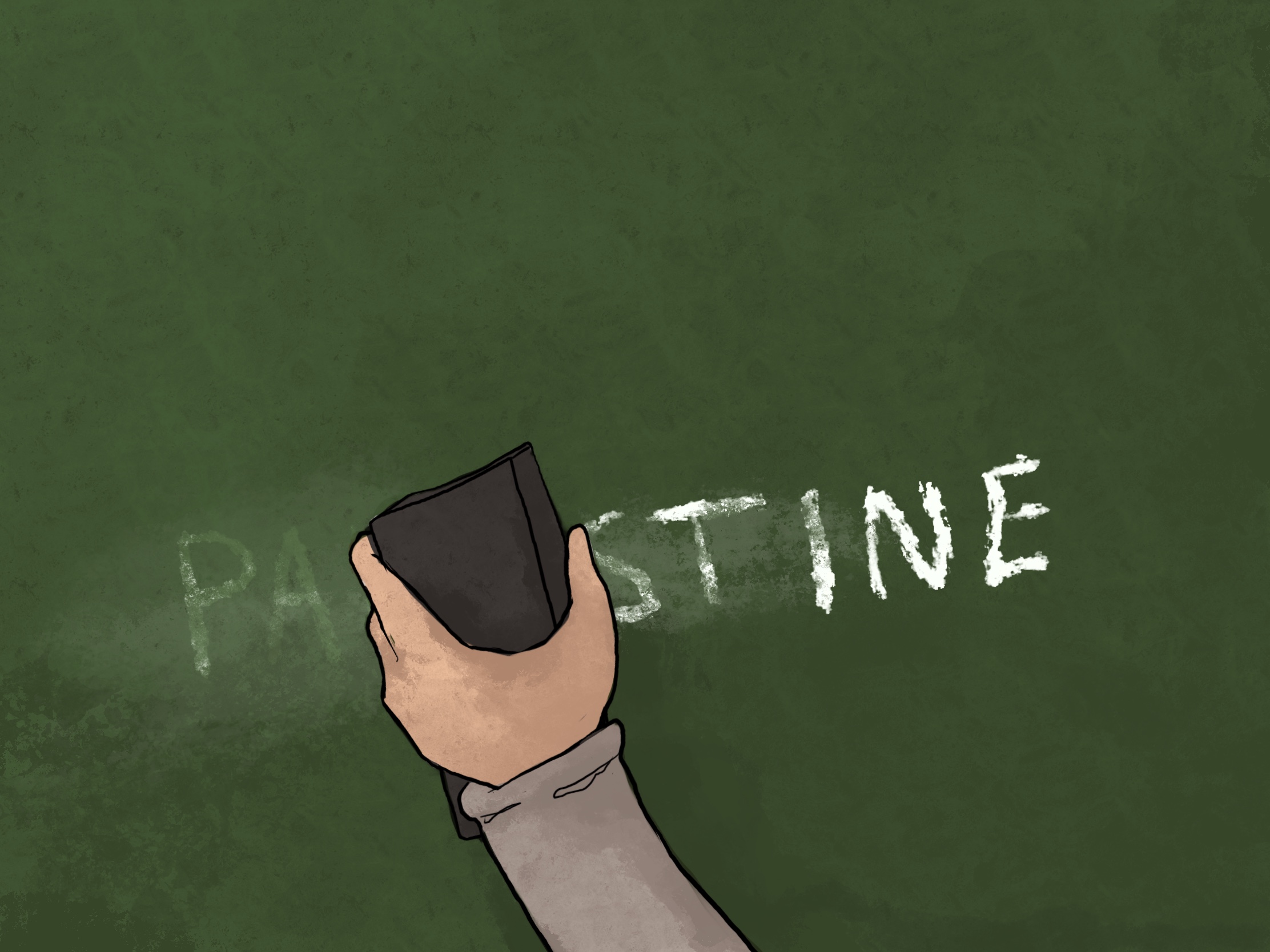
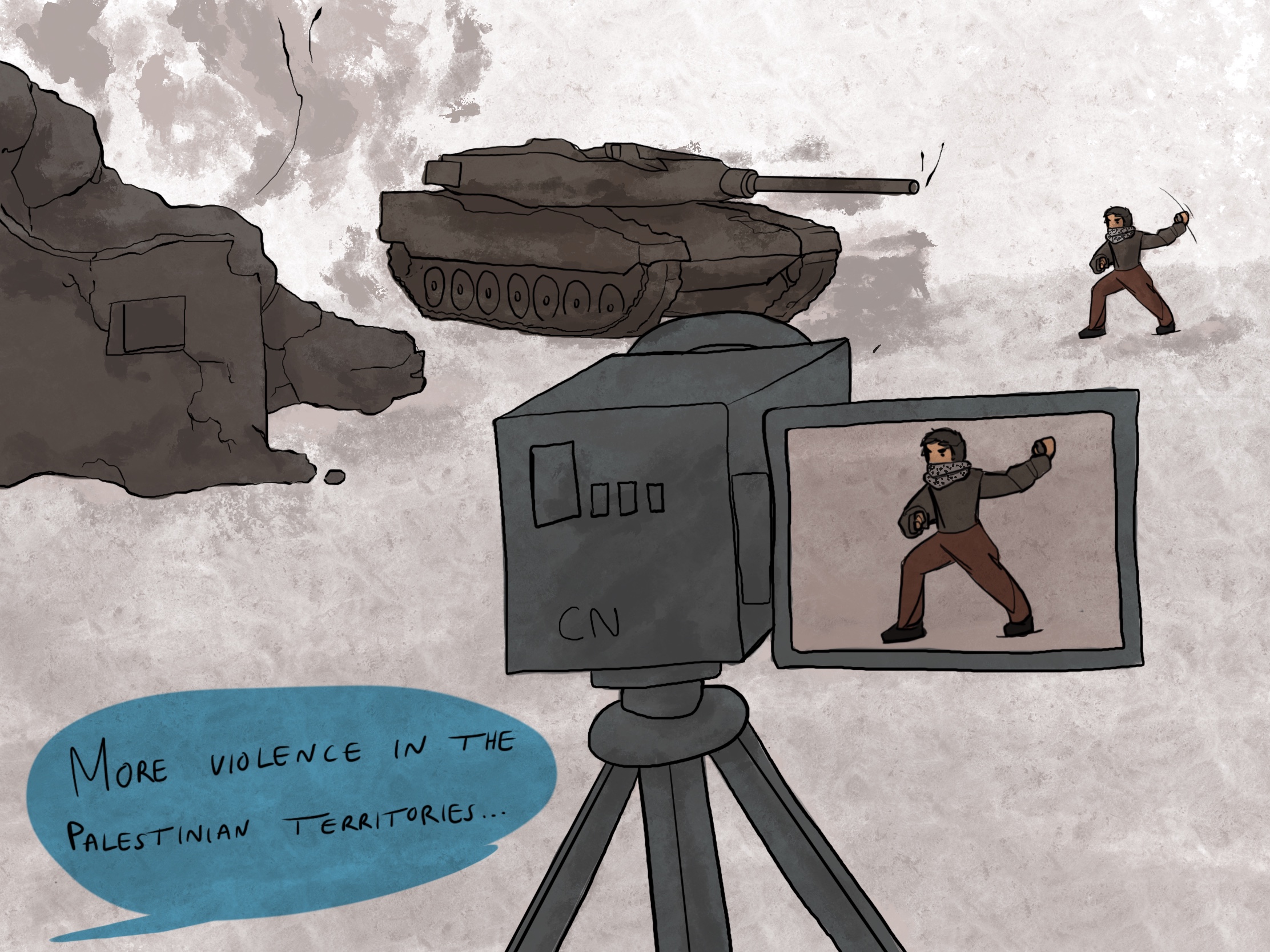
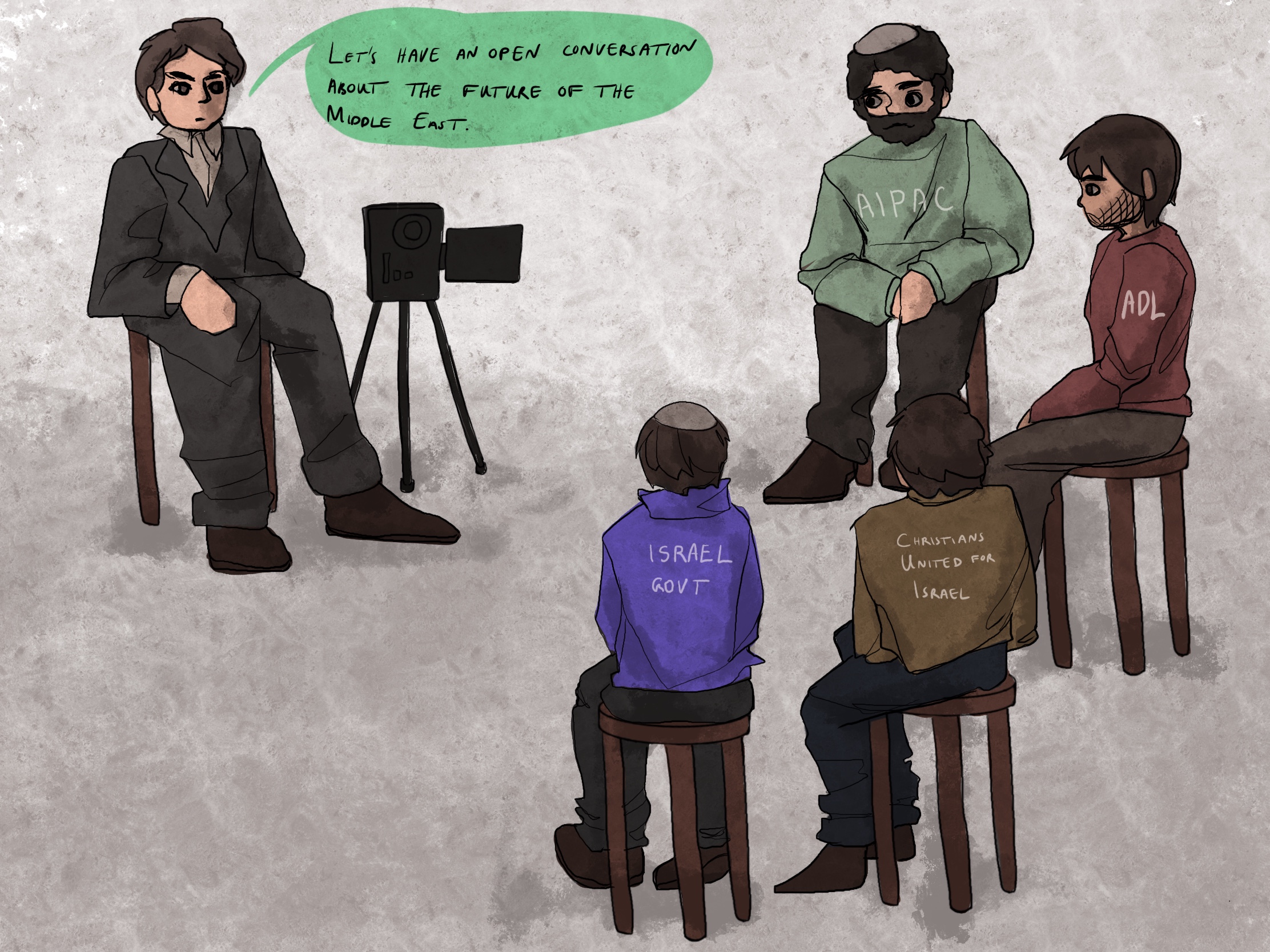
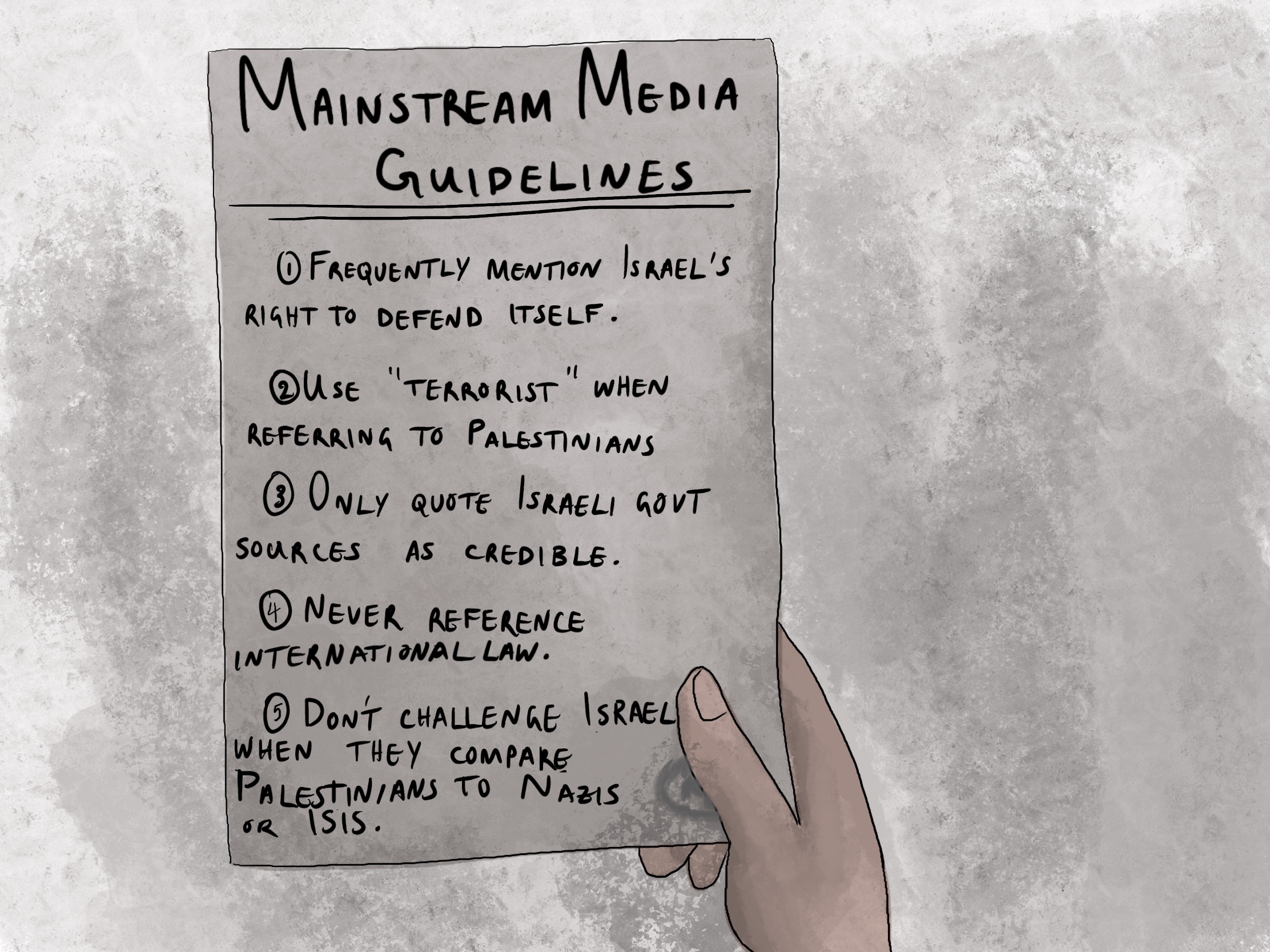
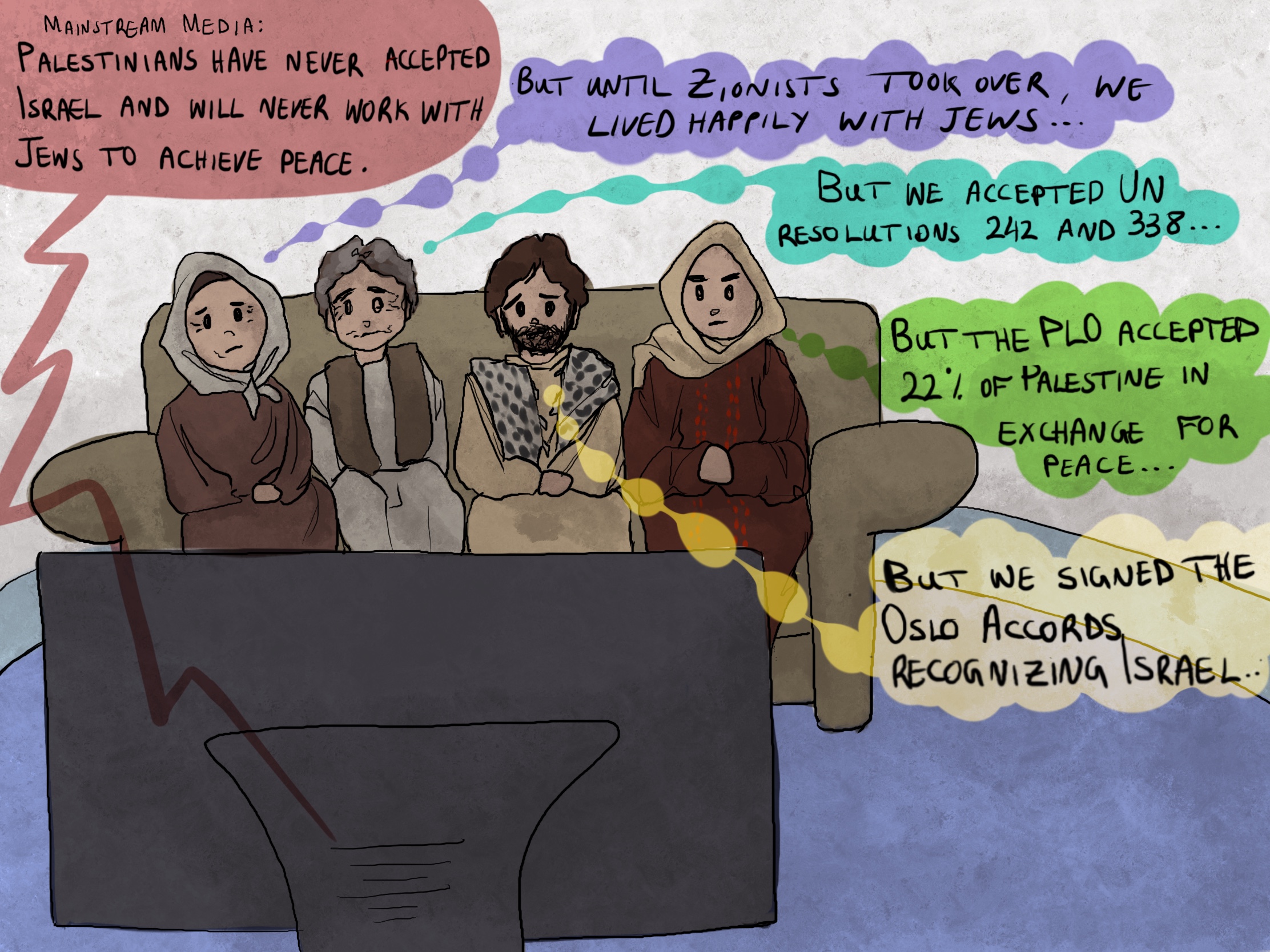
How to justify the genocide of Palestinians in 14 easy steps: A graphical guide

April 25, 2024 by Nora Lester Murad

This comics-based opinion was co-authored with artist Maryam Aswad and published by The New Arab.

Step 1: Erase history. Bury any fair and accurate analysis of how today’s violence came to be.

Step 2: Remove all context. Always depict Palestinians as the aggressors. Blame Palestinians for their own oppression.

Step 3: Monopolise the media. Discredit Palestinians and normalise their exclusion – including by threatening, firing, or even killing them.

Step 4: Dehumanise Palestinians. Use words that play into pre-existing anti-Palestinian, anti-Arab, and anti-Muslim stereotypes.

Step 5: Misinform the public with boldface lies.

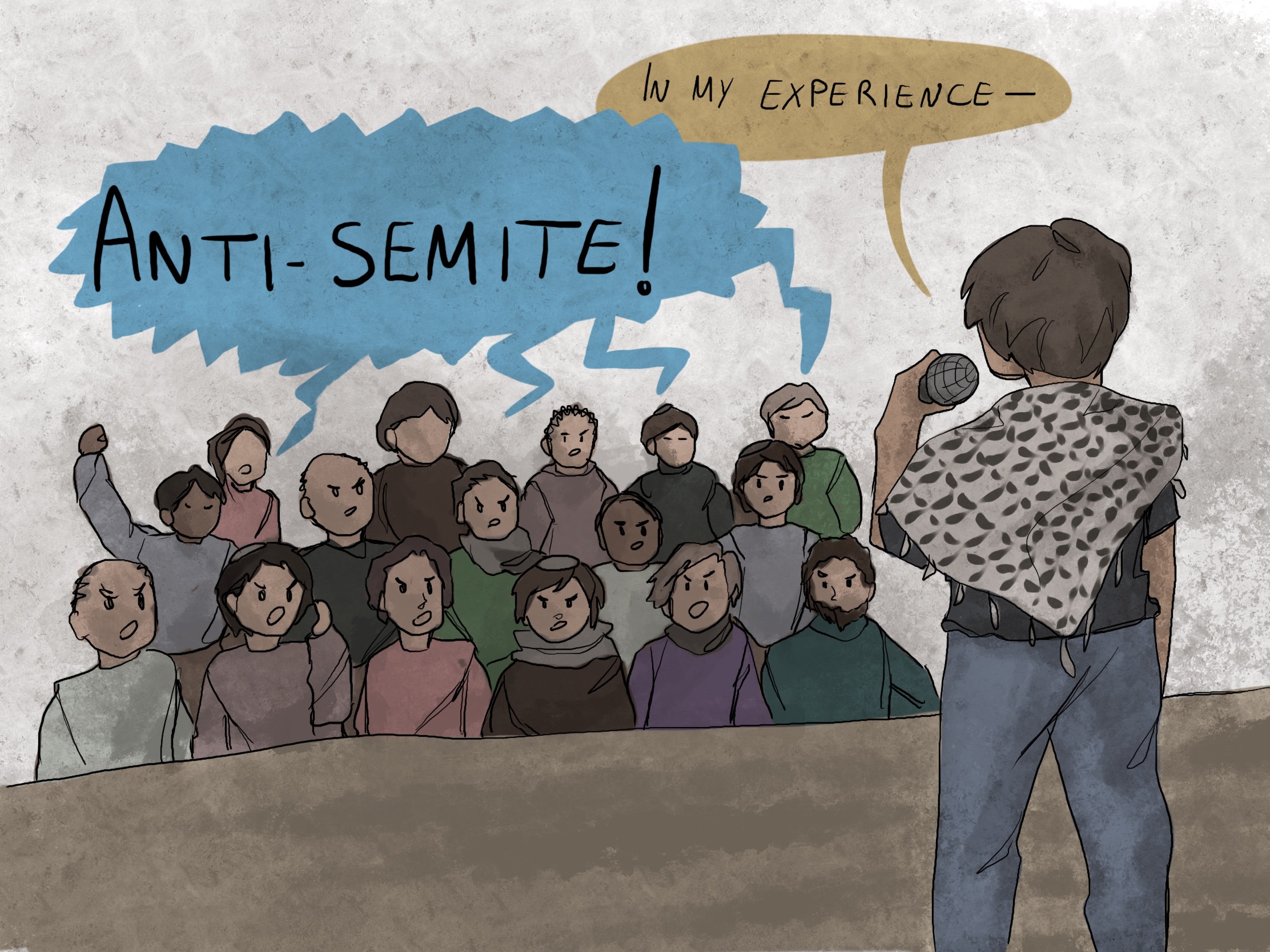
Step 6: Weaponise antisemitism. Accuse any Palestinian who tries to tell their story of hating Jews.

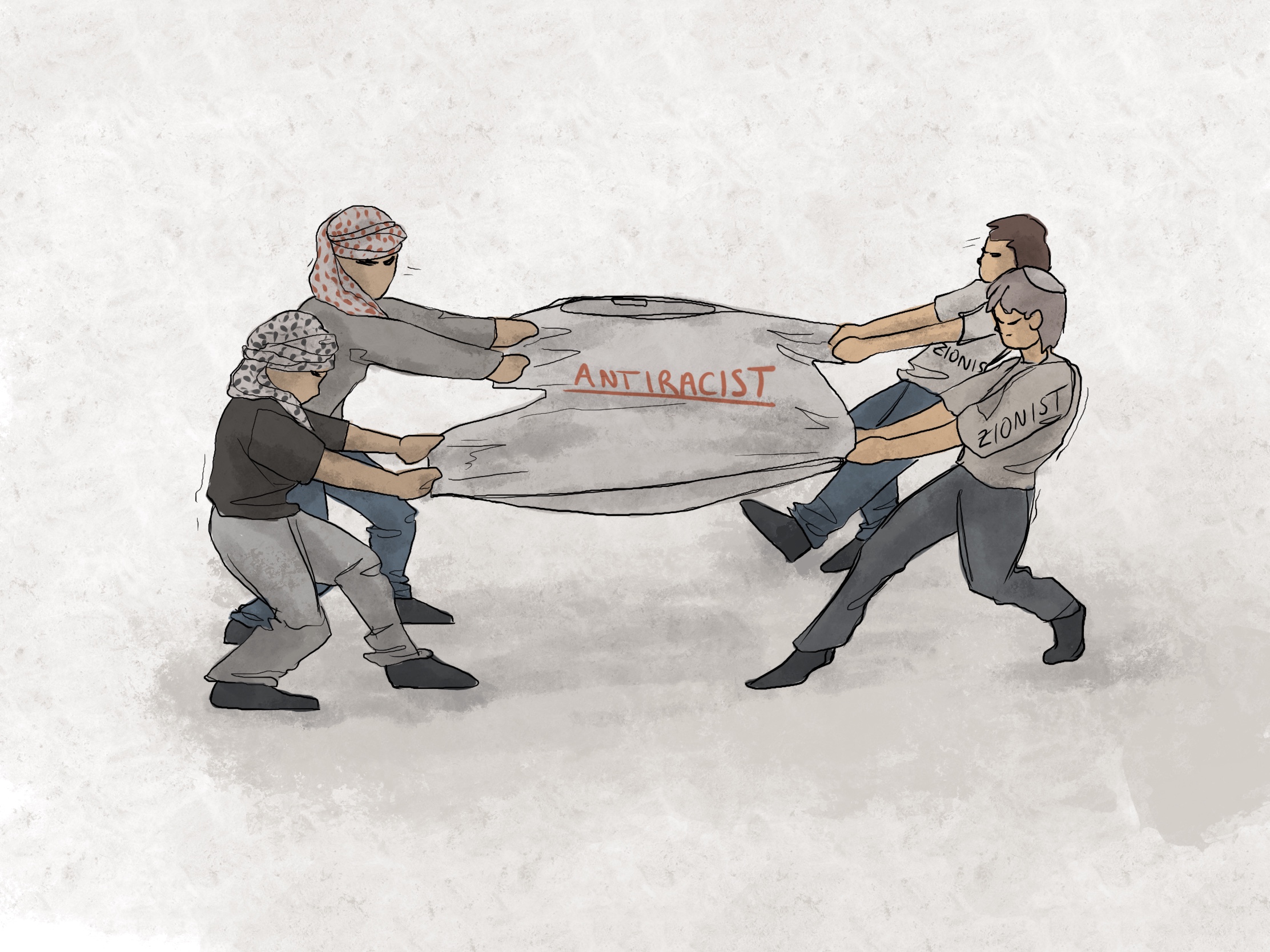
Step 7: Co-opt liberal and antiracist language so you appear to be the good guys.

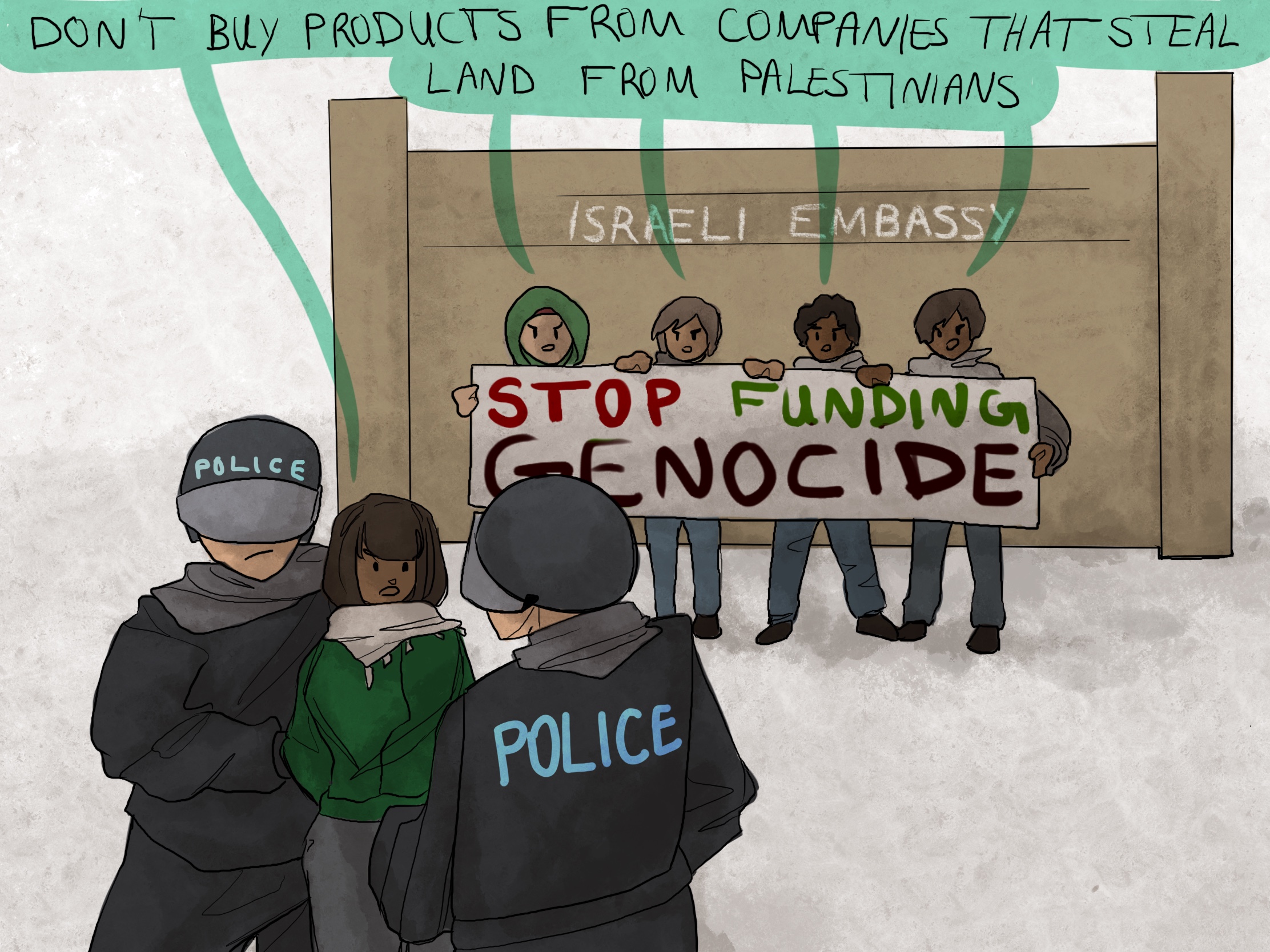
Step 8: Criminalise liberation activities. Punish all Palestinian efforts to claim their rights, including by non-violent means.

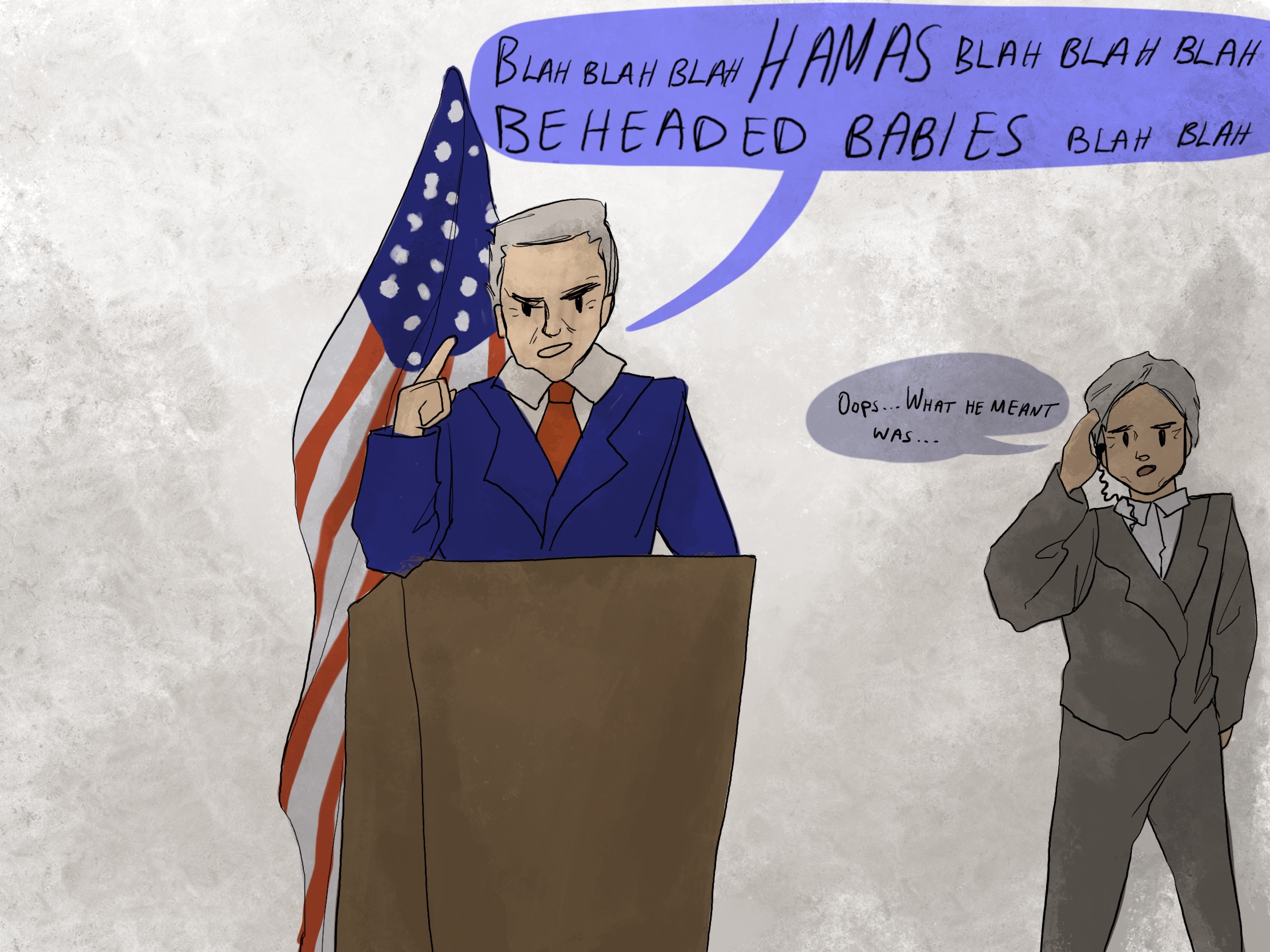
Step 9: Repeat sensational Israeli claims without investigating in order to elevate emotion over rationality.

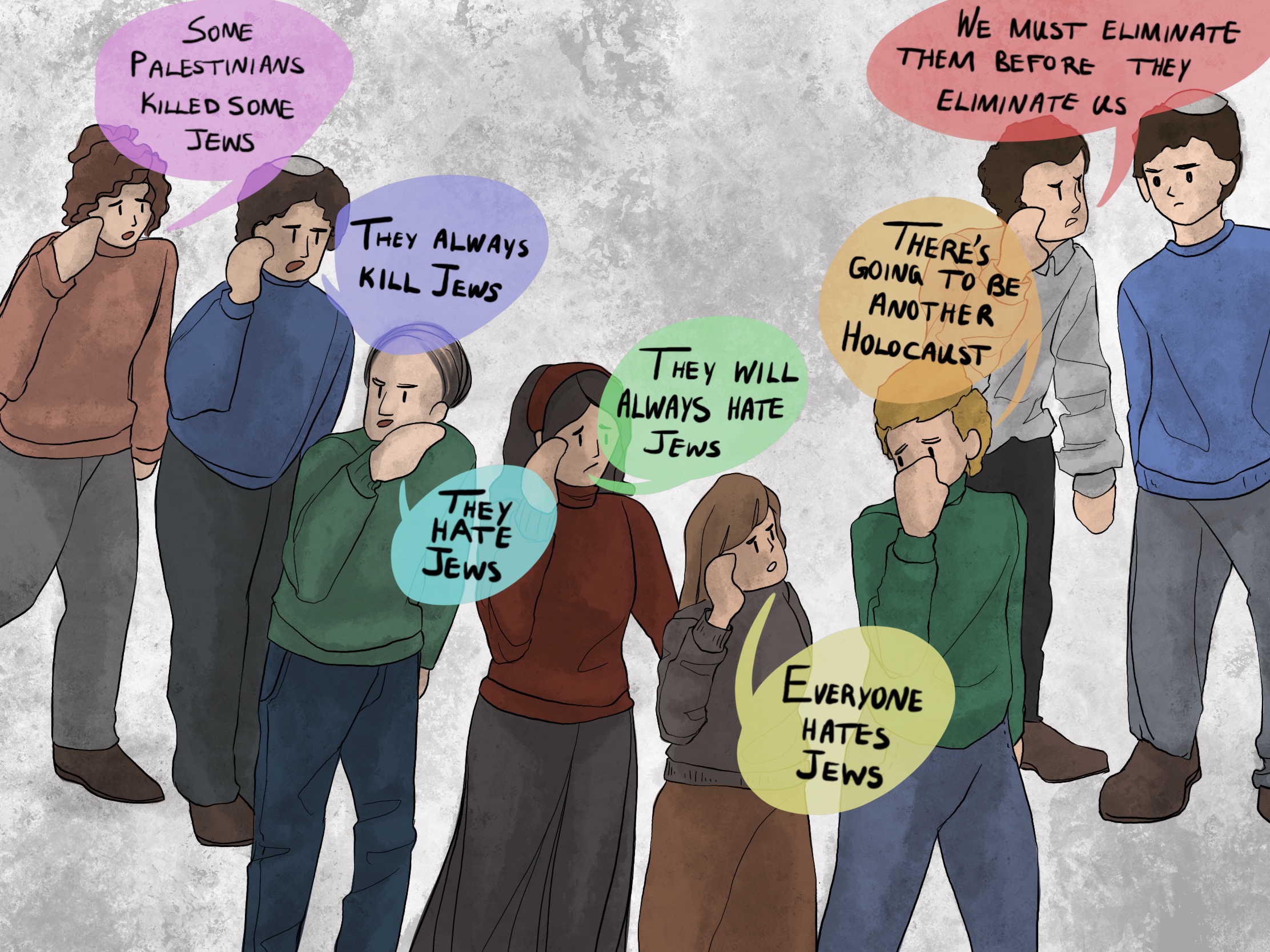
Step 10: Market trauma. Remind Jews of horrible things that have happened in the past so they’ll be scared of peace with Palestinians.

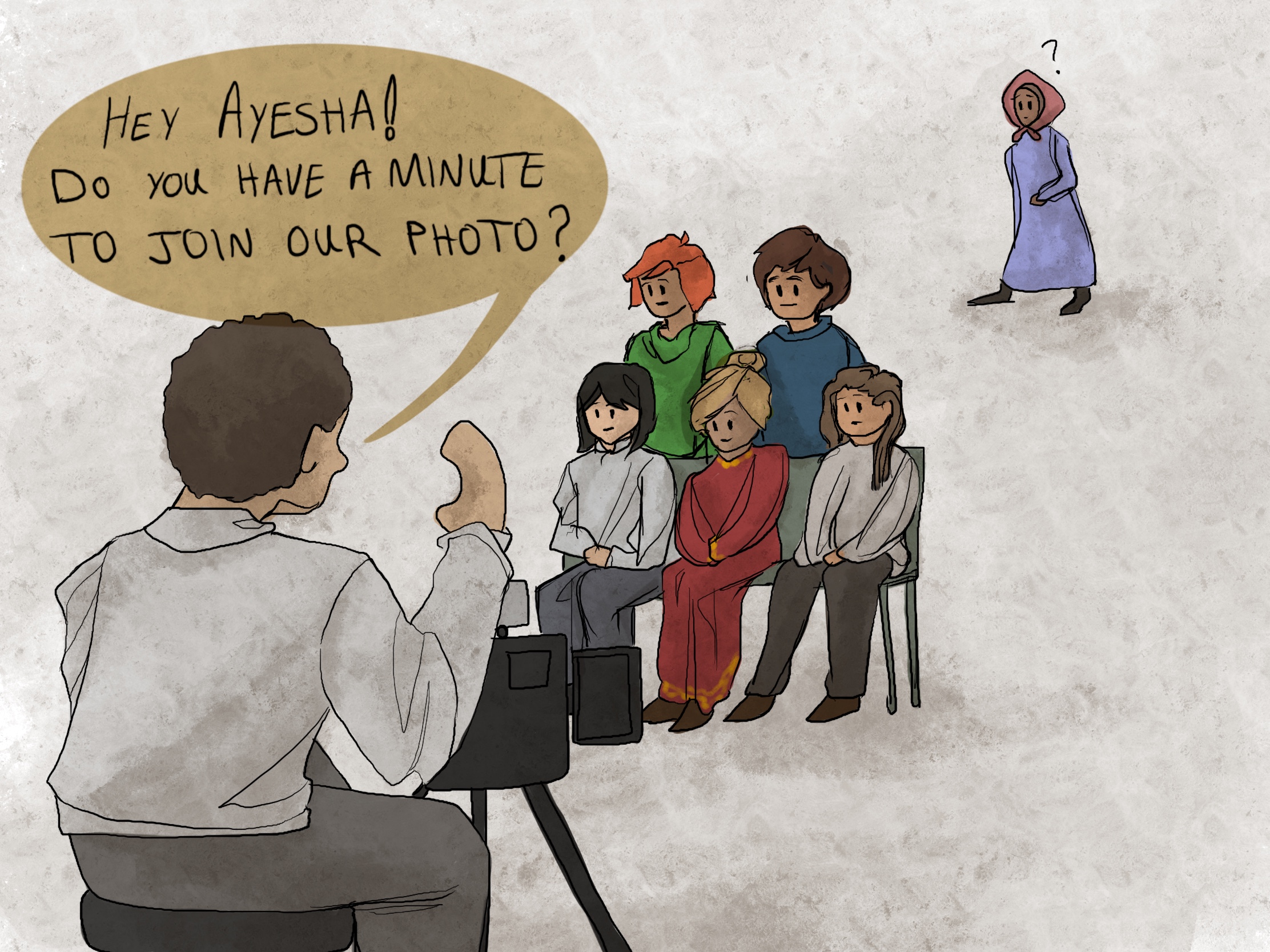
Step 11: Make token gestures to trick people into thinking there is progress towards respect and equality while you protect the status quo.

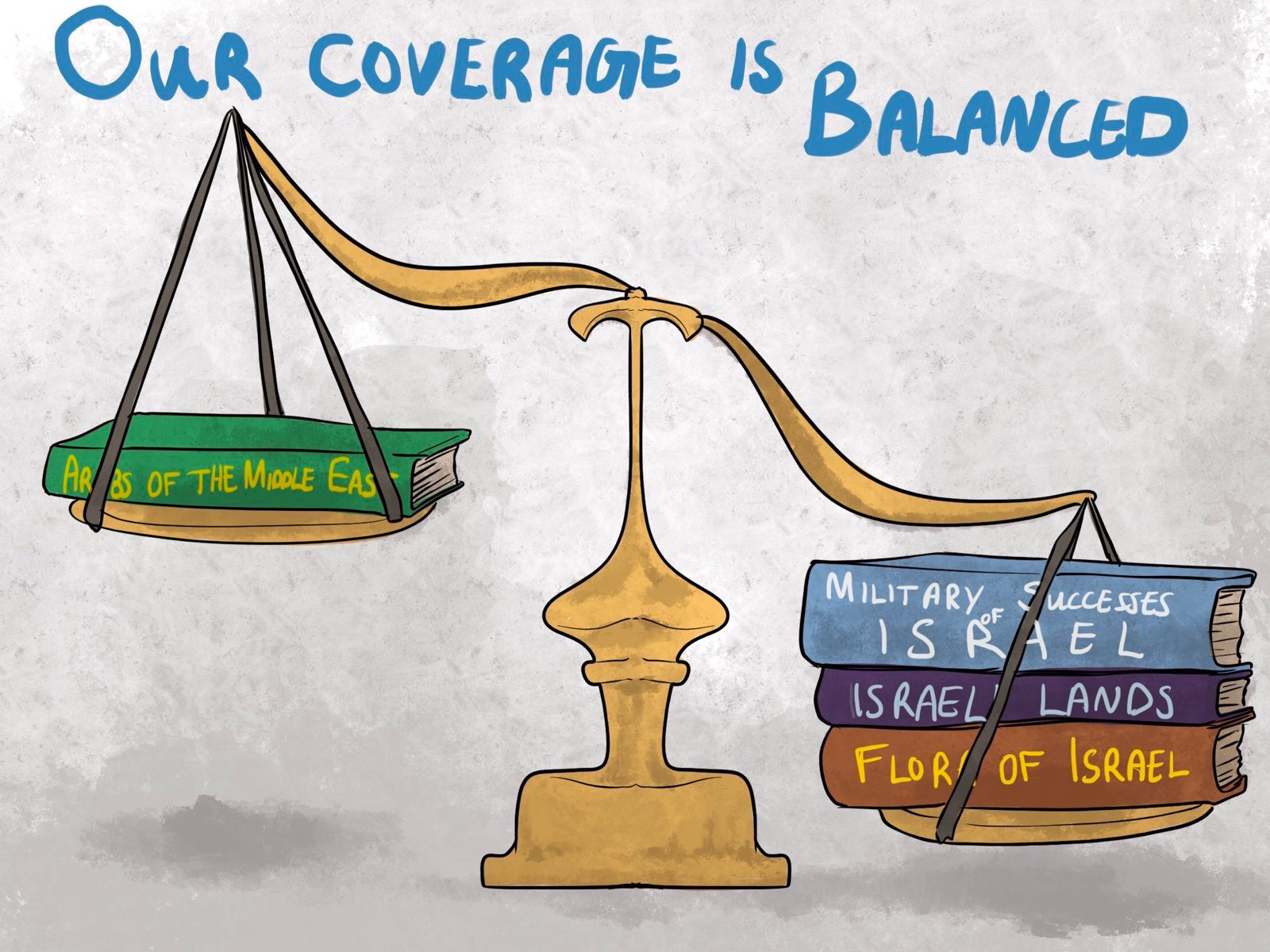
Step 12: Throughout it all, pretend you are being balanced and fair.

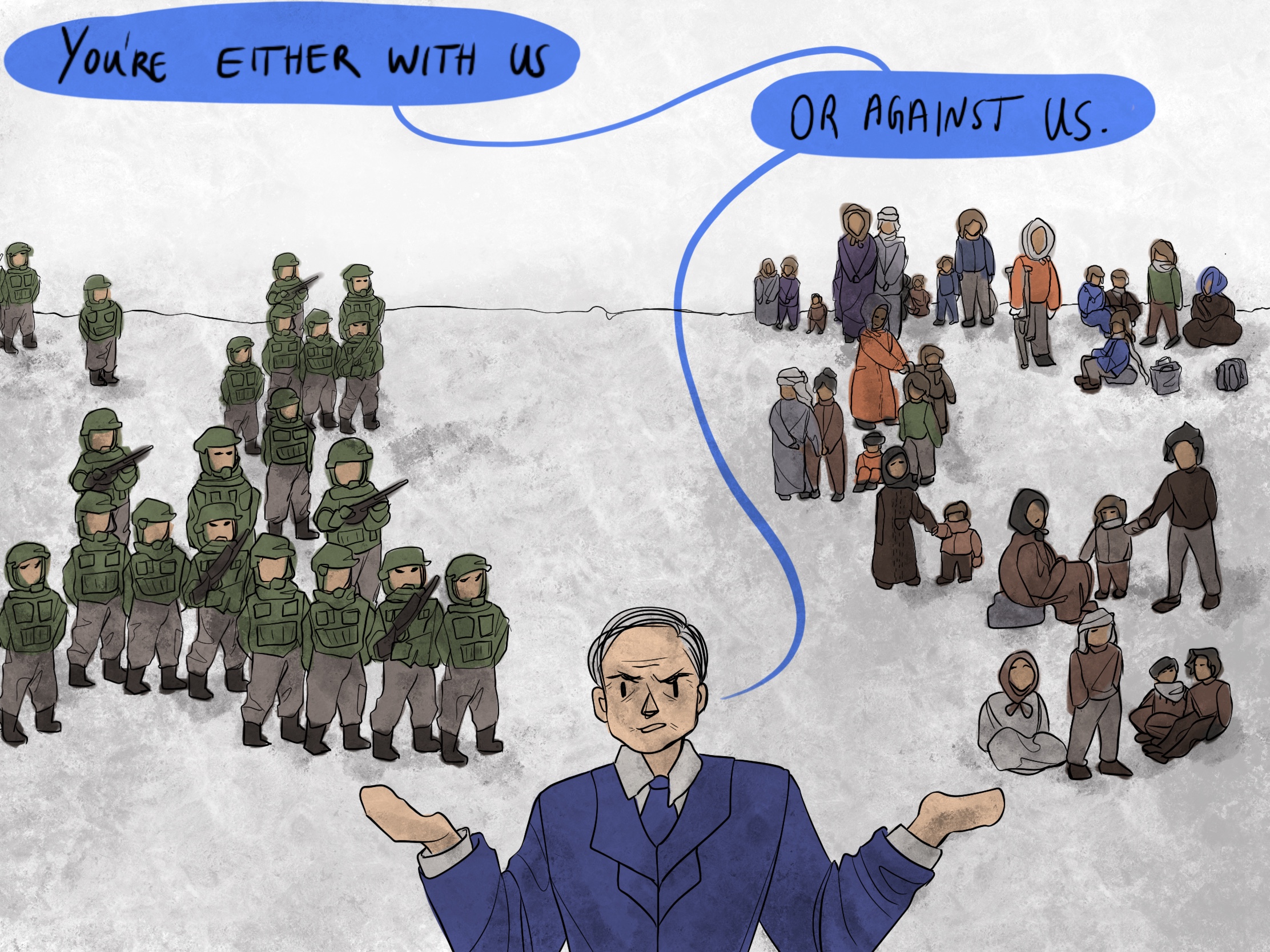
Step 13: Manipulate people into choosing sides as if well-being is mutually exclusive. Hide the fact that a just, political solution will uplift everyone’s rights, security, and dignity, and it offers the only sustainable future.

Step Fourteen: Rinse and repeat

Nora Lester Murad is a writer, educator, and activist. Her young adult novel, Ida in the Middle, won the 2023 Arab American Book Award, the 2024 Middle East Book Award, a Skipping Stones Honor Award, and was a finalist for the 2024 Jane Addams Peace Association Children’s Book Award. She is a Policy Member of Al-Shabaka: The Palestinian Policy Network and supports many social justice issues. From a Jewish family, Nora raised three daughters in the West Bank with her Palestinian husband. She now lives in Massachusetts and can be reached through her blog at www.NoraLesterMurad.com

Follow Nora on X: @NoraInPalestine and Instagram: @nora_lester_murad

Maryam Aswad is an Iraqi-Canadian student, teacher, artist, and mathematician at the University of New Hampshire. She grew up first in a war-torn Iraq, then as part of a diverse refugee community in the UAE, and finally immigrated to Canada in high school. Maryam hopes to use her journeyed perspective to view and illustrate the world with both logic and compassion.

Follow Maryam on Instagram: @meryemaswad

Unleashing Abolitionist Logic on International Aid

April 25, 2024 by Nora Lester Murad

Abstract: “The abolitionist thinking, proliferated particularly by U.S. Black feminist radicals in the wake of the police murder of George Floyd in 2020, exposed police reformism as liberal subterfuge facilitating the expansion of the carceral state. This article utilizes the relationship between police reform and abolition as a prism through which to look at international development aid. If international aid is thought of as a reform effort serving the interests of colonialism, what is the abolitionist approach to international development? This commentary suggests that abolitionist logic grounded in the US-based movement for Black lives can expose international aid reform as a neoliberal tool and simultaneously unmask the potential for a radical vision of development based in a commitment to liberation rather than white/western/northern supremacy. Keywords: abolition, police reform, international development, international aid, colonialism, decolonization, mutual aid, redistribution, reparations.”

This is one of my stranger articles. Writing it made my head hurt! It was informed by my years as an aid accountability activist in Palestine and my experience organizing with the DefundThePolice movement. Read my article in the journal, Decolonial Subversions, main issue, 2023.

Reflections on Gaza: The Day After

March 22, 2024 by Nora Lester Murad

This article was originally published on on January 3, 2024 in American for Middle East Understanding’s The Link (scroll down or download issue).

“There won’t be a ‘day after’ this genocide,” a friend in Nablus tells me on Signal. “The bombing may stop, but the project to erase Palestinians will persist in one form or another until Israel either wins or loses.”

True. We are in an existential fight against White Empire, and it won’t end just because Israel needs a bathroom break. 

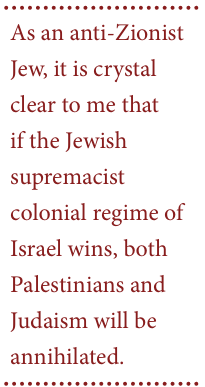
As an anti-Zionist Jew, it is crystal clear to me that if the Jewish supremacist colonial regime of Israel wins, both Palestinians and Judaism will be annihilated. Since I married a Palestinian and have Palestinian daughters, my mama bear energy is fully invested in the scenario where we all live together in equality with dignity, rights, and security for all.

But first, we must stop this goddamned genocide. 

Like everyone, I’m running 24/7 with the heavy, sharp pieces of my broken soul dragging behind. Contemplating the “day after” feels like a Herculean task of acumen at a time when I can barely fathom reality.

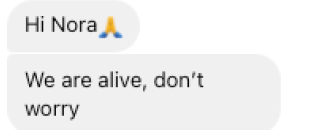
Today, a friend in Rafah texted me on WhatsApp that he was depressed. What could I say? I replied, 

Coming from someone who takes a hot shower every day, it sounds ridiculous. If I see him again when this is over, how will I look him in the eyes? I am overcome with shame about my powerlessness while he literally protects his small children with his body.

Yesterday another friend called me on Messenger from Khan Younis, chaos in the background. His daughter said, “Auntie, please tell Baba not to make us walk to Rafah.” My friend explained they are being forced to move from their shelter. He can’t afford a donkey cart, so the family of eight would have to go on foot, carrying whatever belongings they have left. 

I didn’t know what to say.

Before this genocide, I stood on one side of a huge chasm. On my side were people who cared about houselessness, mass incarceration, discrimination, censorship. But many of those people have since planted “I Stand with Israel” signs on their lawns. I am dumbfounded! How can intelligent, decent people argue against a ceasefire? If it was wrong for 1,200 people to be killed, then isn’t it also wrong to kill 25,000? 

How will I continue to work for social justice when I have lost faith in people?

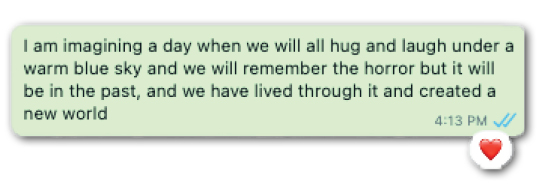
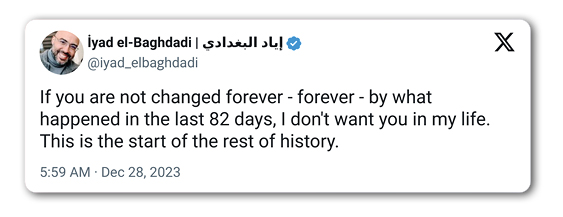
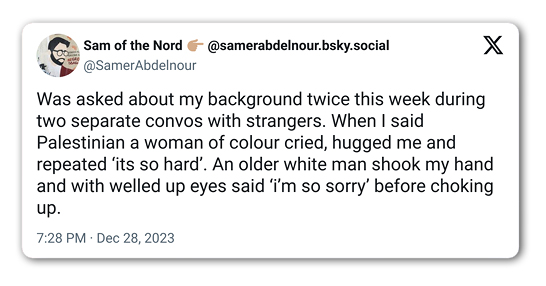
Yet there are people who care:

When I read this tweet to my grownup daughter, her response surprised me. “What the fuck is the point of apologizing?” she erupted. “Palestinians never asked for pity.” 

But I am sorry, I tell her. I’m so sorry. I’m so very, very sorry.

She says that like the woman of color in Samer’s tweet, my pain is from empathy not sympathy. “It’s happening to you too, mama,” she consoles, and I am momentarily relieved. But seconds later, an old colleague sends me photos of the shelter in Nuseirat camp. Feces is everywhere, and there is no water to clean up. How can I face her on the “day after” when all I have are empty platitudes like “May God protect you and keep you?”

My daughter reminds me that faith is inextricably ingrained into the Arabic language. The culture of collective care is upheld in every phrase. The idioms and invocations are not platitudes, she explains patiently. They manifest our hopes for others. The obligatory response, which is nearly always “praise to God,” shows how gratitude breeds strength. “Even during a genocide, every hard day lived is a privilege,” she tells me.

“Never hesitate to look them in the eye and reassure them, even though their wellbeing and liberation are not in your hands,” she says.

I nod, and I’m sure she feels my commitment across the long-distance phone line.

Because no matter what I do or don’t do, on the “day after,” whenever it comes, Palestinian steadfastness will be stronger than ever. And if my faith falters, my friends in Gaza will reassure me.

Anas Abu Jamous is 10-years old and Paralyzed

February 4, 2024 by Nora Lester Murad

It’s hard to visit the Gaza Strip and not fall in love with the people. Sadly, very few people get the opportunity to visit. Israel has controlled the checkpoints with a heavy hand since they imposed a siege and blockade in 2007. They only approve a small number of permits to enter and exit, and only for very specific and self-interested reasons. 

I was extremely fortunate to get consultancy jobs that took me to Gaza several times. I used those opportunities to develop a now-defunct project called Aid Watch Palestine–perhaps the most exciting grassroots advocacy I’ve ever gotten to work on. Community members learned how the international aid system constrained their lives (in addition to the Israeli occupation), and they took action to claim their rights from international donors.

In 2015, on one of these trips, I met the Abu Jamous family in Khuzaa near Khan Younis. Marwan and Hanady’s  family was one among thousands whose homes were destroyed in the 2014 Israeli attack on Gaza and who were poorly served by the international humanitarian response. I wrote an article about their experience to bring attention to the problem. They were also represented in my photo essay of 2016. 

I stayed in touch with the family over the years, celebrating the birth of each new child, fretting about their many health crises, following their creative efforts to take care of one another despite having insufficient resources. In 2017, I wrote another article describing the family’s unacceptable living situation resulting from the ongoing blockade and the lack of proper help. Also in 2017, Hanady’s brother helped my group create a powerful, short video infographic showing that the only way to genuinely help Palestinians in Gaza is not to provide humanitarian aid, but to end the Israeli blockade. 

I stayed in touch with Fathi too, congratulating him when he married and had a son, and stressing when he decided to smuggle himself out of Gaza with the intention of reaching Lesbos for asylum. It was harrowing and dangerous but ultimately successful, and that’s how Fathi found himself outside of Gaza on October 7th. Marwan was also outside of Gaza on October 7th, getting much-needed medical care in the West Bank. When the bombs started falling, the women of the family bore the brunt, trying to protect themselves and their children, even though there was and still is no place that is safe from Israel’s indiscriminate violence. (Marwan was abducted by the Israelis from the hospital in Nablus and thrown back in Gaza in the midst of the bombing. He’s now with the family but sick, having not completed his medical procedure.)

I had hoped my friends in the Abu Jamous family would at least be spared from the worst of the violence, but they weren’t. With much difficulty, the family of 36 people (Marwan’s family and Fathi’s family, including all their brothers and sisters and their spouses and children and parents) were finally able to escape Khan Younis to go to Rafah. Although it was supposedly (but not really) safer, Israeli soldiers confiscated all their belongings at the checkpoint entering Rafah, and they started shooting randomly.

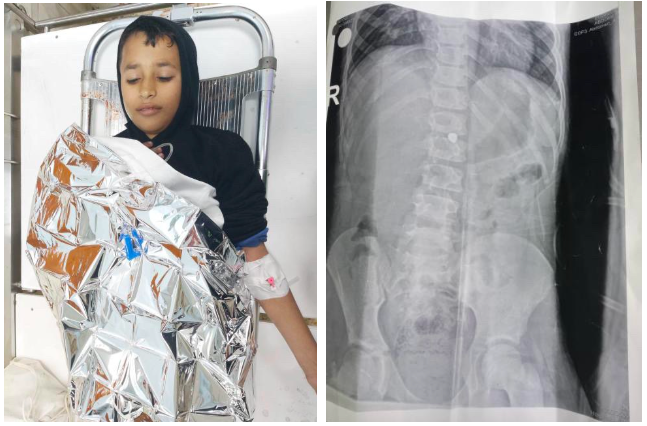
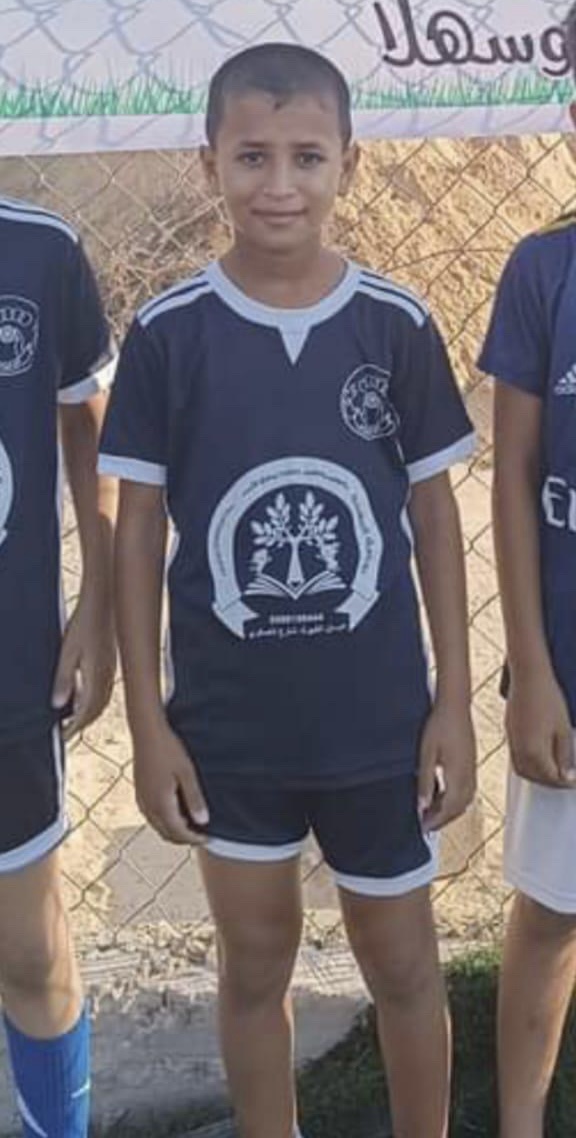
Fathi’s 10-year-old nephew Anas was shot in the back by Israeli soldiers.

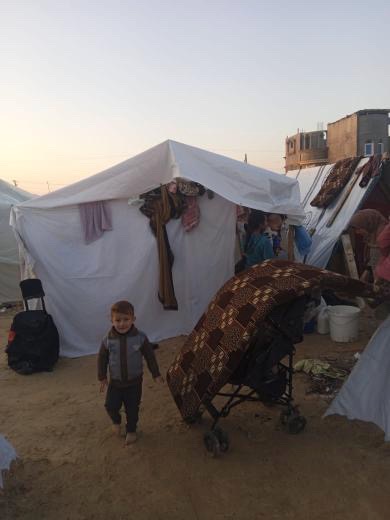
Anas went back to Khan Younis with his father to the European hospital while the rest of the family moved forward, setting up three tents between Khan Younis and Rafah – one for the many men of the extended family, one for the women, and one for the children. Anas got x-rays that confirmed the bullet was lodged in his spine. My friend in Boston, a prestigious spine surgeon, reviewed the images and said that Anas needed surgery immediately. He needed to be moved out of Gaza, but not on a commercial flight. His spinal fluid needed to be monitored. He needed to be catheterized. He had to be moved carefully to preserve the possibility that paralysis might be avoided, and he needed the bullet removed to avoid lead poisoning.

Naive me got to work trying to get Anas moved to another country for treatment. A pediatrician friend liaised with the doctors at the European Hospital who explained that Anas had been put on a list. The Israelis would need to approve his transfer. Visas would need to be secured. A foreign hospital would need to admit him. Funds would need to be raised. And more relevant – there were thousands on the list before Anas.

Fathi told me that the hospital was releasing Anas back to his family, back to the tent where he would sleep on the wet ground. There was no point in keeping him in the hospital since they didn’t have the material or tools to treat him. They don’t even have paid medication to treat the poor kid; he cries constantly from the unbearable pain.

As of this morning, though, Anas is still in the hospital in Khan Younis. When they ultimately ask him to leave, he will return to a family that has no shelter, insufficient food and water, no access to medications, no money for diapers, and no prospects – because Israel continues to deny these basic rights, even while they continue bombing, despite the warnings of the International Court of Justice.

No child should be shot. Anas was shot in the back! He was shot by Israel while following Israeli orders to move to Rafah!! Anas was learning to play soccer. Anas loved playing soccer.

If you would like to help Anas and his family, please contact me at nora@noralestemurad.com. I have a secure way of getting money to them that is still working. It won’t help Anas walk, and it won’t make the family safe from the ongoing genocide, but it may in some small way lift the family’s spirits to know that we care and we wish them the best.

Even if you can’t help Anas, PLEASE help stop the violence in Israel/Palestine by calling on the your governmental representatives to demand their constructive intervention. If you live in the United States, tell your senators and congressional representative to call for: an immediate, sustainable ceasefire; release of all captives in Israel and Gaza; Israeli facilitation of humanitarian aid, including medical; resumption and expansion of US aid to UNRWA; an end to US weapons transfers to Israel until they comply with all international law; facilitation of accountability for Israeli war crimes and crimes against humanity; accountability for US complicity in Israelis violations of Palestinian rights; an end to the siege on Gaza; an end to the occupation and colonization of Palestine; and a just political solution that respects the rights, dignity, security of everyone. (Here is a tool and here is another tool that will help you make those calls and send emails. Please call EVERY SINGLE DAY!)

UPDATE! Anas and his mother and siblings (not his father) have been evacuated to Cairo where he is being evaluated by a doctor! This is absolutely miraculous! Of course the road ahead will be painful and costly, and his family continues to need as much support as they can get.

ANOTHER UPDATE! Marwan’s father and nephew were hit by a bomb strike. Marwan’s father lost both his legs and died two days later. The nephew lost an eye, but I don’t know if he lived. I can’t reach the family.

OPINION: Uplifting Palestinian American students makes everyone safer (Hechinger Report)

November 2, 2023 by Nora Lester Murad

This article was original published in The Hechinger Report.

In Newton, the liberal suburb of Boston where I live, parents of Palestinian, Arab and Muslim children gather weekly to discuss our concerns about how schools are responding to events in Israel/Palestine. We come together to find community and safety amid escalating hostility toward us because of a crisis we did not create and do not condone.

Schools should support the well-being of all students equally. They should help children develop a healthy sense of identity and belonging, encourage curiosity about divergent perspectives and teach the skills needed to constructively address conflict. Unfortunately, we feel that Newton schools, like others throughout the United States, not only fall short, but are complicit in perpetuating divisive anti-Arab and anti-Muslim sentiment — and their complicity is not new.

When 9/11 happened, my oldest daughter was in school in Newton. The principal took great pains to tell the children that they and their families were safe. But it felt like she was only considering the white kids, oblivious to how others, especially Muslims, would increasingly be subject to suspicion. My daughter, just 5 at the time, got the message at school that being a Muslim Arab was something “different” and to be ashamed of.

Schools should support the well-being of all students. They should help children develop a healthy sense of identity and belonging, encourage curiosity about divergent perspectives and teach the skills needed to constructively address conflict.

Seeing the writing on the wall, our mixed American Jewish-Palestinian Muslim family relocated to Jerusalem so the kids could find pride in their culture. When we returned to Newton 13 years later, our youngest daughter found friends here, most of whom were Jewish. But the kids worried they would be ostracized if they spoke about Palestine at school, and when my daughter raised concerns about censorship with school staff, they dismissed it as a simple misunderstanding. She decided to leave the district and graduate from a school where kids from marginalized backgrounds were believed when they talked about their own life experiences.

Related: OPINION: Palestinian American educators deserve support from their peers

One year later, during the 2021 Israeli attack on Gaza, a teacher was dismissed from that same Newton school for writing a pro-Palestinian (not anti-Israel or anti-Jewish) statement on a white board. While we do not know enough about what happened in the classroom to determine if the termination was justified, the principal’s explanation to the community was definitely not appropriate. He wrote that “our students” had been put in an emotionally vulnerable position – but he certainly wasn’t talking about the district’s Palestinian students. My daughter read the letter and said it felt like being told that “others need to heal from your existence.”      

Now, in 2023, everything is exponentially worse.

In the last three weeks in Newton, as in other cities, the superintendent, school principals, PTO groups and a local antiracism group issued statements about the current violence. A few expressed compassion for all those affected by events in the Middle East. But those messages were quickly walked back under pressure and revised to clarify solidarity only with Israelis. To us, it felt as if our city was condoning the killing of innocent Palestinian civilians.

If teachers and students are too frightened to learn about Arabs and Muslims and too uncomfortable to discuss the role the U.S. plays in international affairs, how can schools help kids become informed, global citizens?

References to the historical context, including 75 years of Israeli expulsion, colonization and occupation of Palestine, were absent. Uninformed people were left to misunderstand that the deplorable violence against Israeli civilians on October 7th was motivated solely by some kind of innate or religious hatred of Jews.

False accusations of antisemitism make Arabs and Muslims targets, threatening their children’s safety, both inside and outside of schools. A six-year-old Palestinian boy was murdered, and his mother seriously injured, by their Chicago landlord who was motivated by anti-Palestinian and anti-Muslim hate, fueled in part by media bias that relies on inflammatory words like “brutal” “and “violent” in relation to Palestinians. In Newton, a Palestinian American mother, who was fearful that flyers of Israeli hostages posted around the city would increase division between Muslims and Jews, removed them with the approval of city hall. She was subsequently doxxed, lost her job and now has police protection because of threats against her family.

Related: COLUMN: No son, war is not necessary

I understand why educators are scared to talk about the Israeli-Palestinian crisis. A few years ago, the Newton school district and several individuals were sued by the pro-Israel group Americans for Peace and Tolerance, which falsely asserted that the district’s instruction on Islam, the Middle East and Palestinians was antisemitic. Teaching accurate, nuanced history and providing unbiased context about the Israeli-Palestinian crisis has become dangerous for educators, not unlike the dangers they face from anti-critical race theory forces who seek to limit learning about the role of colonialism and slavery in U.S. history.

Unfortunately, that fear has led schools to avoid teaching about Palestinian experiences and narratives. To us, this censorship feels very much like blatant anti-Palestinian racism.

But it is not only Palestinian, Arab and Muslim students who suffer when fear and anti-Palestinian racism are normalized. All students do. If teachers and students are too frightened to learn about Arabs and Muslims and too uncomfortable to discuss the role the U.S. plays in international affairs, how can schools help kids become informed, global citizens?

The consequences of having an uninformed citizenry are dire. Without quality, unbiased information and antiracist education, U.S. citizens are less likely to support rational, humane policies and more likely to acquiesce to violent ones. As I write right now, Palestinian children are being killed in Gaza and Israeli hostages remain captive.

For all these reasons, Palestinian, Arab, Muslim and allied parents will continue to meet to support one another and the rights of all children. We will continue the important but often exhausting work of advocating for the recognition of Palestinian humanity in our schools and in Gaza and the West Bank. Only when U.S. educators stand bravely to uplift everyone – including Palestinians – can our schools ethically and credibly teach the next generation how to pursue justice and peace.

On the 7th day of the 2023 War…

October 14, 2023 by Nora Lester Murad

I’ve succumbed to my current irrelevance in the big project of peace with justice in Israel/Palestine. Please don’t email or text me messages telling me I’m a good person. I don’t feel bad about myself–I feel bad about the world. Even though I genuinely believe that crisis offers the most fertile opportunity for meaningful change in the mainstream narrative that constraints people’s understanding, I simply can’t make a dent there. Fortunately, there are those with the brilliance and the platform to make a difference. Follow these brave human beings:

https://www.instagram.com/motaz_azaiza/reels/

https://www.instagram.com/byplestia/reels/

https://www.instagram.com/wissamgaza/reels/

https://www.instagram.com/wizard_bisan1/reels/

https://www.instagram.com/ahmedhijazee/reels/

https://www.instagram.com/hindkhoudary/reels/

https://www.instagram.com/joegaza93/reels/

https://www.instagram.com/nouralsaqa/reels/

https://www.instagram.com/ajplus/reels/

https://twitter.com/m7mdkurd
https://twitter.com/PeterBeinart
https://twitter.com/iyad_elbaghdadi
https://twitter.com/theIMEU
https://twitter.com/palyouthmvmt
https://twitter.com/DecolonizePS
https://twitter.com/IfNotNowOrg

My niche now is smaller, but also important. To those of you who are only connected to the Middle East through me, I’m sorry I’ve been silent this week, leaving you to try to make sense of the senseless with few resources beyond the racist and distorted CNN and New York Times. I don’t imagine I can change your minds, but I hope that I can support you in your sincere efforts to learn, and I hope that by sharing my perspective and my anguish, we can at least stay in relationship. Or, dare I hope, perhaps we can work together to demand that world leaders end oppression and war?

-Nora

This video is long (26:42) and probably not interesting for those of you who are well informed about the Palestinian experience in Gaza, but I’m sharing my perspective nonetheless and welcome comments:

Some Articles I’ve Written Over the Years about Gaza
It’s 2020. Does the United Nations Care about Gaza? (September 6, 2020)

What Do I Say to Abu Fathi? (May 25, 2017)

Come With Me to Gaza (photo essay) (April 23, 2016)

One Year After Ceasefire, ‘Temporary’ Housing for Gazans Seems to be Permanent 
(August 28, 2015)

My Trip to Gaza 2015 (April10, 2015)

Israel Devastated Gaza, but “Aid” Helps Keep it That Way (April 9, 2015)

Malala, Where is Your Money? (December 16, 2014)

During Gaza, a poem (November 2, 2014)

Rant on Humanitarianism (September 18, 2014)

Guest post: “I thought I was going to die, but it turned out to be my cousin” by Ahmed AlQattawi (September 8, 2014

Guest post: “When the Gaza Sky Burst into Flames” by Mahmoud Khalaf (August 2, 2014)

US Complicity in Israel’s Attack on Gaza (July 11, 2014)

Gaza Under Fire: What Does it Mean for Philanthropy? (July 8, 2014)

B- for my Gaza Birthday Campaign but an A for Effort (July 4, 2014)
With links to tens of videos of interviews with friends in Gaza

How Can You Help?

Every time there’s an attack on Palestine, people ask me where to send donations. This is a wonderful but problematic dynamic. Palestinians need and deserve support, but real solidarity must be more than money. It must also be political. And donations and solidarity must be ongoing, not sporadic, emotional responses. Funding has to go to local organizations, not sent for convenience sake to international agencies that build capacity and credibility at the expense of Palestinian civil society. Also, support has to flow to all Palestinian priorities, not be diverted from Jerusalem or Hebron or Jenin just because Gaza is on the front page.

To explain, and to answer people’s frequent questions, I wrote a book chapter called “Aiding Liberation” (pages 396-409) in Our Vision for Liberation: Engaged Palestinian Leaders and Intellectuals Speak Out edited by Ramzy Baroud & Ilan Pappé. Clarity Press and The European Centre for Palestine Studies, 2022. You can read it at https://www.academia.edu/105722870/_Aiding_Liberation_Book_Chapter.

How to be a friend to a family at risk of demolition?

April 24, 2023 by Nora Lester Murad

Nurredin Amro has been my friend for more than a decade. For the last eight of those years, he has been fighting to protect his home in Jerusalem from demolition by the Israeli authorities.
The Markaz Review has published my photo essay about Nurredin’s experience. Read it here. Please share it widely.

I’ve started a GoFundMe campaign to help raise funds for Nurredin’s legal and other expenses associated with being at risk of demolition. Support it here. Please share it widely.

Also…

It’s extremely helpful if you would contact your own elected officials (in the US, your congresspeople and senators) expressing your outrage and asking them to investigate and report back to you about Nurredin’s case. If you or they need more information, let me know. You may blind copy me if you’re willing so I can keep track of numbers, and if you get any reply, I hope you’ll let me know at nora@noralestermurad.com.

Sample text for you to pull from is below.

To Whom It May Concern,

I’ve become aware that the home of Nurredin Amro and his family in East Jerusalem has been completely surrounded by a wall, severely impeding entry and exit by Nurredin and his brother, both of whom are blind, and inconveniencing the other eight members of their family. Moreover, this escalation comes after eight years of harassment that started when the Amro home was partially demolished in 2015. During that time, many homes on the land between the vegetable market and the valley below the Mount of Olives have been demolished, the residents forced out of the neighborhood, ostensibly so that the Israeli Nature and Parks Authority can build a park.

As a justice-loving global citizen, I am appalled by Israel’s blatant disregard for human rights and morality in this case, and many others in which Palestinians are being forced out of Jerusalem, despite their demonstrated relationship to the land going back generations. East Jerusalem is occupied and forcible transfer within the framework of occupation is a war crime! I therefore call upon you to cease all harassment against the Amro and other families in the Sawanna area and allow them to live in peace and security with dignity.

Please respond to me with confirmation of what you intend to do in Nurredin’s case. I plan to keep members of my community and my elected representatives informed.

Thank you so much. Your support makes a difference. I promise you.

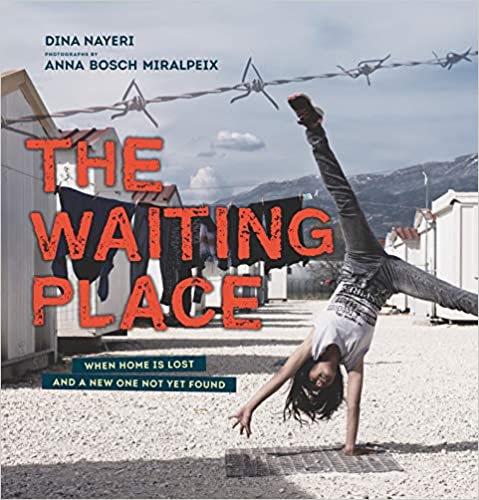
Book Review: The Waiting Place by Dina Nayeri with photos by Anna Bosch Miralpeix

January 20, 2023 by Nora Lester Murad

I received this large, square, hardback book with an eye-catching cover from i’m your neighbor books as part of Multicultural Children’s Book Day 2023. The title, The Waiting Place, lays in bright, red, capital letters over a photo of a scene that one might drive on the way to somewhere else. There’s a child upside down in an impressive cartwheel, evoking childhood joy, next to the incongruous subtitle: “When home is lost and a new one not yet found.” To be honest, the cover and its implications made me want to look away; it took a while for me to open the book.

The Waiting Place is a 64-page book of stunning photographs with limited words. Marketed for 12-17 year olds, The Waiting Place is a must read for everyone, regardless of age. It is compelling and disturbing, as it should be.

There are 82.4 million forcibly displaced people, author Dina Nayeri notes in the afterword. Some of them will experience part of their childhood in refugee camps, as Dina did. They will grow up, become writers and doctors and teachers and programmers. They are our neighbors. This book shows a slice of the experience that some of them have lived.

Nayeri personifies the refugee camp, the waiting place, and it becomes a predator: “At first the Waiting Place welcomes you. It has heard of the wars, the famines and the bombs in your home; it is very sorry. It has been waiting for you.” Then: “Inside its gated mouth is a dreary, lazy encampment where there is nothing to do but drift. Children wait, let time slip away. They forget things: first their sums, street names, their best books. Then beloved faces, stories. The Waiting Place doesn’t mind. It wants more children and mothers and fathers. It doesn’t want you to visit the nearby lake, to hike the frosted mountain, to learn your new language, or to work or build or learn. It craves your hours, weeks, years.”

But Nayeri relieves the reader by interspersing the chilling text with the most mundane, familiar details of life. Brothers fight. Kids make artwork. Families cook. And the photos are not sad. There is adorable, five-year old Matin from Afghanistan making a monster face. His ten-year old sister, Mobina is shown lost in her thoughts, examining a flower, in a field of weeds. Kosar, a Hazara girl from Iran, jumps on her bed in her striped pajamas. The raw description of the place alongside pictures of children being children left me disquieted. I can’t stop staring at the photos, completely taken in by the spirit in these children’s eyes–the same spirit I see in my own children’s eyes. I suppose that’s the point.

Nayeri doesn’t offer a sugar-coated ending because there isn’t one. We don’t know if these specific children are still at Katsikas camp in Greece, and if not, who are the children who might now be living in the lined-up shipping crates that they called home. From my own life advocating for Palestinian rights, I know the only way to process hard truths and still avoid despair is to take action. Candlewick Press offers a discussion guide and there are engagement ideas at https://imyourneighborbooks.org/waiting-place-engage/. 

But for engagement to be anything other than guilt-driven charity, readers of The Waiting Place will need to understand that while refugee camps may feel like perpetrators to children, it is people who continue to cause displacement through decisions that lead to war and other conditions that force people to run from their homes. And it is well-intentioned people like me who too often remain silent and let those bad leaders get away with it. As I recently posted in relation to Palestine, angst is not an act of solidarity. For me to live up to the expectation of this #MustRead book, I will have to take political action. I will have to do my part to influence my own government to stop creating the conditions that lead to the need for refugee camps that steal childhoods.

Later: I keep pondering this book! I’m thinking about Palestinian kids who are born, live and die in refugee camps just waiting. They go to school, waiting. They get married, waiting. They become grandparents, waiting. What’s it like when generations live without a home, without papers, without hope – waiting?

The Waiting Place

Dina Nayeri with photographs by Anna Bosch Miralpeix

Candlewick Press, 2022

978-1-5362-1362-1

“Ida in the Middle” Book Launch at Brookline Booksmith with Areen Bahour

November 23, 2022 by Nora Lester Murad

A lovely conversation with Areen Bahour at Brookline Booksmith on November 16, 2022. We talked about growing up #Palestinian, “Ida in the Middle” and the importance of books about Palestine for both Palestinian and non-Palestinian kids. (1:05)

  • « Previous Page
  • 1
  • 2
  • 3
  • 4
  • …
  • 25
  • Next Page »

Recent Posts

  • Media Coverage of My Lawsuit with Jenan Matari against the Los Angeles Public Library (running list)
  • Children’s Picture Book Review: “Never Again for Anyone”
  • Members of Educators Union Say Its Capitulation to ADL Betrays Workers, Students
  • On Teach Truth Day of Action: The Movement to #TeachTruth Includes Palestine, Too
  • How do we get the ADL out of schools? A conversation with Nora Lester Murad of #DropTheADLfromSchools.

Tweets!

Could not authenticate you.
  • Contact Me
  • About Me
  • Archive
  • Sign up for updates

Copyright © 2026, All rights reserved
Website Maintained by AtefDesign