This story is about my sister-in-law, Juwahir. No, it’s about her car. No, let’s be honest. It’s about me.
It was a struggle to write it.
This Week in Palestine asked for a “positive” story about Palestine for their January issue themed, “The Common Good.” I could not for the life of me think of a single positive thing about Palestine. I went to sleep sure I’d miss the deadline, but I woke up with this fully formed story. It is one of my favorite stories of all time.
You can find the original here on pages 56-60.
**********
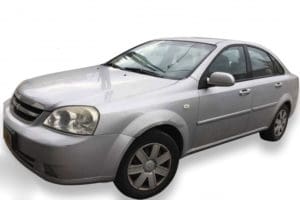
Through the Window of Juwahir’s Old, Gray Chevy
My sister-in-law died at the age of 40 leaving four beautiful children. Breast cancer moved to her lungs, then to her brain, and stole one of the kindest and most humble human beings I’ve ever known. Five years on, there is still a hole in the village in the shape of her life-force.
Her husband gave me Juwahir’s old, gray Chevy and told me to donate payment for it to people in need. I sent it to Syrian refugees in Jordan. I still try to do good in her memory every day. When it’s very hot, my daughters and I pick up old ladies who are burdened by kilos of vegetables balanced in baskets on their heads, or old ladies dragging bushels of wild thyme they harvested in the mountains. We drive them home and they bless us and we feel we’ve honored Juwahir.
But driving Juwahir’s old, gray Chevy through Palestine isn’t always easy. Through her window, I have seen a lot of stupidity.
Just last week I pulled into a parking space marked with the logo of the beauty salon where I had an appointment for an expensive procedure. The doorman came out to tell me to move — it was the private parking space of the owner of the salon. I looked up and down the block and there was no other place to park. I remembered my uncle in the US who had owned a jewelry store where excellent customer service wasn’t a matter of greed, it was a demonstration of integrity. “Are you really sending away a paying customer so you can keep a spot empty for the owner?” I asked incredulous. The man smiled as if to say it wasn’t his fault, but I was tired and stressed and I left in a huff. Yes, I have seen a lot of stupidity through the window of Juwahir’s old, grey Chevy.
But I have also seen decency.
There was a time I stopped at an intersection then inched forward right into a car that was soaring by. The only damage was to the guy’s hub cap, but if I’d hit the body of his car, he might have flipped over. That experience scared the hell out of me and I couldn’t bring myself to drive for weeks. My husband and I often walked passed the guy’s house, and he waved whole-heartedly and invited us in for coffee.
When the car died on my way to an important meeting just before the busy Sharafa Junction in Ramallah, I leaned out of the window and summoned a small group of young men on the sidewalk. They pushed me into a space in front of the bookstore before there was even time for a traffic jam to form. I hailed a taxi and phoned my landlord to ask him to have a mechanic meet me at the car two hours later. But in just 15 minutes he walked into my meeting, took my car keys, supervised the mechanic, and it was all fixed before my meeting finished.
When the car died between two Israeli settlements as I left my friend’s house in Susya in the South Hebron Hills, a man and his wife with what seemed like ten kids in the backseat stopped and filled my radiator with water. They followed me for more than one hour, refilling the radiator every couple of miles, until we reached a military checkpoint they couldn’t cross with their Palestinian license plate. Although I didn’t have his name or mobile number, I believe he was genuine when he yelled from his window, “Call if you need any more help!”
When the car died in Beit Hanina, I went into Ja’afar Supermarket to ask for help and ran into a friend who offered to deliver me to work – on his bicycle! I found a nearby service station, but the mechanic wasn’t yet at work. A neighborhood boy went to wake him up. He arrived soon, coffee in hand, without complaint.
Juwahir’s old, gray Chevy is a piece of junk but I can’t say goodbye to it because I can’t say goodbye to her.
Last week I had one terrible day after another. It seemed everyone around me was ignorant and incompetent and selfish and I just wanted to be alone. I dropped my daughter at her circus class and parked in front of Zaman Café where I could sit in the car and use the wifi. I guess I stayed too long because when I turned the key to pick up my kid, the car battery was dead. I collected my daughter in a taxi and brought her back to the old, gray Chevy where we tried to figure out what to do.
Within minutes, the shabab who work at Zaman and the shabab who work at Shishapresso across the street were in competition to see who could find jumper cables first. They accosted every single customer in their respective cafes, and when the cables were found, a small mob gathered around my car debating which bolt was positive and which was negative – it was a community affair.
For years one of Juwahir’s hijab pins remained stuck in the soft ceiling above the rearview mirror and I’d rub the white plastic tip when I needed strength and perspective. I’d imagine her fixing her scarf before she went to the health clinic where she worked or before she led a religion meeting for women, or before she popped into her mother’s living room to greet me warmly with her slightly lopsided smile. The pin got lost at a car wash years ago but I still touch the place it used to be.
Through the window of Juwahir’s old, gray Chevy, I have seen shooting and teargas and arrests and home demolitions. I have seen children sent by drug-addicted parents to beg at military checkpoints and women and children abandoned in poverty by cheating husbands. I have seen students disrespect teachers and teachers disrespect students and I myself have endured periods when I felt that nothing I did mattered in the slightest.
Then I remember Juwahir. I get into her car and go out into the world to do the work that has to be done. If I need anything, I just look at the world through the window of her old, gray Chevy, and I see good people like Juwahir. Ordinary decent people.