Nora Lester Murad - The View From My Window in Palestine

  • About Me
    • Bio
    • Contact Me
    • Sign up for updates
  • My Writing
    • Life Under Occupation
    • Video/Radio
    • Guest Posts
    • Aid and Development
    • Gaza!
    • Palestinian Literary Scene
  • My Books
    • Resisting Erasure
    • Ida in the Middle
    • Rest in My Shade
    • I Found Myself in Palestine
  • Shop
  • Email
  • Instagram
  • LinkedIn
  • Twitter
  • YouTube

The Mapping Project is Not Antisemitic but it is Destructive Activism

June 21, 2022 by Nora Lester Murad

This opinion piece about The Mapping Project first appeared in Mondoweiss.

The Mapping Project is undermining years of social justice efforts to bring Palestinian rights into the mainstream. In greater Boston, where I live and organize, the folks I know can’t stop shaking our heads and asking “why?”

Palestinians and social justice activists have hard ideas to bring into the mainstream. We need to show how the state of Israel is allied with right-wing causes like policing and imperialism and that mainstream Jewish organizations are complicit with (and sometimes fronts for) pro-Israel political pressure. 

I suppose that’s what The Mapping Project was trying to do, to expose the system we’re up against, to bring into one place, for example, the way the ADL simultaneously promotes a militarized, racist Israel and militarized, racist policing in the US. This is true, but being right is not the same thing as being effective.
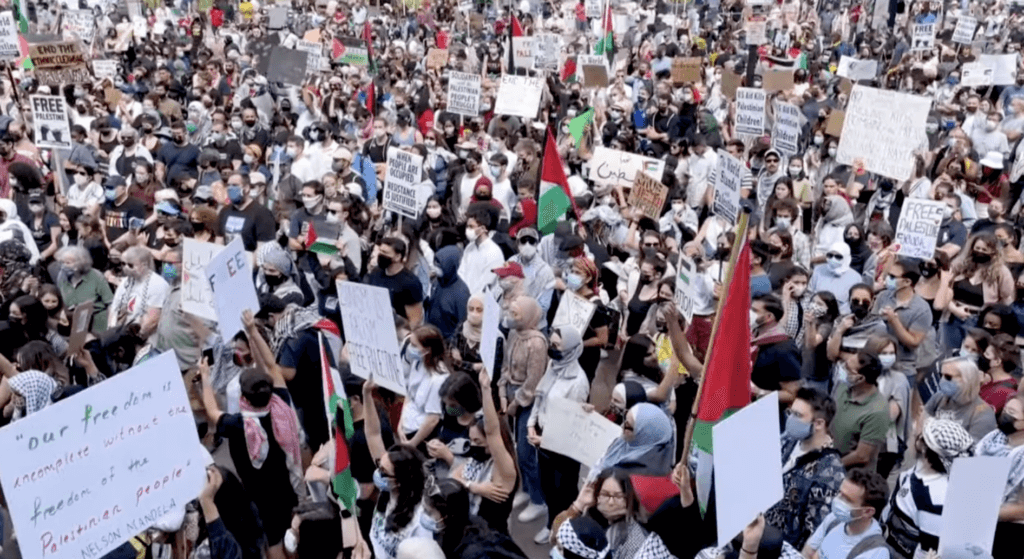
Protest in Boston, May 2021

Because of our opposition’s free wielding of false accusations of antisemitism and the confusion it causes among potential allies, the movement has spent much effort over the years being  intentional about how we communicate. We explain to policymakers and the public that there is nothing inherently pro-Jewish about supporting Israel, a right-wing, militarized, Apartheid state that does not embody Jewish identity. We explain that there is nothing anti-Jewish about fighting for Palestinian rights. We explain that one can’t be truly antiracist on behalf of any group without also standing up for the humanity of Palestinians. We work hard to distinguish between Judaism and Zionism because we support the humanity of Palestinians and Israelis (and everyone!) and believe that we are all  oppressed in some form until everyone is liberated.

Yes, it is exhausting and infuriating to have to work so hard to consider the comfort of (mostly white, mostly Jewish) people when the lives and rights of Palestinians and other people of color are being taken. But while Palestinians in Palestine fight for their land, their livelihoods and their security, we in the US are fighting for a narrative – a narrative that respects Palestinians as equal in every way, a narrative that will open policy options that aren’t available now. So, we are careful.

And then, out of the blue, comes The Mapping Project. 

Good, smart people can disagree, but it is my view that The Mapping Project, while a Herculean effort that provides lots of useful information, is a poor piece of research and a destructive piece of activism. If they intended it to be truth-telling, they didn’t implement it well.

The Mapping Project is Poor Research

First, it’s important to trace institutional and political relationships between pro-Israel and other military interests, like police, and creative to show links with other harms like medical apartheid. While many of the organizations identified by The Mapping Project are legitimate advocacy targets, it is unhelpful to throw random organizations like a disability rights group (even if they do advance Israeli interests) in along with major players like the ADL. Including every possible actor hides the important differences in their levels of influence, and it unnecessarily opens windows for attack.

Second, while the data is well-referenced, the conclusions drawn by The Mapping Project are not always supported. A single interaction between Facing History and Ourselves and AIPAC is not sufficient evidence to conclude the organizations are collaborators. Ironically, there is relevant information not included in The Mapping Project, perhaps because it didn’t lend itself to an easily linked data point, but rather requires the harder work of unraveling narratives and exposing distortions. Facing History and Ourselves is a good example. An influential educational nonprofit, they promote an understanding of antisemitism that considers some critiques of Israel to be anti-Jewish. This does show a convergence in narratives between Facing History and AIPAC that is useful to map. In other words, I think Facing History is a strategic choice for action and their narrative supports AIPAC’s pro-Israel agenda, but I don’t think you can conclude that from the data point that Facing History presented at an AIPAC event in 2019. The problem of selective data and weak conclusions is especially troubling in a project that presents itself as data-driven.

Third, I see no analytical value to presenting organizations on a geographical map. I understand that maps can be powerful tools for illustrating local-global connections and facilitating local organizing. But showing that an organization with offices on Arlington Street gets a grant from an organization on Tremont Street doesn’t add to their analysis.

The Mapping Project is Destructive Activism

Besides being poor research, The Mapping Project is a strategic mistake of incalculable proportions that we will pay for over many years.

First, the release of the Mapping Project, without the support of key antiracist groups working in the Israel-Palestine space, and without a clear call to constructive action, put activist groups in a bad position of catch-up. The ADL and friends were highlighted in media spaces that covered The Mapping Project with their anti-Palestinian spin, but no one was ready from the social justice community to step in and convey our message. Every time the media said “we reached out to The Mapping Project and other local pro-Palestinian actors and got no response,” it was a huge missed opportunity. 

Second, while we all know that pro-Israel advocates would have attacked the project even if it had been good, their attack is stronger because the advocacy message of The Mapping Project is so unclear. Saying, “Our goal in pursuing this collective mapping was to reveal the local entities and networks that enact devastation, so we can dismantle them. Every entity has an address, every network can be disrupted” makes sense to me, a progressive in the movement who understands organizing, nonviolent action, and local-global connections. But any informed person could anticipate that these words would be interpreted by fear-mongerers and mainstream media as a call to antisemitic violence. If, as the developers say, the map “is intended first and foremost to cultivate relationships between organizers across movements and deepen our political analyses as we build community power,” the project should have been vetted more broadly and coordinated with other organizers, including ones positioned to bear the brunt of the pushback.

Third, and importantly, The Mapping Project alienates potential allies and upends rather than cultivates synergies between causes. A case in point is the inclusion of Elizabeth Warren and Ed Markey on the map. While the information provided about them is likely true, some people would consider Warren and Markey on the right side of many other issues, and worthy of inclusion in the “need to cultivate” category – unlike others on the map, such as the Consulate General of Israel to New England. I’m not saying we should excuse or go easy on those who are “progressive except for Palestine,” but I do think each kind of actor needs its own strategy. And the left is hardly in a position to throw progressives under the bus for their imperfections, especially since we too are imperfect. The challenge is to learn how to hold tight to our values while building alliances, especially with people in positions of power who can move our policy aspirations forward.

The Mapping Project is not ideologically or religiously anti-Jewish as the ADL and other spokespeople for zionism claim, and those bogus accusations should be exposed for what they are–virulent, deceptive, anti-Palestinianism. But even though it is not antisemitic, The Mapping Project is still destructive to our public-facing work and to the movement.

Confusion Within the Movement

We have been asked to defend The Mapping Project because it has been attacked by the same forces that regularly attack us, and there’s some logic in that. For example, respected Mondoweiss activist/journalists Phil Weiss and Adam Horowitz doubled down on their defense of The Mapping Project, saying:

The attacks on one element of this analysis demonstrate a truth of the report and a problem we have long pointed out here. Israel lobby institutions have considerable political and cultural power in dictating the discourse of Israel/Palestine, and the resultant policy. But they are unaccountable. That power can never be pointed out. Because it’s supposedly a form of Jew hatred. 

But others point out, if not publicly, that while we’re used to having to defend against attacks on movement work, in this case we’re asked to do that with no preparation, context or collaboration on the content of what we’re asked to defend, and we don’t even know who is behind the project. This is an organizing problem that extends beyond The Mapping Project.

Damage Control

How do we know what is the most constructive stand to take in this situation? So much time and effort has already been wasted doing damage control, when a respectful, movement-grounded effort would have been better positioned to withstand the inevitable attack. Many activists feel derailed rather than helped by The Mapping Project, meaning that empirically, it’s not having the effect the authors likely wanted.

But let’s be honest, there are sub-par research projects and poorly conceived social justice  campaigns all the time. Why did this one garner such incredible visibility, to the extent that the city council in Newton, my Boston suburb, felt compelled to make a statement against it? Because we do not have the civic space to have open discourse around Israel-Palestine. Just last month pro-Israel advocates leveraged fear of Jew hatred to try to shut down and control an event sponsored by Families Organizing for Racial Justice that featured Palestinian-Americans in Newton talking about their search for belonging. But the Newton City Council didn’t make a statement against anti-Palestinian racism, no. They didn’t even respond to my invitation to attend the event. That’s my point: The civic space we have is small and precious and must be utilized wisely.

Pro-Israel actors have long searched for examples of “antisemitism from the left.” These examples are essential to their twisted logic claiming that “everyone hates Jews, including those who call themselves antiracist, so Jews are never safe, which is why Israel must be supported unconditionally or there will be another Holocaust.” Sadly, the Mapping Project has given those pro-Israel forces a gift and we, social justice movement actors, are left trying to mitigate the harm.

Since this article was published, I did an interview with KKFI’s “Understanding Israel and Palestine.” You can hear our discussion about The Mapping Project followed by an interview with Charlotte Kates of Samidoun. Also, Jewish Currents “On the Nose” podcast discussed The Mapping Project, and referred to my and other articles exploring various points of view.
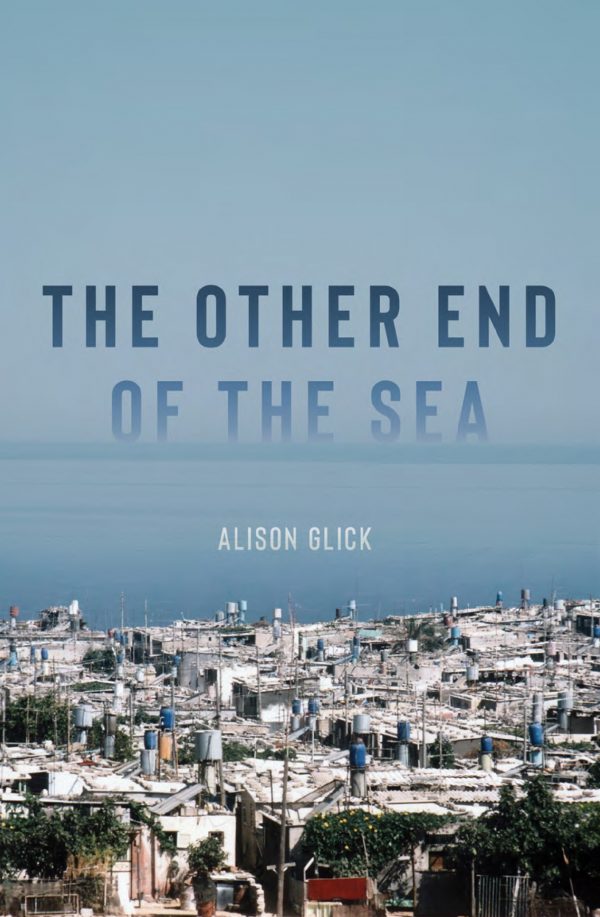
Fragmented Love in Alison Glick’s “The Other End of the Sea”

May 16, 2022 by Nora Lester Murad

This Palestinian book review originally appeared in The Markaz Review.

It would be easy to focus on the Jewish protagonist in Alison Glick’s debut novel The Other End of the Sea. After all, it was the search for her roots that first took Rebecca Klein to Israel. But like the author, whose visit to Israel “opened her eyes to the realities for Palestinians living under Israeli control,” the protagonist, too, was captivated not by Israel, but by Palestine.

Palestinian Book Review: The Other End of the Sea - Alison Glick (Book Cover)
Available from Interlink

The premise — a US Jew who evolves to support Palestinian rights — is more than plausible. Increasingly, Jewish Americans are becoming informed about Israeli history, and they are more vocal in critiquing Israel’s policies — Peter Beinart being only one case among many who are speaking out and taking action based on the principle of liberation for all.

But The Other End of the Sea is not another pro-Palestinian screed, it is a bona fide love story, complete with the tenderness, pain, intimacy and miscommunication that define any romantic relationship.

In this narrative, Rebecca Klein meets Zayn Majdalawi in the early 1980s in a taxi cab as both try to find a way out of Gaza. Zayn is a refugee from Shati camp studying in the West Bank, where Rebecca works as a teacher in the Quaker school. Even this plot point — a US Jew falling in love with a Palestinian Muslim — is conceivable. In fact, I myself am an American Jewish woman who married a Palestinian Muslim, and in our nearly forty years together, we have met many other “mixed” couples.

The rest of the plot, however, is completely far-fetched. Despite already serving fifteen years as a political prisoner, Zayn gets exiled by Israel and over the next several years, the couple move between Egypt, Lebanon, Libya and Syria trying to find a safe and secure place to raise their daughter. On the way, Rebecca sees the inner workings of Palestinian families, refugee camps, the life of exiles, political strategizing, and so much more. The protagonist, Rebecca, takes the reader deep into places and situations that no non-Palestinian could ever see.

Except for one thing: The Other End of the Sea is a fictionalized memoir, based closely on the life of the author, Alison Glick. Those “far-fetched” events and forays into the depths of Palestinian experience really happened. It is a story that no one else could have told.

Glick takes readers through a unique and important experience — that of Palestinian exiles. Her masterful storytelling is gripping, pulling us fully into every scene. Over the course of the 30-year-long story, each historical event, place, situation and person erupts into Technicolor. Something as mundane as watching her husband eat melons is told in a way that makes the reader salivate:

In the late morning light, juice the color of a harvest moon ran in rivulets down his smooth arms as, one after the other, he sliced through the fruit’s flesh, scooped out the seeds, and quartered them, methodically eating each one down to the rind. The waiting garbage can registered each fruit with a clunk.

I related deeply to the charged moments at which Rebecca and Zayn just couldn’t understand one another. In one situation, Rebecca expresses her liberal values around gender relations, values that Zayn had always shared. But in a foreign country, and beaten down by his exile, Zayn is overwhelmed. He throws up his hands and says, “You just don’t get it, do you?” Neither is able to explain themselves across the cultural divide, widened by trauma and despair.

Like all good fiction — and effective memoir writing — Glick tells a story that is not only entertaining, but one that matters. Even though politics and culture pervade every aspect of the story, the book centers on one thing: The impact of Israel’s fragmentation of Palestine on a family.

Of course, the story of Palestinian fragmentation cannot be fully captured in a single novel, and it did not end on the last page of Glick’s book. With a population of around 13 million today, there are over 2 million Palestinians living as second-class citizens in Israel, 2.5 million under Israeli occupation in the West Bank, and 2 million living under Israeli siege in the Gaza Strip. Another 3 million Palestinians live in Jordan, with the rest scattered across the Arab world, Europe, Latin America and North America, each group with a different, often precarious, legal status. Nearly every Palestinian is touched by this fragmentation: grandparents are strangers to their grandchildren, aunts miss their nieces’ weddings, and brothers are absent from their brothers’ death beds.

It’s not surprising, then, that love, no matter how strong, can choke from the toxicity of this fragmentation. This shows up poignantly, and tragically, in Glick’s life and her brilliant novel. At one point in the story, Rebecca returns to the house in Gaza she shared with Zayn, a house to which Zayn can no longer go. She says:

“Standing in that hushed house, I understood that it wasn’t the Palestine Street chickens or leftovers that shifted the course of our relationship. It was the realization that despite all we had lost — friends, family, our home, our work — there was still more left to lose.”

Pushing back against right wing attacks on education by centering Palestinian voices

March 28, 2022 by Nora Lester Murad

This book review was first published by Mondoweiss on March 24, 2022

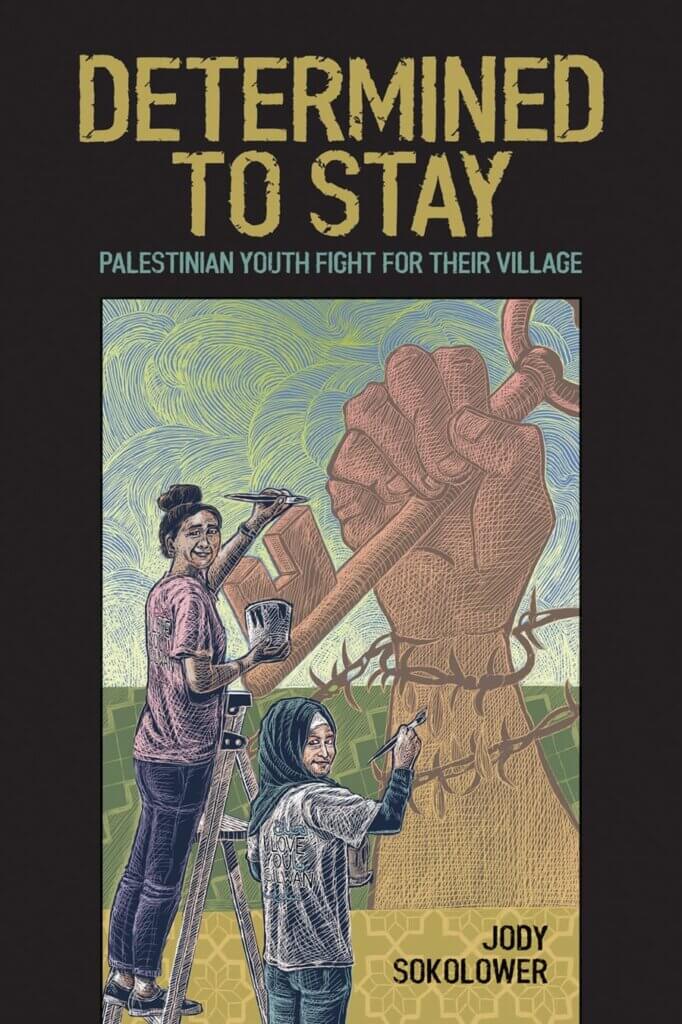
Determined to Stay: Palestinian Youth Fight for Their Village by Jody Sokolower is one of the rare non-fiction, young adult books that center contemporary Palestinian experiences and voices.

Teachers and students will quickly recognize that this valuable resource was written by a skilled educator, and one with deep knowledge about how to teach social justice issues to youth. After working as a classroom teacher in middle and high school settings, Jody spent eight years as managing editor of the social justice publisher Rethinking Schools, during which she edited two groundbreaking books. She now works as co-coordinator of the Teach Palestine Project at the Middle East Children’s Alliance and helps lead the National Liberated Ethnic Studies Coalition.

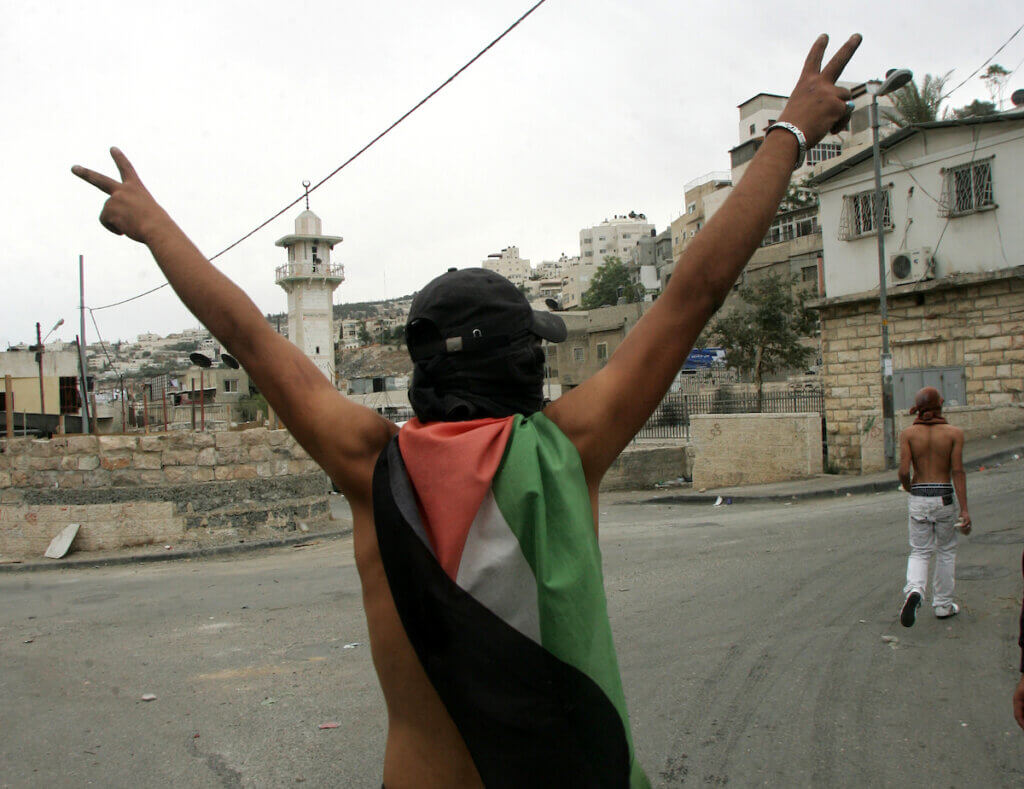
PALESTINIAN YOUTHS CONFRONT ISRAELI SOLDIERS DURING THE CLASHES IN THE EAST JERUSALEM NEIGHBORHOOD OF SILWAN, WEDNESDAY, SEPT. 22, 2010. (PHOTO: MAHFOUZ ABU TURK/APA IMAGES)

The structure and content of Determined to Stay utilize and model best practices in teaching material that is unfamiliar to students and about which there are different and potentially conflicting perspectives. For example, a compare-and-contrast approach is woven throughout the book enabling readers not only to learn about Palestine, but about their own communities. This starts right at the beginning with a framing introduction by Nick Estes (Lower Brule Sioux), co-founder of Red Nation, a Native American resistance organization. Past and current examples of US colonialism are integrated throughout the book, giving readers a home base from which they can venture out to understand what’s happening in Palestine. She also includes the stories of Palestinian-Americans, who only infrequently get to see themselves in books. The inclusion of Palestinian-American stories helps non-Palestinian readers understand that the issues in the book are relevant in the US, not just “over there.”

The bulk of the content is Palestinians telling their own stories. The reader “hears” about Palestinian youth’s lives in their own words. Sokolower does not explain what Palestinians say or give her own opinions. She lets Palestinians’ voices stand on their own. She models self-reflection for the reader by gently commenting on her own experiences in light of what she learns from the Palestinians she interviews. She also models for readers the importance of considering one’s own social location and biases. She reminds the reader that she is an older, white, Jewish woman from the US, and that reality shapes her experiences and perspective.

The chapters are short, between 5-10 pages, and can be easily woven into lessons in various disciplines at different levels. Given that the material is heavy and may be new to readers, these short bites are perfect for taking in an aspect of Palestinian youth’s lives, and connecting the learning to previous chapters and other material they are discussing in school.

Available from Interlink Books

It is refreshing that Determined to Stay starts small. It doesn’t try to explain the entire background and history of what’s going on. Context and history are included in reference to Silwan, the village that is the subject of the book. Most importantly, it doesn’t try to “balance” what Palestinians say with opposing views, a tactic used in US media and educational settings to undermine Palestinian voice.

Showing her expertise in social justice education, Sokolower addresses hard issues like arrest of youth, demolition of homes, harassment by Israeli soldiers, the lasting effects of trauma, and more. But in every instance, she highlights the way that Palestinian youth cope, find agency, support one another and resist.

In this way, the difficult aspects of life under military occupation and siege do not define Palestinians, nor do they overwhelm readers. They are actors who think and act and offer hope for change. Seeing them act inspires us to consider how we, too, can act to improve our situations.

There are some maps, artwork and photos. The most important photos are of young Palestinians in a variety of settings, including dancing and playing as well as being arrested and resisting. Since many US readers never meet a Palestinian, they are subject to the ways Palestinians are framed, often as “terrorists,” in US media. Humanizing images are critical for young readers to be able to relate to and connect with the stories of their counterparts in Palestine.

Although Determined to Stay: Palestinian Youth Fight for Their Village is clearly about youth, it is not immediately obvious from the cover that it is for young readers. Adult readers, including teachers, will also benefit from the book, but there are plenty of other books for adults that address Palestinian topics. Determined to Stay: Palestinian Youth Fight for Their Village fills a void because it is aimed at youth readers, and it raises the bar for forthcoming books for this audience.

Sadly, despite increasing interest in Palestine and Palestinians in the US, it is getting harder for K-12 teachers to bring Palestinian perspectives into the classroom. Attacks on what is erroneously called “Critical Race Theory” are the most recent indication of the politicization and divisiveness of public discourse around education. Educators with social justice sensibilities, however, understand that the key to constructive civic discourse is not banning certain books or ideas, but rather prioritizing skills in listening, evaluating facts, analyzing different narratives, forming opinions, and engaging in civil discussion across lines of difference. Determined to Stay: Palestinian Youth Fight for Their Village is a valuable resource for all of us who want to keep education relevant, honest and effective in our struggle to improve the world in which we live.

Fiction, reality, the US police, the Red Cross & Palestinians

December 29, 2020 by Nora Lester Murad

TV commercials showing beautiful people with windblown hair driving along the California coastline in a convertible have a disclaimer in small print at the bottom of the screen that says something like, “Professional driver on a closed course. Do not attempt.” Why do they say this?

Clearly, some people do not understand the difference between fiction and reality. In his brilliant commentary-comedy (8:06), Trevor Noah demonstrates how some people develop opinions about the police through cop shows. He acknowledges that police are often portrayed as breaking the law, but rather than come away with the impression that police misconduct should be addressed, viewers see police as good people who only break rules when necessary to promote the common good. In other words, police misconduct is justified and even glorified.

Apparently, the International Committee of the Red Cross (ICRC) in Israel and the Occupied Territories had similar concerns. In a series of recent tweets, they creatively showed how the Israeli TV drama series, Fauda, portrays violations of international humanitarian law in ways that the common viewer might not recognize as illegal.

Ep. 7:
👍Escorting a loved one to a hospital is fine.
❌Building a military base in the premises of a hospital is not allowed by #IHL as it puts civilians and wounded fighters at risk. pic.twitter.com/pXdN4WYFhV

— ICRC in Israel & OT (@ICRC_ilot) December 27, 2020

Ep. 10:
👍Cruising with friends in a van is a great way to enjoy the weekend.
❌Using an ambulance for covert activities and impersonating health care workers and misusing the emblem are serious violations of IHL. pic.twitter.com/c0MrXbREoc

— ICRC in Israel & OT (@ICRC_ilot) December 27, 2020

Ep. 10:
❌❌Torture is illegal in any circumstances!❌❌ pic.twitter.com/X2Um6oxvoy

— ICRC in Israel & OT (@ICRC_ilot) December 27, 2020

But the twitterverse did not approve. There were literally hundreds of replies calling out the ICRC for reflecting on representations of Israeli behavior on a fictional show. The replies were defensive, as if the ICRC were accusing Israel of committing these crimes when they are, in fact, only fictional.

Unfortunately, Israeli violations of international humanitarian and human rights law is not fictional and police misconduct is real. The only question worth asking, then, is whether or not creators of fiction have an obligation to at least consider the social impact of their portrayals. We know, for example, that representations of women in children’s literature and television have a dramatic impact on how girls see themselves (not to mention how boys see girls).

The problem can go the other way too. Reality can be presented in ways that are problematic. Just last week, in fact, I tweeted about a fundraising commercial (ironically for the American Red Cross). In it, a woman plays “What the world needs now is love” on a piano in a demolished house. Her husband and daughter find a teddy bear in the rubble. The October 26 commercial is touching, and no doubt, many viewers pull out their check books to support the disaster relief work of the Red Cross.

But this commercial is no mere fictional scene pulled from the head of a creative advertiser. It is nearly identical to an August 5 home video taken just after the Beirut explosion and circulated by the Guardian. And this is not okay. The American Red Cross should not fictionalize reality for the sake of profit. This is exploitation and definitely (IMHO) crosses the line of acceptable humanitarian communications.

What, then, can we conclude? Viewers should consume all kinds of media with healthy skepticism. We should not assume that what we see in the media is “true.” We should definitely ask what interests benefit from a certain portrayal. In the case of police, viewers should believe what Black and other people of color share about their real experiences with police. Centering and amplifying BIPOC voices will put fictional portrayals into context and provide depth to our analysis of media coverage of the police. As for Fauda, we should respond to those like the ICRC who call on us to go beyond TV drama for information about international humanitarian law. But that’s not enough. We must center and amplify the voices of the people who experience the violations of international humanitarian law — in this case, Palestinians. Until Palestinians are heard, seen and believed, the rest of the world will be susceptible to Israel’s portrayals of them, whether in drama or the news.

When foreigners move to Palestine, a review of “I Found Myself in Palestine”

September 26, 2020 by Nora Lester Murad

This article originally appeared in Mondoweiss. It was written by Alison Glick.

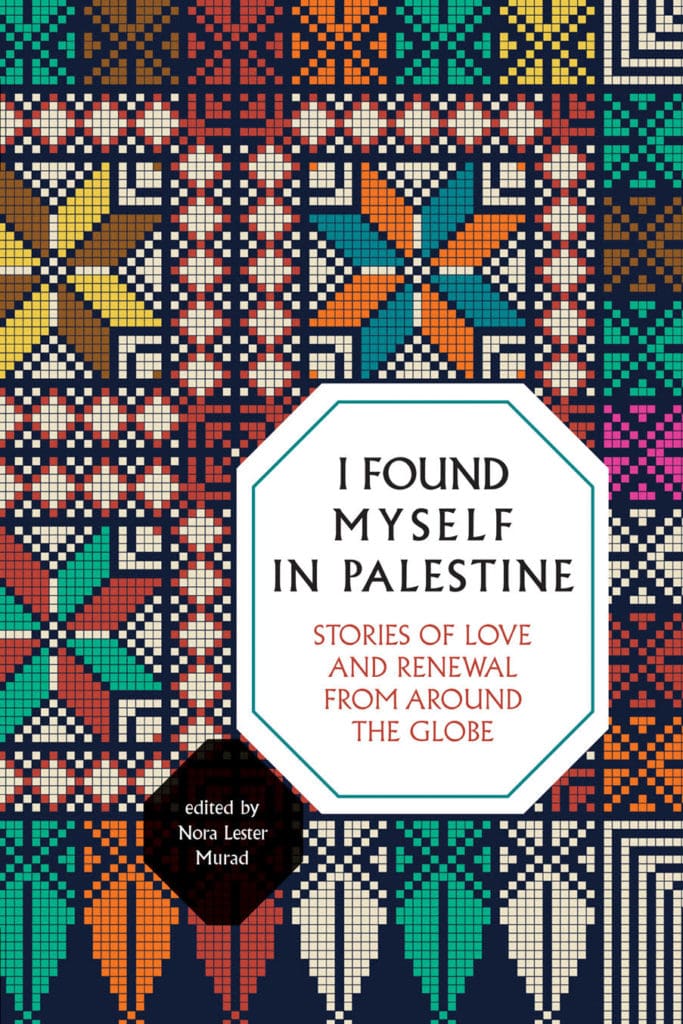
The main title of Nora Lester Murad’s edited collection of personal reflections on being a foreigner in Palestine, “I Found Myself in Palestine,” is the perfect articulation of the two kinds of narratives found in the book. Pronouncing it without any particular word accentuated, almost without thinking, the phrase conjures up an image of someone arriving in this beloved and besieged land as if by accident – perhaps an unexpected side trip or a wrong turn? Yet accentuating the title’s second word alludes to another type of story – that of the foreigner who sojourns to Palestine and manages to fill an emptiness inside herself, a void she wasn’t aware existed.  In a few instances, both meanings exist simultaneously. The charm and poignancy of the book lies in understanding that whatever the impetus for travel, the writers contributing these reflections are sharing profound human experiences that indelibly shaped their lives. 

Murad’s introduction and a prologue and postscript by Palestinian writer Miriam Barghouti distinguish the book as more than a compilation of vignettes. The pages are filled with introspective, touching, edifying, and funny stories. 

Written as if in dialogue with each other and the contributors, these pieces anchor the book’s insights and the significance of living as a “well-intentioned” foreigner in a colonized land, reminding us that foreigners also shape the lives of Palestinians and the lived reality of Palestine in ways that can be inspiring but also deeply problematic. 

As a U.S. citizen and solidarity activist, Murad ponders the role ajanab (foreigners) like her have in cleaning up the mess we made, given our government’s support for the ongoing occupation and colonization of Palestinian land. Following Murad’s introduction, Barghouti’s prologue further contextualizes the attraction Palestine has to many kinds of foreigners and the effect of their presence. She describes the impact of Zionist colonizers, foreign governments, and certain kinds of NGOs that undermine grassroots resistance and strip away Palestinian agency “in layers.” This is an apt metaphor for how Israel enacts control over Palestinian land and lives.  This includes internationals who are often “unable to recognize the complexities of displacement and the privileges afforded to them in Palestine simply for being foreign,” Barghouti writes.  Contemplating, as a Palestinian, the arrival of strangers, even those “with a thirst for justice, brave enough to harness introspection and to confront the unjust power around us,” she details, in achingly beautiful prose, the “never-ending estrangement from our homeland… Absence permeates the Palestinian experience. Absence of justice, absence of loved ones, absence of choice and quality of life, absence of the right to belong.” What does it mean for Palestinians to welcome (or not) foreigners when, “In a strange twist of events, we too become ajanab”? 

The twenty-one narratives in the book are an attempt to answer that question. 

There can be and is a great deal of difference among ajanab who find themselves in Palestine. Several contributors are in Palestine as trailing wives, having met their Palestinian husbands while they were studying abroad. Some of their stories focus on being warmly welcomed into families, sometimes by in-laws who were initially skeptical of their unions and radiate an emotional warmth and tenderness not viewed as the norm in Western cultures. Pondering the difference between the multitude of kinship terms used in Palestine (and elsewhere in the Arab world) and the cold “legal and un-familial” term “in-laws” used in America, Helene Furani observes, “Perhaps in American society, the legal relationship is what matters, whereas in Palestine what clearly matters most is the collective-personal-social sense of belonging and connectedness.” 

A sentiment expressed in other essays, Furani shares what she has learned about finding herself in Palestine after 14 years: “I did not truly fathom what I was getting myself into when I married Khaled, but I did know what I was leaving behind…. isolated American suburbia, with its plasticized conviviality, life of ease, and constant social flux, compounded with family few and far away…”

Two bittersweet stories written by North American men who traveled to Palestine to work tell of marrying Palestinian women, both of whom tragically die of cancer, leaving them widowers with children to raise. One, Steve Sosebee, decides to fulfill his wife’s wish and raise their daughters in Palestine, while growing the work of the organization they founded, the Palestine Children’s Relief Fund (PCRF). After establishing a pediatric cancer center named for his late wife, Huda Al Masri, he eventually remarries a Sudanese-American pediatric oncologist who joins him to work at a PCRF cancer center in the Gaza Strip. 

Dr. Zeena Salman’s story is an honest, sensitive account of the racism and colorism she faces as a Black woman in Palestinian society, where even her perfect Arabic couldn’t convince a shopkeeper that she is Arab. He repeatedly tells her, “We don’t have Arabs that look like you.” She is stung by casual comments during everyday interactions, like that of the hairdresser who tells her it’s good her infant daughter “isn’t too dark.” What ultimately grounds Salman and her husband in their adopted home is the commitment they’ve made to serve the people of Palestine. For foreigners who acknowledge and navigate both the problematic aspects of Palestinian society and the privilege that gives them access denied to many Palestinians, the label ajanab is peeled away – at least temporarily — to reveal something more profound. In the words of Salman:

But when I am working at the cancer department, these differences don’t exist. There are children, innocent but strong, some days playing in the playroom with an IV in their arm, other days weak in bed from their treatment…There are mothers and grandmothers at their bedsides, tired, yet patient and kind. They look at me and they see not an ajnabiya. They see a caregiver, a woman, a fellow mother who feels their pain…We talk, I explain, they unload. Sometimes there are tears, sometimes on both sides. There is a kind of symbiosis between us. I know why I am here.”

The symbiosis she acknowledges speaks to a truth non-Palestinians who find themselves in Palestine must recognize on some level: the experience of living in Palestine gave them as much — or more — as they gave to Palestinians.

Underlying the stories are, of course, the Israeli occupation of the West Bank and Gaza, and the systemic racism and discrimination against Palestinian citizens that areembedded in Israeli society. As one German NGO worker states, “In the midst of great beauty, the scars of occupation are always visible.” The writers in this collection identify and respond to this scarring in ways as varied and interesting as their stories. There is the contribution of Fatima Gabru, an Indian woman whose family shielded her from racial politics in apartheid South Africa while growing up there but, once confronted with the reality of Israeli apartheid as an adult, she is compelled to take a stand with Palestine. And there are stories by journalists, aid workers, and human rights defenders who find deeper connection to and meaning in their work and themselves while living in Palestine. For some, this takes the form of finding faith and a spiritual relationship to the world that takes them by surprise. For others, living and working among Palestinians emboldened them to break away from their professions’ zeitgeist and challenge prevailing Orientalist and colonial mindsets, at a cost to their careers.

Some reflections are told with humor and levity, the best of these doing so while speaking volumes about interpersonal relationships, inter-cultural differences, and the ignorance of Orientalist stereotypes. One such contributor is Samira Safadi, a German-Palestinian woman who leaves East Berlin after that wall fell and eventually arrives in Ramallah where she meets her future husband. Her contribution, written as a play script of short vignettes from her personal and work life, is a wry, sidelong glance at identity, and a charming account of realizing what a gift embracing a new culture truly is. Here is Safadi’s account of her wedding day:

ME: But I thought we agreed to invite only around seventy people?
FUTURE HUSBAND: Actually, there might be around 200 guests. I printed 700 invitation cards.
ME: You did what?
FUTURE HUSBAND: It was the same price.
ME: But who did you invite?
FUTURE HUSBAND: All my friends and the family of friends. They are a lot, you know.
ME: Why didn’t you tell me?
FUTURE HUSBAND: Because I wasn’t sure if you would agree, and I was worried you might cancel the wedding.
ME: Oh.
FUTURE HUSBAND: You’ve never been to an Arabic wedding. You’ll see. You can’t just invite seventy people. But don’t worry. I have everything under control.

Safadi also tells about hosting fifteen German Parliamentarians at her home as follows:

PARLIAMENTARIAN: Do you wear the same clothes when you walk in Ramallah in the streets as you wear here in your home? Don’t you wear a headscarf?
ME: Um, no, I don’t wear a scarf. And I go out in public in normal clothes.
PARLIAMENTARIAN: How did your marriage to a Muslim Palestinian affect your situation as a woman?
ME: Everything is fine! My husband is Muslim culturally. Actually, he’s a communist. In the household, he takes care of most of the work, since I have long working hours. We’re not religious. But we celebrate Christian holidays, as well as Muslim ones.

She recounts an incident in her garden on Easter:

ME: Honey, I feel so ill. Could you decorate and set everything up? The children are so excited and want to hunt for eggs.
HUSBAND: Just let me be sure I understand how you do it. I hide the boiled eggs behind plants and flowers and trees?
ME: Yes, exactly.
HUSBAND: And I hide the chocolate bunnies and other sweets in the garden?
ME: Yes, sweetie.
HUSBAND: It’s a strange tradition, isn’t it?
ME: I’ve never thought about it. But yes, it’s a strange tradition somehow. Now, can you please put the eggs under the trees?

Murad’s decision to include an essay from a Palestinian from the diaspora is an interesting one that is explored in the prologue. 

The last piece in the book is by Nadia Hasan, a Chilean-born Palestinian whose emotional and sometimes harrowing journey to understand fully her Palestinian identity culminates with setting down roots in Ramallah, where she is raising a daughter. Hers is the story of countless Palestinians, whose dispossession and exile create and recreate generational trauma. But hers is also the story, ultimately, of triumph. She regenerates the loss of kinship imposed by the Nakbathrough her daughter and their presence on the land — a presence facilitated, ironically, by her ability to enter as a “foreigner” working for an international aid organization. Her triumph, to be sure, leaves her with wounds inflicted by other Palestinians as well as by Israeli policy. But in time she is able to let those scars go because she has found herself in Palestine.

Barghouti’s postscript centers the “collision of worlds” that occurs between the divided and disconnected places of Palestinian existence and the worlds of the ajanib. This should not be mistaken with the nefarious “clash of civilizations” theory used to justify a new imperialist order. Rather, this colliding is not only inevitable but necessary and, ultimately, productive.  She writes, “…it is upon impact that both appreciation and resentment are forged,” positing a view of such interactions that is not only more humane but reflective of history’s progress.

“The voices gathered on these pages provide hope that in the spaces where we share, communicate, support, and uplift to keep going on, our stories become a lattice for a different vision of the world,” Barghouti writes.

May it be so.

It’s 2020. Does the United Nations care about Gaza?

September 6, 2020 by Nora Lester Murad

UN’s warning that Gaza will not be a “liveable place” by 2020 has been realised. Stephen McCloskey. (15 January 2020). Open Democracy.
https://www.opendemocracy.net/en/north-africa-west-asia/uns-warning-that-gaza-will-not-be-a-liveable-place-by-2020-has-been-realised/

The crisis in the Gaza Strip shames the world as ‘unliveable’ 2020 arrives. Yvonne Ridley. (December 31, 2019). Middle East Monitor. https://www.middleeastmonitor.com/20191231-the-crisis-in-the-gaza-strip-shames-the-world-as-unliveable-2020-arrives/

By 2020, the UN said Gaza would be unliveable. Did it turn out that way? Donald Macintyre. (December 28, 2019). https://www.theguardian.com/world/2019/dec/28/gaza-strip-202-unliveable-un-report-did-it-turn-out-that-way

Gaza 2020: Has the Palestinian territory reached the point of no return? Megan O’Toole (December 9, 2019). Middle East Eye. https://www.middleeasteye.net/news/what-is-gaza-2020-un-report-uninhabitable-unliveable-blockade

How Gaza was made into an unlivable place. Michael Lynk. (July 24, 2017). Aljazeera. https://www.aljazeera.com/indepth/opinion/2017/07/gaza-unlivable-place-170723091946355.html

Gaza in 2020: A Livable Place? A report by the United Nations Country Team in the occupied Palestinian territory. (August 28, 2012).
https://www.unrwa.org/newsroom/press-releases/gaza-2020-liveable-place

Black Lives Matter: The Best Thing That’s Happened to Palestinians in a Very Long Time

August 2, 2020 by Nora Lester Murad

This article originally appeared in LA Progressive.

At her last class on her last day of 11th grade in Newton, Massachusetts, my Palestinian-American daughter received a shock. Just before the zoom call ended, one student mentioned he’d be taking a gap year in Israel after graduation. Another student smirked, ‘I hear there’s a lot of land opening up over there.” The screen quickly went blank, and my daughter burst into angry tears.

I realize that many people reading this article won’t understand why. The fact that Israel may annex an additional 30% of the Palestinian West Bank is not widely known or understood. In the US and elsewhere, the discourse about Palestinian rights has been distorted and silenced, by fear of being called anti-semitic, by US foreign policy interests, by Christian zionism, and by Islamophobia. Perhaps worst is the common misbelief that Israelis and Palestinians constitute  “two equal sides” and that being “neutral” does no harm.

In the US and elsewhere, the discourse about Palestinian rights has been distorted and silenced, by fear of being called anti-semitic, by US foreign policy interests, by Christian zionism, and by Islamophobia.

As a white anti-zionist Jew from the US who married a Palestinian Muslim and lived in Palestine for 13 years, I see things differently. I see a “side” that wants equality and peace for everyone, and a “side” that believes that Israel should be a state for Jews maintained by institutional racism and military control over non-Jews.

The US has long supported Israel with money and political support that gives cover to Israel’s land grabbing. As a result, Israel, despite its ideology of Jewish supremacy, has been “normalized.” It is common for people I know to take family trips to Israel to celebrate a Bat Mitzvah or just to hang out on the beach in Tel Aviv. Despite being liberals, they are willing to ignore Israel’s ongoing human rights violations against Palestinians. This explains why my daughter, and so many other Palestinians, feel invisible, dehumanized, and unsupported—even in self-proclaimed “liberal” spaces.

But there may soon be a historic development in the Palestinian struggle.

It is August 2020 and we’re in the midst of arguably the most important escalation of the movement for racial justice in US history. The movement for Black lives calls not merely for Black liberation, but for sustainable transformation of our communities. The movement is black-led, intersectional, multiracial and has mobilized people all over the world. On the local, state and national levels, actors as diverse as corporations, schools and even restaurants are making public statements against institutional racism, a topic that was taboo in mainstream media just months ago.

And the protests are making a difference. Not only is there pressure for national police reform legislation, there are surprising and visible changes happening in local communities. In the city where I live, the police chief has resigned, possibly influenced by pressure for systemic change from our local Defund Newton Police Department group. Changes like support for Black businesses, the removal of statues glorifying confederate racists, and improvements to school curricula are real. Embedded in these changes is a dislodging of normalized inequality and the mainstreaming of ideas previously considered radical—like social transformation.

More and more white people seem to “get” that inequality isn’t accidental, but rather the natural outcome of a system that has institutionalized white supremacy.

This is a new chapter for Black Americans, one that will surely see both great gains and violent pushback. It also appears to be a new chapter for white people. More and more white people seem to “get” that inequality isn’t accidental, but rather the natural outcome of a system that has institutionalized white supremacy.

As for Palestinian rights, while there have been gains in recent years in US discourse, including by progressive Jewish groups, and while Black-Palestinian solidarity remains a strong pillar of both liberation movements, white people in the US are far from understanding Israel’s institutionalized racism against Palestinians, this despite strong parallels with the US.

Palestinians

White colonists took North America by committing genocide against Indigenous peoples; Israel’s colonization project is ongoing. Palestinian demands for self-determination remain a threat—not to Jews as people, but to the position Jews hold at the top of a highly racialized hierarchy in Israel. That explains, I think, the continued portrayal of all Palestinians as terrorists and Israeli violence against Palestinians being justified by “security” concerns.

So, while the image of unarmed Black men being murdered by US police (finally!) sparks outrage, the persistent murders of Palestinians by the US-funded state of Israel are met merely with muted criticism. And Israel’s historic decision to illegally expand its territory becomes a casual aside in a conversation among US teenagers.

I argue that Black Lives Matter may be the best thing that’s happened to Palestinians in a very long time. Because BLM targets the power structure of the United States—the very heart of global capitalism, the movement for Black lives is positioned to make real changes in the colonial, neocolonial, militaristic, capitalist and racist DNA of the United States that is wreaking havoc around the world.

I am hoping that the new-found popularity of Black struggles will lead white US people to listen more, act more, and make reparations. I also hope they will consider BLM’s internationalist analysis and realize that the US original sins of genocide and slavery are being recreated against peoples of the global south right now—with US funding and political support. I am hoping that white people, including white people who identify as Jewish, will be able to expand their commitment to racial equality to include their engagement with the Palestinian struggle, for the sake of my daughter and all our daughters and sons.

Racism (like all the other isms) is a global industry in the service of profit, and therefore, struggles against racism must be simultaneously local, national and transnational. Today’s Black liberation movement will help challenge the root causes of inequality in the United States, in Palestine, and around the world—if we support it fully and work to make those connections.

Authors’ Talk (June 2020)

June 12, 2020 by Nora Lester Murad

Join me and other Interlink authors Phyllis Bennis and Daphna Levit for a one-hour discussion of our books. Sponsored by the Arab American-Anti-Discrimination Committee (ADC). If the technology doesn’t work correctly, you may wish to try watching it on YouTube at https://www.youtube.com/watch?v=DRpdYrflvdM&feature=youtu.be.

Launching a book in the midst of a pandemic

May 27, 2020 by Nora Lester Murad

Copies of my second book, I Found Myself in Palestine, arrived from the publisher in the middle of March. The very considerate delivery guy put down the books and moved away. “I’ll sign your delivery receipt,” he said, “so you don’t need to touch my pen and clipboard.”

There is nothing normal about launching a book in the midst of a pandemic.

The cover was beautiful and I liked holding the compact little book in my hands, but it didn’t feel like an accomplishment. It didn’t feel like the culmination of literally years of work by me and the 23 writers featured in the anthology. Honestly, it seemed trivial.

Hundreds of thousands more people have died since then, and the stress of uncertainty in the United States and around the world has grown. But I’m ready to share the book with the world anyway. Some people are reading more these days, and friends tell me that the personal approach of the book may bring calm and inspiration to some people. I hope so.

There is nothing normal about launching a book in the midst of a pandemic, but I hope that I Found Myself in Palestine will remind people that Palestinians, like many others, have experienced uncertainty and death for decades and they have kept their humanity. I hope we can all do the same.

Do today’s concurrent actions by Central Americans and Palestinians show a historic convergence of protest?

December 4, 2018 by Nora Lester Murad

Freedom is claimed not granted

Do today’s concurrent actions by Central Americans and Palestinians show a historic convergence of protest?

This article originally appeared in Transformation: Where Love Meets Social Justice


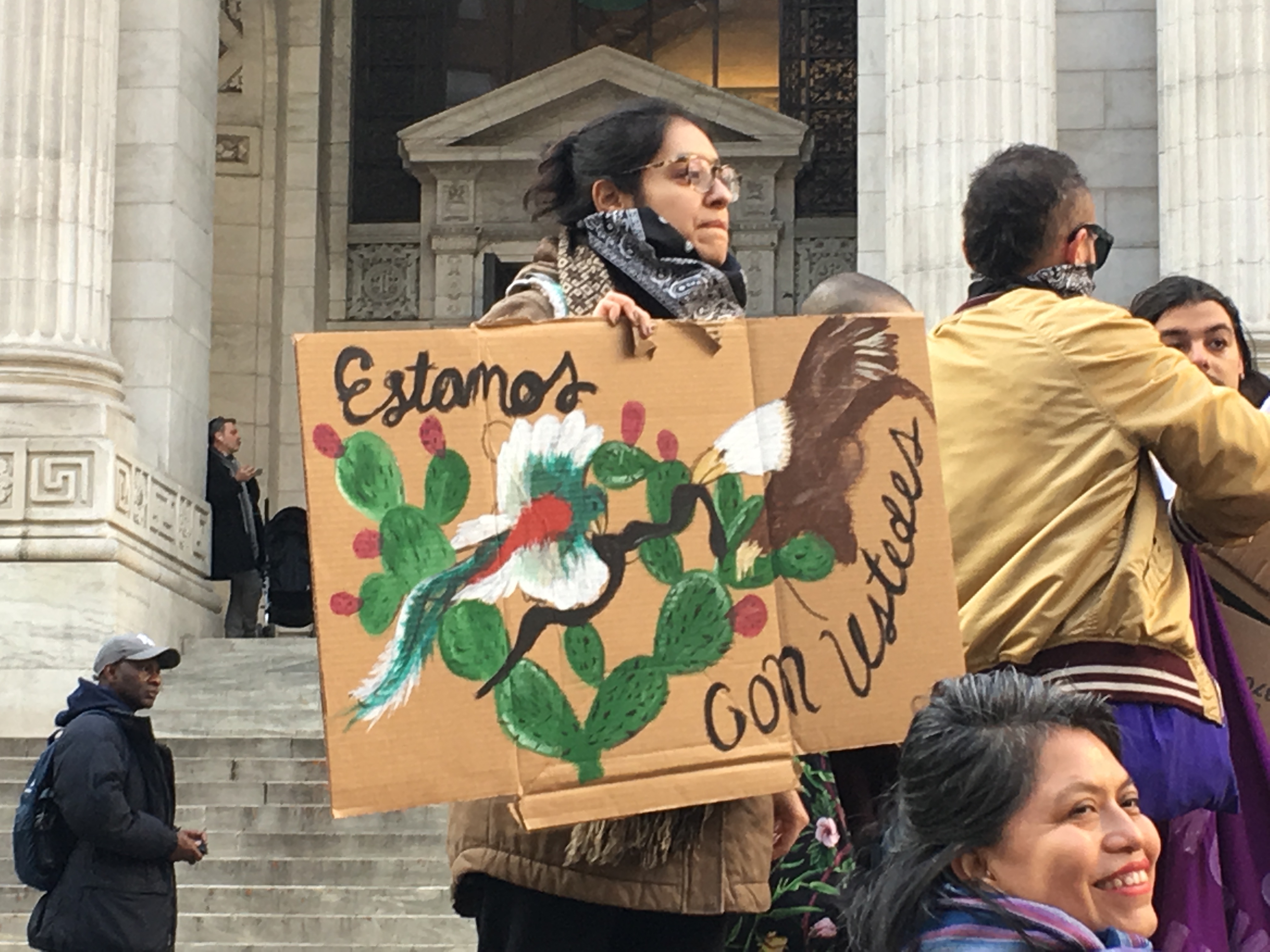
NY protest in support of asylum seekers’ rights

A photograph of Maria Virginia Duarte sits on my desk, and as I watch the coverage of the migrant caravan approaching the US border I think about her again. Maria arrived in the United States without documents from El Salvador in in the early 1970s. She became part of my family, and when I had my first daughter Maria dipped her finger in a cup of coffee and put it in my baby’s mouth (apparently in El Salvador that’s considered good for babies).

In 1986, Maria was one of the almost three million “illegal aliens” granted amnesty by Ronald Reagan, and she no longer needed to live in hiding. When she and her sister decided to visit El Salvador for the first time since they had escaped, I went with them. I met their relatives on both sides of the brutal civil war that took the lives of 75,000 people between 1980 and 1992. I took rickety buses on narrow, unpaved mountain roads to visit relatives who had no water, sewage or electricity. I was in the marketplace when in the blink of an eye, all the young boys disappeared into shops and houses just minutes before government forces marched around the corner to “recruit” child soldiers.

Nearly four decades later, Central Americans continue to risk their lives to escape conditions caused in great part by US foreign policy, only to find themselves unwelcome in the oft-touted “land of immigrants.” But something feels different this time around. Individuals and families are marching together. It is not “merely” thousands of scared people risking their lives to stay alive, as we have seen in the exodus from Syria. It is also a protest of sorts, a refusal to comply, and it’s being met not only with humanitarian aid, but with political solidarity.

It might just be me, influenced by 35 years of being married into a Palestinian family including 13 years living under Israeli military occupation, but no matter how they are portrayed in the media, the Central American caravan and Gaza’s Great Return March feel to me like a convergence. Regular people taking brave steps, inspiring others to join, and building community while claiming freedom.

Today’s protests stand firmly on generations of resistance. They are parts of movements, cultivated over decades out of smaller attempts and in response to increasing repression that has made clear to people that freedom is claimed not granted. And our claims for freedom must be global.

Of course there are many differences in the situations of the Palestinians in Gaza and the Central Americans on the caravan, but there are also a surprising number of similarities. The Central Americans are running away from their homelands to find refuge in the United States. They are challenging the borders that prevent them from living in safety with respect for their human rights. The Palestinians in Gaza are running towards their homeland and challenging the blockade of a “border” that illegally prevents two million people from returning to their homeland (1.3 million of whom are documented refugees).

The Central Americans are seeking the legal status of asylum, which is part of refugee law, while in Gaza, legally-recognized refugees are denied their right of return. In both cases, the US and Israel distort the law in an attempt to claim that the relevant protections don’t apply.

For example, the US government portrays Central Americans not as asylum seekers but as migrants – people who choose to move “not because of a direct threat to life or freedom, but in order to find work, for education, family reunion, or other personal reasons,” as the UN puts it (p. 17). This enables the authorities to evoke their rights as sovereign states to deny entry into their borders and say that caravan participants should apply using existing immigration procedures or face deportation. In fact, Trump has repeatedly called them “invaders,” subject to a security rather than a humanitarian response.

This is nearly identical to Israel’s portrayal of the Gaza protesters. They are deemed a security risk to Israel, criminal, and not subject to any rights and protections – certainly not the right to return to their homeland, the right to protest for their human rights, or the right to international protection from a belligerent occupying power.

In fact, according to UNHCR, the UN Refugee Agency,

“State responsibility starts with addressing root causes of forced displacement. Strengthening the rule of law and providing citizens with security, justice, and equal opportunities are crucial to breaking the cycles of violence, abuse and discrimination that can lead to displacement (p. 34).”

Yet in both cases, the US and its allies have not fulfilled their obligations to prevent displacement. Instead, they have invested in funding conflicts and then erecting obstacles to rights-claiming by those who are displaced as a result. Israel constructed an Apartheid Wall that has been deemed illegal; Trump is trying to construct a similar wall along the US-Mexico border, even citing the Israeli wall as a model.

One mechanism used in both cases is the outsourcing of foreign policy enforcement, often paid for with foreign aid. Israel outsources enforcement to the Palestinian Authority (paid for by international donors), while the US has outsourced enforcement to Mexico, again paid for with aid.

In both cases, governments and multilateral organizations are complicit in the violation of human rights. The most obvious example is the Gaza Reconstruction Mechanism (GRM), ostensibly created to facilitate the reconstruction of Gaza after the 2014 Israeli attack by putting the United Nations in charge of vetting materials and beneficiaries using Israeli-approved criteria.

In my own research (pp.59-66) I found that the GRM potentially legalizes the perpetuation of a wrongful act (the blockade of Gaza), and potentially enables the perpetuation of violations by Israel, while the United Nations did not follow a correct process in becoming a legal party to the GRM agreement and inaccurately portrayed its role as a mere facilitator. In addition, the UN and other parties failed to fulfill their legal obligation of due diligence to ensure that the GRM agreement did not violate human rights, and the agreement appears unbalanced in assigning rights and responsibilities in Israel’s favor, while obligations are borne by the United Nations and the Palestinian Authority. Finally, the GRM potentially compromises the humanitarian principles of neutrality, impartiality, humanity and independence (for example, by allowing Israel a veto power over aid beneficiaries).

It doesn’t take much digging to find shameful failure of international organizations to protect the rights of Central Americans too. A recent article in an official United Nations news source reported that the “Secretary-General António Guterres was urging all parties to abide by international law, including the principle of ‘full respect for countries’ rights to manage their own borders.’” The failure to prioritize the protection of displaced Central Americans, Palestinians, Syrians, Rohingya, Afghanis, South Sudanese, Somalis and so many more demonstrates that an ongoing battle between human rights and states rights is at play – an existential fight to realize (or crush) the aspirational potential of international law and global governance.

When the declaration of a “humanitarian situation” becomes justification for military build up, checkpoints, and collection of personal information that threatens security (which is found in both these cases), people increasingly recognize this as a rhetorical slight-of-hand. When Donald Trump says that Central American migrants who throw stones would be shot, a policy almost identical to Netanyahu’s stance against Palestinian rock throwers, people see what they are up against: This cadre of power-mongers intend to criminalize communities that seek to protect human beings from the unconstrained power of militarized states.

But people like Maria Duarte and my friends in Gaza have no intention of giving up, nor of succumbing to the cowardly strategy of divide-and-conquer. Like the generations of activists on whose achievements we stand today, we will respond by recognizing the parallels and similarities in our struggles and in our aspirations for a safe place to live with dignity and call home.


Nora Lester Murad’s new book is “Rest in My Shade, a poem about roots,” co-authored with Danna Masad and published by Interlink Books with support from the Palestine Museum US. More information at https://www.restinmyshade.com.


BIO: Nora Lester Murad is a writer and activist. She is co-founder of the Dalia Association, Palestine’s first community foundation, and Aid Watch Palestine, a community-driven aid accountability initiative. She blogs at The View From My Window in Palestine and can be reached at @NoraInPalestine.


  • « Previous Page
  • 1
  • 2
  • 3
  • 4
  • 5
  • …
  • 16
  • Next Page »

Recent Posts

  • Children’s Picture Book Review: “Never Again for Anyone”
  • Members of Educators Union Say Its Capitulation to ADL Betrays Workers, Students
  • On Teach Truth Day of Action: The Movement to #TeachTruth Includes Palestine, Too
  • How do we get the ADL out of schools? A conversation with Nora Lester Murad of #DropTheADLfromSchools.
  • The convos jumbled in my heart and head

Tweets!

Could not authenticate you.
  • Contact Me
  • About Me
  • Archive
  • Sign up for updates

Copyright © 2026, All rights reserved
Website Maintained by AtefDesign